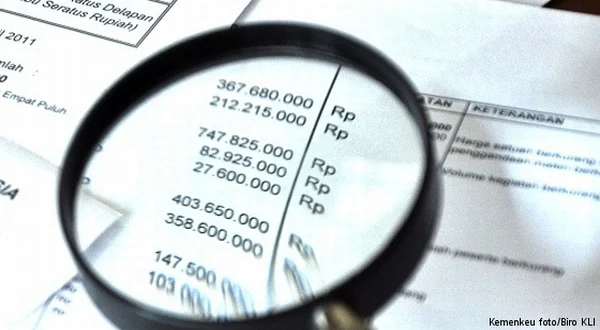
The Government of Indonesia officially presented the Draft Law on the Accountability for the Implementation of the 2013 State Budget (RUU APBN) during a plenary session at the House of Representatives (DPR RI) in Jakarta. The presentation, led by then-Minister of Finance Muhammad Chatib Basri, marked a crucial constitutional step in fiscal transparency, shedding light on both the operational challenges faced by the state treasury and the complex macroeconomic headwinds that characterized Indonesia’s financial landscape during that fiscal year.
The submission of the accountability bill brought to the forefront the assessment delivered by the Supreme Audit Agency (BPK) regarding the Central Government Financial Report (LKPP) for the 2013 fiscal year. BPK conferred a Qualified Opinion—commonly known as Wajar Dengan Pengecualian (WDP)—on the financial report. This designation indicated that while the vast majority of government accounts were presented fairly and in accordance with government accounting standards, specific areas within the ledger required formal qualifications or exceptions due to unresolved accounting complexities.
Addressing the legislative body at the Nusantara II Building in Senayan, Minister Chatib Basri elaborated on the specific accounting hurdles that prompted the BPK to issue a WDP opinion. According to the government’s financial leadership, the exceptions were primarily concentrated in four distinct areas: receivables from over-lifting of oil and gas, receivables from oil and gas sales, credit assets originating from the former Indonesian Bank Restructuring Agency (BPPN), and pension expenditure funds. These legacy and operational accounting items presented persistent valuation, verification, and asset-reconciliation challenges that prevented the attainment of an unqualified (Wajar Tanpa Pengecualian or WTP) audit opinion for that reporting period.
Chronology of the 2013 Fiscal Year and Budget Execution
To fully comprehend the context of the 2013 APBN accountability report, it is essential to examine the chronological progression of economic events that shaped budget execution throughout that year. The formulation of the 2013 state budget took place against a backdrop of optimistic growth projections, but reality quickly introduced severe external and internal tests for fiscal managers.
In early 2013, the global economic recovery from the 2008 financial crisis remained fragile, with emerging markets experiencing shifting capital flows. By mid-2013, sentiment shifted dramatically when the United States Federal Reserve signaled a potential tapering of its quantitative easing program—an announcement widely referred to as the "tapering off" shock. This external monetary policy shift triggered rapid capital outflows from emerging economies across the globe, including Indonesia, placing immense downward pressure on domestic financial markets, foreign exchange reserves, and the value of the Indonesian Rupiah.
Concurrently, the domestic economy faced structural vulnerabilities, most notably a widening current account deficit. On the internal front, declining international commodity prices reduced export revenues, while high domestic consumption of subsidized fuel drove up import volumes, straining the national balance of payments. As the Rupiah depreciated against the US dollar, the government’s fiscal space constricted, forcing economic policymakers to continuously recalibrate macroeconomic assumptions, adjust expenditure priorities, and manage the cascading effects on energy subsidies and infrastructure financing.
Detailed Breakdown of Audit Qualifications
The issuance of a Qualified Opinion (WDP) by BPK on the 2013 LKPP underscores the intricate nature of public sector accounting in Indonesia, particularly concerning complex assets and multi-agency reconciliations. The four primary factors cited by the Ministry of Finance represent longstanding structural challenges in state financial management:
-
Over-lifting Receivables: Over-lifting occurs when a contractor lifts a volume of oil and gas exceeding their entitlement share during a specific period, creating a receivable obligation to the state. Accurately tracking, valuing, and reconciling these volumes across numerous production sharing contracts (PSCs) requires rigorous coordination between upstream oil and gas regulators and financial auditors.
-
Oil and Gas Sales Receivables: Similar to over-lifting, receivables stemming from direct sales of state-owned shares of petroleum involve complex revenue recognition timelines, fluctuating international market prices, and verification of delivery schedules, which historically complicated fiscal record-keeping.
-
Former BPPN Credit Assets: Following the 1997-1998 Asian Financial Crisis, the Indonesian Bank Restructuring Agency acquired vast portfolios of non-performing loans and corporate assets. The ongoing management, restructuring, liquidation, and eventual transfer or write-off of these legacy credit assets have generated accounting ambiguities that spanned multiple administrative decades.
-
Pension Expenditure Funds: Managing civil servant and military pension obligations involves long-term actuarial calculations, demographic shifts, and coordination between the state treasury and pension administration institutions, making precise annual expenditure reporting uniquely challenging.
Macroeconomic Dynamics and Policy Responses
The execution of the 2013 APBN was inextricably linked to the broader macroeconomic volatility of the period. Minister Chatib Basri emphasized during his address to the DPR that both external and internal pressures fundamentally altered the macroeconomic assumptions underpinning the original budget targets.
From an external perspective, the slowdown in global economic growth reduced international demand for Indonesian commodities. This sluggishness in global trade coincided with the aforementioned liquidity tightening by the US Federal Reserve, which created severe liquidity strains across domestic financial markets. Bond yields rose, equity markets fluctuated, and foreign portfolio investments experienced significant volatility.
Internationally induced capital flight directly impacted the domestic currency. The Indonesian Rupiah depreciated substantially, testing the resilience of local corporations with foreign-currency-denominated debt and increasing the cost of imported goods, energy, and government debt servicing.
Internally, the pressure on the current account deficit became a primary policy concern. To restore macroeconomic stability and instill confidence among investors and international financial institutions, the Indonesian government deployed a coordinated policy package. Key interventions included:
- Strengthening the Current Account Balance: Implementing structural measures to curb excessive imports, promote domestic manufacturing, and encourage export-oriented value addition.
- Exchange Rate Stabilization: Working in tandem with Bank Indonesia, the central bank, to deploy monetary policy tools, manage foreign exchange market interventions, and calm speculative pressures on the Rupiah.
- Fiscal Consolidation and Energy Subsidy Adjustments: Undertaking the politically difficult but economically necessary step of adjusting subsidized fuel prices (BBM) to alleviate the heavy fiscal burden of energy subsidies, thereby creating fiscal room for priority development and social protection programs.
Legislative Reception and Oversight
The submission of the RUU APBN 2013 initiated a formal deliberative process within the House of Representatives. Lawmakers from various factions scrutinized the financial report, questioning executive officials on both the policy effectiveness during the crisis and the administrative steps being taken to resolve the recurring BPK audit qualifications.
Parliamentary oversight during such sessions typically centers on accountability, transparency, and corrective action. Members of the Budget Committee (Banggar) and Commission XI of the DPR—which oversees financial affairs, national development planning, banking, and state-owned enterprises—demanded detailed roadmaps from the Ministry of Finance regarding asset resolution for former BPPN assets and improvements in non-tax state revenue (PNBP) administration from the energy sector.
While acknowledging the extraordinary global circumstances that complicated the 2013 fiscal year, legislators emphasized that obtaining an unqualified audit opinion remains a vital benchmark for good governance and public trust. The government, in its response, assured parliamentarians that structural reforms in financial reporting systems, asset inventory, and inter-agency data reconciliation were actively being pursued to address BPK’s findings systematically.
Broader Implications and Long-Term Fiscal Reforms
The events surrounding the 2013 State Budget Accountability Bill highlighted several critical lessons for Indonesia’s fiscal management framework. The episode demonstrated the acute vulnerability of an emerging market economy to sudden shifts in global monetary policy and commodity cycles, reinforcing the necessity of maintaining robust foreign exchange reserves, flexible fiscal buffers, and prudent debt management policies.
Furthermore, the audit findings served as a catalyst for ongoing modernization within the government’s financial architecture. Over subsequent fiscal years, the Ministry of Finance accelerated the implementation of accrual-based accounting standards, a transition mandated by Law Number 17 Year 2003 on State Finances and Government Regulation Number 71 Year 2010. This structural shift aimed to provide a more comprehensive and accurate depiction of the government’s financial position, liabilities, and assets.
Efforts to resolve legacy issues, such as the disposition of remaining former BPPN assets and the optimization of natural resource revenue accounting, demonstrated the executive branch’s commitment to resolving systemic audit exceptions. By systematically addressing these historical bottlenecks, subsequent administrations sought to improve transparency, enhance institutional credibility with international credit rating agencies, and secure higher standards of public financial accountability for future state budgets.