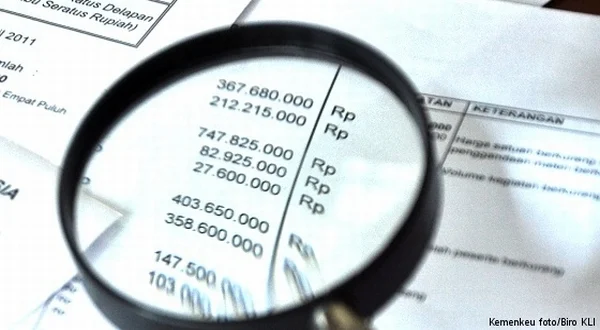
The Indonesian government officially presented the Draft Law on the Accountability for the Execution of the 2013 State Budget (RUU APBN) during a plenary session at the House of Representatives (DPR RI) in Jakarta. The presentation, delivered by then-Minister of Finance Muhammad Chatib Basri, marked a crucial constitutional step in transparently reporting the realization, management, and auditing of state finances for the 2013 fiscal year. However, the legislative proceedings were immediately met with focused scrutiny from lawmakers, primarily due to the "Qualified Opinion" (Wajar Dengan Pengecualian or WDP) status bestowed upon the Central Government Financial Report (LKPP) by the Supreme Audit Agency (BPK).
This fiscal milestone occurred against a backdrop of severe domestic economic friction and turbulent international markets. Throughout 2013, the Indonesian economy faced mounting structural pressures that challenged both fiscal targets and monetary policy stability. By bringing the accountability bill to the parliamentary floor, the Ministry of Finance sought not only to fulfill its statutory obligations but also to contextualize how external shocks and internal structural bottlenecks directly influenced budget performance, revenue collection, and expenditure outcomes.
Chronology and Legislative Background of the 2013 State Budget Execution
The trajectory of the 2013 State Budget (APBN) was defined by a series of high-stakes adjustments, legislative debates, and rigorous post-audit evaluations. The process began in late 2012 when the government and the DPR deliberated and subsequently ratified the 2013 APBN law, which was built upon macroeconomic assumptions that initially forecasted robust growth, manageable inflation, and stable exchange rates.
However, as the fiscal year progressed, deviations from the original macroeconomic assumptions forced the administration of President Susilo Bambang Yudhoyono to execute significant mid-course corrections. Most notably, the government proposed a revised state budget (APBN-P 2013) in mid-2013, which accommodated critical policy shifts—chief among them being the contentious adjustment of subsidized fuel (BBM) prices designed to alleviate mounting pressures on the state treasury.
Following the conclusion of the 2013 fiscal year on December 31, 2013, the BPK conducted its comprehensive annual statutory audit of the LKPP. By mid-2014, the audit findings were finalized, resulting in the WDP status. The presentation of the RUU APBN 2013 to the DPR on Tuesday, June 24, 2014, represented the formal transition of the financial reports from executive auditing to legislative oversight, where members of Parliament would evaluate the government’s stewardship of public funds before passing the final accountability legislation.
Root Causes of the Wajar Dengan Pengecualian (WDP) Audit Status
Addressing the plenary session at Gedung Nusantara II, Senayan, Jakarta, Minister of Finance Chatib Basri provided a transparent breakdown of why the BPK issued a WDP opinion—commonly translated as a Qualified Opinion—on the 2013 LKPP. While a WDP indicates that the financial statements are presented fairly in all material respects, it highlights specific accounting exceptions that prevent the awarding of an unqualified or "Wajar Tanpa Pengecualian" (WTP) opinion.
According to the Ministry of Finance, the qualifying factors identified by the BPK centered on complex, legacy, and administrative accounting challenges that had persisted across multiple fiscal years. Specifically, Chatib highlighted four primary areas of concern:
- Over-Lifting Receivables: Discrepancies and valuation complexities associated with oil and gas over-lifting receivables, which involve intricate calculations regarding production shares between the government and contractors.
- Oil and Gas Sales Receivables: Outstanding receivables stemming from petroleum sales that required enhanced verification and reconciliation processes between state agencies and energy sector stakeholders.
- Legacy Credit Assets from the Indonesian Bank Restructuring Agency (BPPN): Management, valuation, and documentation issues surrounding residual asset portfolios inherited from the historic restructuring agency established in the wake of the 1997–1998 Asian financial crisis.
- Pension Expenditure Funds: Actuarial and administrative complexities tied to the recording, distribution, and liability management of state pension funds.
These structural accounting hurdles underscored the ongoing challenges faced by public sector institutions in modernizing state financial management systems to meet rigorous, independent auditing standards. Despite these exceptions, financial experts noted that identifying these areas was a necessary step toward achieving total transparency and eventual clean audit opinions in subsequent fiscal cycles.
Macroeconomic Pressures: External Shocks and Internal Imbalances
Beyond administrative and accounting exceptions, the execution of the 2013 state budget was heavily tested by an unforgiving macroeconomic environment characterized by dual pressures from international markets and domestic structural imbalances.
From the external perspective, 2013 was a pivotal year defined by the shifting monetary policy stance of the United States Federal Reserve. The mere anticipation and subsequent signaling of quantitative easing tapering (known widely as the tapering off issue) by the Fed triggered massive capital outflows from emerging market economies, including Indonesia. This global liquidity tightening coincided with a broad-based deceleration in global economic growth and a notable contraction in international commodity prices, which directly impacted Indonesia’s export-driven revenue streams.
Internally, these external shocks exposed vulnerabilities within the domestic economy. The country’s current account deficit experienced significant downward pressure as export revenues slowed while import demand remained robust. This imbalance inevitably spilled over into the foreign exchange market, where the Indonesian Rupiah faced relentless downward sentiment and depreciation pressures against the US Dollar.
"The dynamics, both internal and external, undoubtedly impacted changes in the basic macroeconomic assumptions, which ultimately influenced the implementation and achievement of the 2013 state budget targets," Chatib explained to lawmakers.
Government Policy Interventions and Stabilization Measures
Faced with mounting macroeconomic headwinds, the Indonesian government implemented a series of stabilization policies aimed at cushioning the economy and restoring fiscal discipline. These interventions were structured around three core pillars: defending external balances, stabilizing the national currency, and managing fiscal space through subsidy reform.
To address the widening current account deficit, the economic team rolled out structural policies designed to curb non-essential imports and promote domestic processing of raw commodities, aligning with the spirit of the newly implemented Mining Law. Concurrently, Bank Indonesia, working in close coordination with the Ministry of Finance, deployed monetary tightening measures and market interventions to anchor inflation expectations and restore stability to the Rupiah.
Perhaps the most politically sensitive yet fiscally critical policy action was the adjustment of subsidized fuel prices. By reducing the burden of energy subsidies on the state budget, the government successfully freed up fiscal space to protect vital capital expenditures and social assistance programs targeted at vulnerable populations. These coordinated fiscal and monetary responses helped prevent a deeper economic contraction, allowing the economy to navigate the turbulent global waters of 2013 and lay the groundwork for subsequent economic resilience.
Implications and Outlook for State Financial Accountability
The presentation of the 2013 State Budget Accountability Bill carried profound implications for Indonesia’s ongoing journey toward institutional transparency and good governance. The dialogue between the Ministry of Finance and the DPR served as a vital accountability mechanism, reinforcing the constitutional mandate that executive spending must face rigorous legislative scrutiny.
While the persistence of a WDP audit opinion indicated that structural improvements in asset management and receivables reconciliation remained unfinished business, the transparency with which the government addressed these issues was viewed favorably by fiscal analysts. Resolving complex legacy issues—such as the BPPN asset portfolios and oil and gas accounting metrics—required inter-agency coordination that extended far beyond a single fiscal year.
Ultimately, the 2013 fiscal experience provided valuable lessons for macroeconomic management and public financial administration. By confronting external shocks, executing difficult subsidy reforms, and steadily addressing BPK audit recommendations, Indonesia strengthened its institutional capacity to withstand future global financial volatility while reinforcing public trust in the management of state finances.