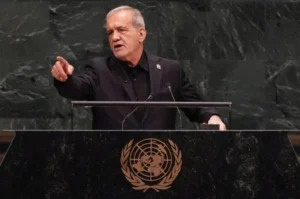
The Indonesian government has issued a resolute call for the international community to prioritize the restoration of civilian life in Gaza, emphasizing that the pursuit of peace must be intrinsically linked to the immediate reconstruction of essential services and infrastructure. This diplomatic push was spearheaded by Indonesian Minister of Foreign Affairs Sugiono during the High-Level Roundtable on Gaza Early Recovery, titled "From Sharm El-Sheikh to Phase II – Consolidating Peace and Early Recovery," held on the sidelines of the 81st United Nations General Assembly in New York.
The assembly, which brought together global leaders and stakeholders, served as a platform for Indonesia to reiterate that while a permanent ceasefire and the cessation of hostilities remain the foundational requirements for stability, they are insufficient on their own. For Jakarta, the transition from emergency humanitarian intervention to sustainable recovery is the most critical hurdle facing the Palestinian people in the current geopolitical climate.
A Holistic Approach to Peace
In his address to the roundtable, Minister Sugiono argued that peace in the Palestinian territories must be defined by more than the mere absence of active combat. He underscored that a sustainable future for Gazans is predicated on the ability to rebuild lives that are dignified and functional. "For the people of Gaza, peace must mean more than just the absence of violence," Sugiono stated. "They must be empowered to reconstruct their lives with dignity, which requires access to basic services, functional infrastructure, and the opportunity for long-term economic stability."
Indonesia’s stance is that humanitarian aid, while vital in the short term, often acts as a stopgap that masks the deeper structural collapse of Gaza’s societal framework. By shifting the focus toward "early recovery," Indonesia is advocating for the rehabilitation of schools, hospitals, water sanitation systems, and electrical grids—services that have been decimated during the prolonged conflict.
The Chronology of Crisis and Response
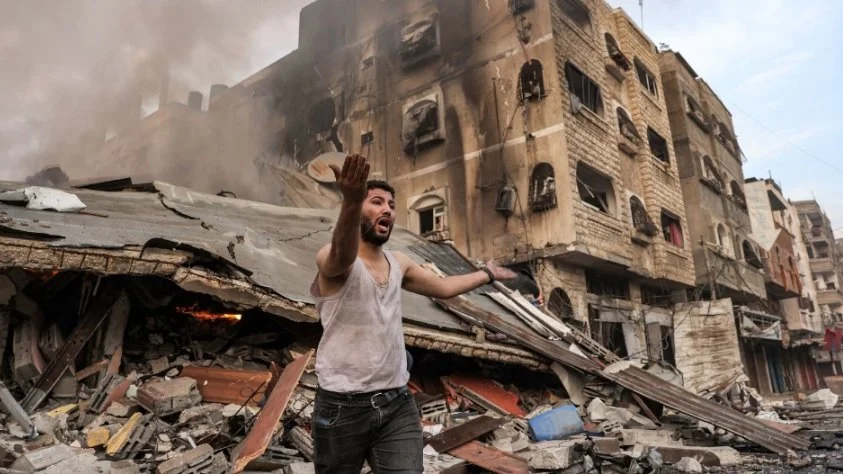
The current state of Gaza is the result of a protracted conflict that has evolved through several distinct phases since late 2023. The escalation of hostilities led to an unprecedented humanitarian crisis, characterized by the displacement of over 80% of Gaza’s population and the near-total destruction of the enclave’s physical infrastructure.
Throughout 2024 and 2025, the international community struggled to balance urgent relief efforts with the political complexities of regional security. The "Sharm El-Sheikh" phase, referenced in the UN roundtable title, represented an initial attempt to coordinate international financial support for recovery. However, progress remained stagnant due to ongoing military operations and the lack of a cohesive administrative mechanism to oversee reconstruction efforts.
By late 2026, as the 81st UN General Assembly convened, the focus shifted from purely humanitarian aid—such as food and medical supplies—to the logistical and administrative requirements of early recovery. The inclusion of the "National Committee for the Administration of Gaza" in the dialogue highlights a growing consensus that reconstruction must be managed by Palestinian entities to ensure legitimacy and local ownership.
Data and Infrastructure Reality
The scale of the destruction in Gaza is unprecedented in modern history. According to recent reports from international monitoring bodies, the cost of reconstruction is estimated to reach tens of billions of dollars. Key sectors affected include:

- Housing: Over 60% of residential units in Gaza have been damaged or destroyed, leaving hundreds of thousands of people in temporary, often hazardous, shelters.
- Healthcare: The collapse of the health sector remains one of the most dire consequences. Most hospitals are either non-functional or operating at a fraction of their capacity due to shortages in electricity, specialized medical equipment, and staff.
- Education: The systemic destruction of academic institutions has created a "lost generation" scenario, with millions of students facing significant interruptions in their education.
- Utility Grids: Water, sanitation, and hygiene (WASH) infrastructure has been severely compromised, leading to a surge in preventable waterborne diseases, which continues to threaten the public health of the remaining population.
Indonesia’s call for "adequate supplies and resources" addresses the reality that without a steady stream of construction materials and specialized technical support, physical reconstruction remains an impossibility.
The Principle of Palestinian-Led Recovery
A cornerstone of Indonesia’s foreign policy regarding Palestine is the insistence that all recovery efforts must be "Palestinian-led and Palestinian-owned." Minister Sugiono emphasized that international aid should not be used as a tool to impose external administrative structures. Instead, it should empower existing Palestinian institutions to regain control over their public services.
This principle is designed to avoid the pitfalls of previous reconstruction efforts, which were often criticized for being overly dependent on external contractors and failing to build sustainable local capacity. By supporting the National Committee for the Administration of Gaza, Indonesia is signaling its support for a governance structure that can effectively manage the massive inflow of resources required for the "Phase II" recovery stage.
Geopolitical Implications and Global Reactions
The diplomatic maneuverings at the 81st UN General Assembly reflect a broader tension within the international community. While there is near-universal agreement on the need for recovery, the "how" remains a point of contention. Major powers are divided on the role of international oversight versus local governance.
Indonesia, as a prominent member of the Organization of Islamic Cooperation (OIC) and a vocal supporter of Palestinian sovereignty, plays a crucial role in bridging these divides. By centering the conversation on "early recovery," Jakarta is attempting to depoliticize the immediate needs of the Gazan population, framing them as a moral and humanitarian imperative that precedes long-term political settlements.
Analysts note that Indonesia’s active role at the UN provides a necessary counterweight to the apathy that often sets in during long-term conflicts. By consistently keeping the Gaza recovery on the agenda, Indonesia ensures that the international community cannot pivot away from the humanitarian crisis even as other global conflicts compete for attention.
Future Outlook and Challenges
The transition to Phase II recovery faces significant hurdles. The most pressing challenge is the ongoing security risk, which complicates the movement of building materials and technical personnel into the territory. Furthermore, the lack of a unified financial mechanism means that funding remains fragmented and inconsistent.
Indonesia’s proposal for a structured approach to early recovery is seen by many observers as a pragmatic pathway forward. However, it requires a high degree of cooperation between regional powers and international donors. The success of this initiative will depend on whether the international community can move beyond verbal commitments and establish a formal, multi-year funding and implementation plan that empowers Palestinian institutions.
In conclusion, Indonesia’s intervention at the UN serves as a reminder that the reconstruction of Gaza is not merely a technical project, but a fundamental human rights issue. By emphasizing that "peace must mean more than the absence of violence," Minister Sugiono has set a clear bar for the international community. The coming months will be a litmus test for global leaders to see if they can translate these high-level discussions into tangible, on-the-ground support that restores the standard of living for the people of Gaza. The path forward is undoubtedly complex, but as Indonesia has articulated, it is a path that must be taken immediately to prevent further long-term erosion of the Palestinian social fabric.