Badminton has long served as the crown jewel of Indonesian sports, consistently acting as the primary pillar for international athletic achievement and national pride. For decades, whenever the Red and White flag has been raised at major multi-sport events—ranging from the Olympic Games to the prestigious Asian Games—the sport of badminton has almost always been at the epicenter of the celebration. The historical dominance of Indonesian athletes on the court is not merely a byproduct of occasional talent, but rather the result of a systematic, generational pipeline of world-class players, coaches, and administrators. Among the pantheon of greats who have shaped this legacy, few names resonate as profoundly as Christian Hadinata. A master tactician, an extraordinarily versatile doubles player, and a revered statesman of the sport, Hadinata carved out a career that remains unmatched in the annals of Indonesian sports history, holding the undisputed record for the most gold medals won by an Indonesian athlete at the Asian Games.
To understand the magnitude of Christian Hadinata’s achievements, one must examine the broader historical context of Indonesia’s participation in the Asian Games. Since the inception of the modern regional games, the contingent from Southeast Asia’s largest archipelago has relied heavily on the shuttlecock to boost its overall medal tally. Historical records indicate that Indonesian badminton players have collectively amassed a staggering total of 99 medals across various colors throughout the history of the Asian Games. This monumental contribution underscores the sport’s unique status in the national consciousness, transforming players into national heroes and setting a benchmark of excellence that athletes from other disciplines continually strive to emulate. Within this rich tapestry of success, Hadinata stands alone at the apex, boasting a career gold medal haul at the Asian Games that has stood the test of time, remaining untouched by subsequent generations of elite players.
The Golden Era of Christian Hadinata: A Chronological Journey
The legendary journey of Christian Hadinata on the continental stage is a story of exceptional versatility, unmatched stamina, and fierce competitive resolve. Unlike many modern specialists who focus exclusively on a single discipline, Hadinata possessed the rare ability to excel at the highest level across multiple departments of the game, regularly contending for podium finishes in men’s doubles, mixed doubles, and team events simultaneously during the grueling schedules of the 1970s.
The genesis of his golden legacy was forged during the 1974 Asian Games held in Tehran, Iran. Amidst the challenging high-altitude conditions and intense international competition, a young and hungry Hadinata made his defining breakthrough. Partnering with Regina Masli in the mixed doubles category, he displayed extraordinary court craft, tactical intelligence, and defensive resilience to capture his first-ever Asian Games gold medal. This victory was not an isolated incident; it marked the beginning of a dominant campaign. Later in the same tournament, Hadinata extended his prowess to the men’s doubles and men’s team events, adding valuable silver medals to his collection and signaling to the badminton world that a new powerhouse had arrived.
Four years later, the continent converged on Bangkok, Thailand, for the 1978 Asian Games. By this time, Hadinata was no longer an emerging prospect but a seasoned veteran and the tactical anchor of the formidable Indonesian squad. Demonstrating remarkable physical conditioning and tactical evolution, Hadinata achieved ultimate glory by securing two gold medals in a single edition. Partnering with the legendary Ade Chandra, he conquered the fiercely competitive men’s doubles division, navigating through a minefield of elite pairs. Furthermore, he played an instrumental role in leading the Indonesian men’s team to the gold medal in the team event, neutralizing fierce challenges from traditional rivals. To cap off an extraordinary campaign in the Thai capital, Hadinata also secured a hard-fought bronze medal in the mixed doubles event alongside his partner, Imelda Wiguna, further cementing his status as one of the most complete and durable players of his era.
Analyzing the Feat: Why Hadinata’s Record Endures
Decades after his retirement from competitive play, Christian Hadinata’s record of five Asian Games gold medals remains unbroken. In the contemporary era of professional sports, where sports science, specialized nutrition, and advanced recovery techniques are deeply integrated, the modern badminton calendar has evolved significantly. Today’s elite athletes operate under strict specialization guidelines, often dedicating their entire training regimens to either singles or a specific doubles discipline to cope with the sheer physical demands of the BWF World Tour circuit.

This modern specialization highlights why Hadinata’s feat is widely considered nearly impossible to replicate in today’s sporting landscape. Competing simultaneously in men’s doubles, mixed doubles, and team events at a major multi-sport quadrennial games required a monumental expenditure of physical and mental energy. Matches in the 1970s were played with traditional scoring systems that could stretch physical limits, and the absence of modern recovery modalities meant that athletes relied purely on innate endurance, grit, and exceptional technical foundations. Hadinata’s ability to maintain peak performance levels across multiple categories over successive editions of the Asian Games illustrates a level of athletic versatility that few players in history have ever matched.
Perspectives from the Badminton Community and Institutional Legacy
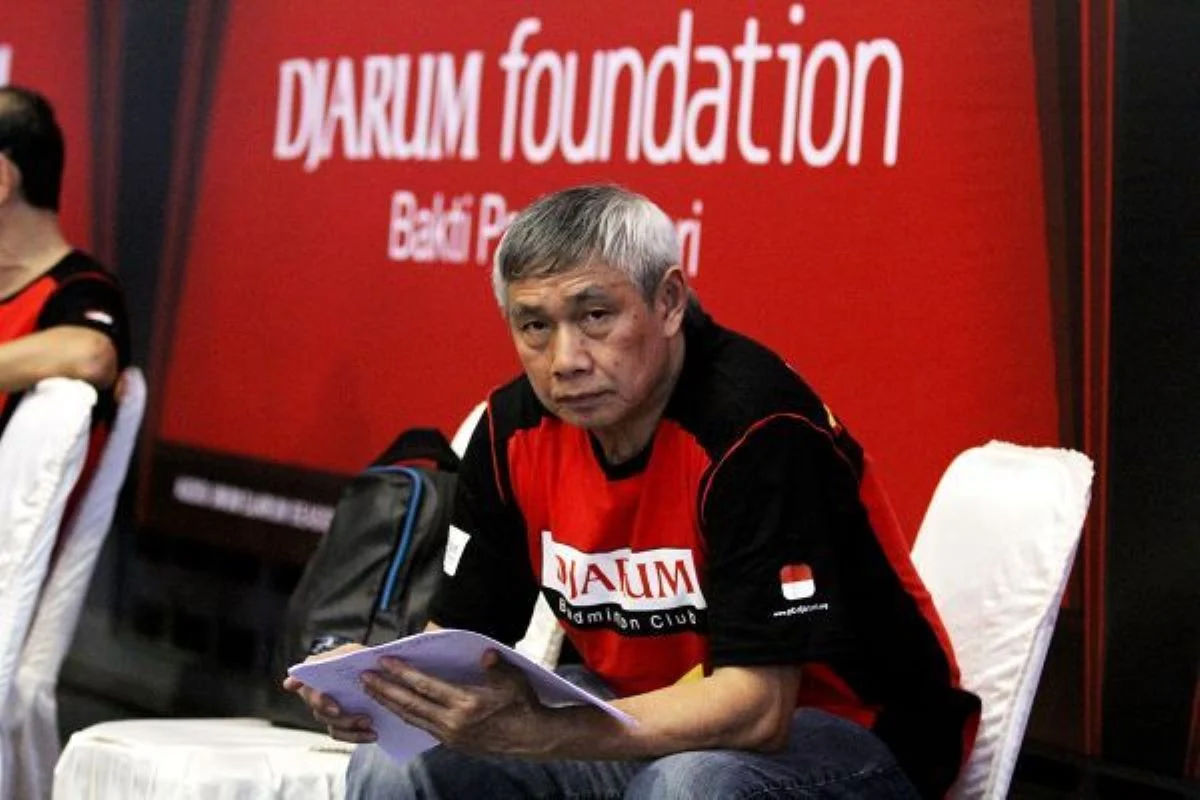
The enduring impact of Christian Hadinata extends far beyond his glittering medal cabinet. Within the inner circles of the Indonesian Badminton Association (PBSI) and legendary clubs such as PB Djarum, Hadinata is revered not only as a champion athlete but as a visionary coach, mentor, and administrator who dedicated his entire life to safeguarding the nation’s badminton sovereignty.
Reflecting on his contributions, contemporary peers and sports historians frequently emphasize his intellectual approach to the game. Unlike players who relied solely on raw power, Hadinata was celebrated for his sublime court vision, defensive masterclasses, and tactical acumen. He understood the nuances of partner dynamics, transforming various pairings into cohesive, winning units. When speaking about the pressures of representing the nation on the international stage, veteran analysts often point to Hadinata’s career as the gold standard of professional composure.
In statements released by sports bodies and veteran associations over the years, leaders have consistently highlighted how Hadinata transitioned seamlessly from player to mentor. After hanging up his racket, he served in various critical capacities within PBSI, including coaching coordinator and high-performance director. Under his guidance, countless Indonesian players developed the winning mentality required to conquer the Olympic Games, World Championships, and Thomas Cup. His ability to diagnose opponents’ weaknesses from the coaching bench mirrored the analytical brilliance he once displayed on the court.
Broader Impact and Implications for Future Generations
The legacy of Christian Hadinata serves as both an inspiration and a sobering reminder for the current and future generations of Indonesian badminton athletes. As global competition intensifies with the rise of powerhouses from China, Japan, South Korea, Denmark, and emerging European nations, the traditional dominance enjoyed by Indonesia is constantly challenged. The pressure to maintain the country’s proud heritage at upcoming international multi-sport events, including the Asian Games and the Olympics, remains immense.
Sports analysts observing the trajectory of Indonesian badminton emphasize that modern athletes can draw vital lessons from Hadinata’s career blueprint. Key takeaways include the importance of tactical discipline, psychological resilience under extreme pressure, and a willingness to put team success ahead of individual accolades. While the modern sports ecosystem demands strict specialization, the underlying virtues that defined Hadinata’s play—unyielding fighting spirit, meticulous preparation, and profound national pride—remain timeless prerequisites for championship success.
Ultimately, the story of Christian Hadinata is much more than a historical recount of medals won in Tehran and Bangkok. It is the narrative of a modest sportsman who defined an era, elevated his teammates, and left an indelible mark on the global history of badminton. As future generations of Indonesian athletes step onto the court bearing the heavy expectations of the Red and White flag, the shadow of the legendary Christian Hadinata will continue to loom large—a golden standard of excellence, resilience, and uncompromised dedication to sport and country.