

The Indonesian rupiah is projected to trade within the vicinity of the Rp18,000 per US dollar threshold through the remainder of 2026, driven primarily by persistent macroeconomic pressures emanating from global currency markets rather than any underlying deterioration in Indonesia’s domestic economic fundamentals. Financial analysts and prominent market institutions have emphasized that the anticipated trajectory of the local currency reflects a broader, systemic strengthening of the US dollar worldwide rather than structural vulnerabilities within Southeast Asia’s largest economy.
Global economic authorities and advisory desks, including insights shared during high-level financial forums in Jakarta, have pointed toward a confluence of aggressive monetary tightening policies implemented by the US Federal Reserve as the principal catalyst behind the shifting currency dynamics. As international investors reallocate capital toward dollar-denominated assets, emerging market currencies, including the rupiah, face prolonged depreciation pressures.
Global Greenback Dominance and the Fed’s Policy Stance
The primary driver behind the projected movement of the rupiah toward the Rp18,000 level is the formidable strength exhibited by the US dollar across global foreign exchange markets. Frederic Neumann, Chief Asia Economist at HSBC, noted that the remaining months of 2026 will likely feature limited volatility for the Indonesian currency, though it is expected to maintain a mild downward drift against the greenback.
Addressing participants during a media briefing at the HSBC Indonesia Summit 2026, Neumann elaborated on the pervasive nature of the US currency’s strength. He highlighted that the Federal Reserve’s ongoing interest rate adjustments have continuously bolstered the attractiveness of US financial instruments, drawing liquidity away from both emerging and developed economies alike.
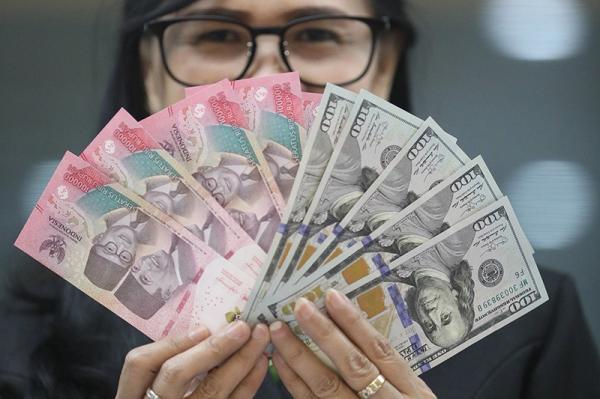
"Terkait rupiah, kita harus mengakui bahwa The Fed sedang menaikkan suku bunga saat ini dan dolar karena itu mendapat banyak dukungan," Neumann stated, pointing to a phenomenon that has similarly impacted major global currencies, including the Japanese yen and the European euro.
According to economic strategists, the index measuring the US dollar’s strength relative to a basket of major foreign currencies has sustained an upward trajectory, leaving limited room for regional currencies to mount significant recoveries in the short term. Consequently, analysts view the rupiah’s movement not as an indicator of domestic economic weakness, but rather as a testament to the overpowering momentum of the US dollar. With only a brief window remaining before the close of the 2026 fiscal year, market consensus suggests that the Indonesian currency will hover within a relatively stable yet pressured band, avoiding drastic shocks while gradually adjusting to the external monetary environment.
Domestic Economic Resilience Amid External Pressures
Despite the formidable headwinds originating from global monetary shifts, domestic economic indicators in Indonesia continue to reflect a resilient foundation. Fiscal authorities and central bank officials have consistently maintained that Indonesia’s macroeconomic fundamentals—characterized by controlled inflation, steady gross domestic product (GDP) growth, and manageable foreign debt levels—remain robust.
Financial observers note a distinct divergence between market sentiment driven by external capital flows and the actual health of the domestic economy. While the nominal exchange rate breaching the Rp18,000 per US dollar mark carries psychological implications for importers and corporate balance sheets, structural safeguards put in place by national financial regulators have historically cushioned the blow of imported inflation.
Bank Indonesia (BI), the country’s central bank, has closely monitored these developments and actively deployed an array of stabilization instruments. These measures include direct interventions in the domestic foreign exchange market, the management of domestic liquidity through secondary market operations, and the implementation of monetary incentives designed to encourage exporters to repatriate and retain foreign exchange earnings within the domestic financial system.

Leadership figures within Bank Indonesia, including senior executives and deputy governors, have routinely addressed the vulnerability of emerging market currencies to shifting global tides. In various official briefings throughout the year, central bank representatives have detailed the mechanisms driving exchange rate volatility, pointing explicitly to external variables such as geopolitical tensions, global supply chain realignments, and shifting expectations regarding the trajectory of US monetary policy.
Chronology of Currency Pressures in 2026
The journey of the rupiah toward the Rp18,000 per US dollar threshold has evolved through distinct phases over the course of the year:
- First Quarter of 2026: The global economic landscape faced renewed uncertainties as persistent inflationary pressures in advanced economies forced central banks to reconsider the pace of monetary easing. The US dollar regained lost ground, immediately putting downward pressure on Asian currencies, including the Indonesian rupiah.
- Second Quarter of 2026: As macroeconomic data from the United States continued to exceed market expectations, the Federal Reserve signaled a prolonged period of elevated interest rates. This "higher-for-longer" narrative triggered significant capital outflows from emerging markets back into US dollar-denominated assets, pushing the rupiah steadily past previous psychological resistance levels.
- Third Quarter of 2026: By mid-year, exchange rate volatility prompted intensified commentary from market analysts and central banking authorities. Discussions at major economic summits, such as the HSBC Indonesia Summit in late September 2026, formally cemented projections that the rupiah would test and potentially hover around the Rp18,000 per US dollar level through the fourth quarter.
- Fourth Quarter Outlook (Concluding 2026): Economists project a period of relatively narrow trading bands. While depreciation pressures are expected to persist, the rate of decline is anticipated to slow significantly, allowing businesses and policymakers to adjust operational strategies to the prevailing exchange rate reality.
Broader Implications for Businesses and the Economy
The stabilization of the rupiah around the Rp18,000 per US dollar mark carries multifaceted implications for various sectors of the Indonesian economy.
For the corporate sector, import-dependent industries face heightened cost structures, particularly those reliant on raw materials, energy commodities, and capital goods invoiced in US dollars. Companies operating within these sectors have increasingly turned to corporate hedging strategies, foreign exchange risk management tools, and supply chain localization to mitigate the impact of currency depreciation on their profit margins.
Conversely, export-oriented industries—such as commodity producers, manufacturing exporters, and agricultural enterprises—stand to benefit from enhanced competitive pricing power in international markets. The stronger dollar translates into higher rupiah-denominated revenues for goods sold abroad, providing a financial cushion that supports domestic employment and operational expansion within these sectors.

From a consumer perspective, the primary concern associated with a weaker rupiah centers on imported inflation, particularly regarding essential commodities such as energy, food staples, and manufactured goods. However, proactive government interventions, including targeted subsidies, price stabilization programs, and domestic market obligations for key commodities, have thus far played a crucial role in insulating the broader populace from severe price shocks.
As Indonesia prepares to close out 2026, financial markets remain watchful of global macroeconomic indicators, particularly incoming data from the United States concerning labor markets and inflation prints. While the headline figure of Rp18,000 per US dollar marks a significant milestone in currency valuation, coordinated domestic policy responses and underlying economic stability ensure that the broader financial system continues to navigate external volatility with resilience and composure.
