The calendar of national commemorations in Indonesia is deeply anchored in the evolution of its national ideology, Pancasila. As October arrives, the nation observes Hari Kesaktian Pancasila on the first day of the month, a date that frequently causes confusion among the general public due to its nominal proximity to Hari Lahir Pancasila, which is commemorated on June 1. While both days are intrinsically linked to the philosophical foundation of the Indonesian state, they occupy distinct temporal spaces and commemorate vastly different historical trajectories. Distinguishing between the birth of the ideology and the historical assertion of its resilience is essential for a comprehensive understanding of Indonesia’s statecraft and collective memory.
The Genesis of the Nation: Hari Lahir Pancasila
Hari Lahir Pancasila, observed annually on June 1, marks the conceptual birth of the state ideology. The significance of this date is rooted in the deliberations of the Investigating Committee for Preparatory Work for Independence (BPUPKI) in 1945. During a landmark session on June 1, 1945, Sukarno, who would later become Indonesia’s first president, delivered an impassioned oration outlining the foundational principles of the future independent state.
In this address, Sukarno introduced the term "Pancasila"—derived from the Sanskrit words "panca" (five) and "sila" (principles). This moment was the culmination of intellectual discourse regarding how a pluralistic, post-colonial archipelago could be unified under a single, cohesive vision. Following this initial proposal, the formulation of the five principles underwent several refinements through the Committee of Nine (Panitia Sembilan). These efforts ultimately yielded the final version of the Pancasila, which was enshrined in the Preamble of the 1945 Constitution, ratified on August 18, 1945.
In 2016, the government formalized the recognition of this historical milestone through Presidential Decree Number 24 of 2016, which designated June 1 as a national holiday. This move was intended to elevate the status of Pancasila as the "soul" of the nation, emphasizing that its origin was not merely a political compromise but a fundamental consensus reached by the founding fathers during the struggle for sovereignty.
The Resilience of the State: Hari Kesaktian Pancasila
Conversely, Hari Kesaktian Pancasila, observed on October 1, serves a different purpose within the national narrative. It is a day of remembrance for the events surrounding the 1965 political upheaval, often referred to as the September 30th Movement (G30S). The movement involved the abduction and subsequent assassination of several high-ranking Indonesian Army generals, a crisis that threatened the stability of the young republic and the standing of its foundational ideology.
The term "Kesaktian," translated as "sanctity" or "invincibility," reflects the state’s historical stance that the Pancasila ideology successfully withstood the threats posed by the 1965 incident. Following the crisis, the New Order government established October 1 as the day to commemorate the "sanctity" of the state ideology. This was formalized through Presidential Decree Number 153 of 1967, a regulation that remains in effect today.
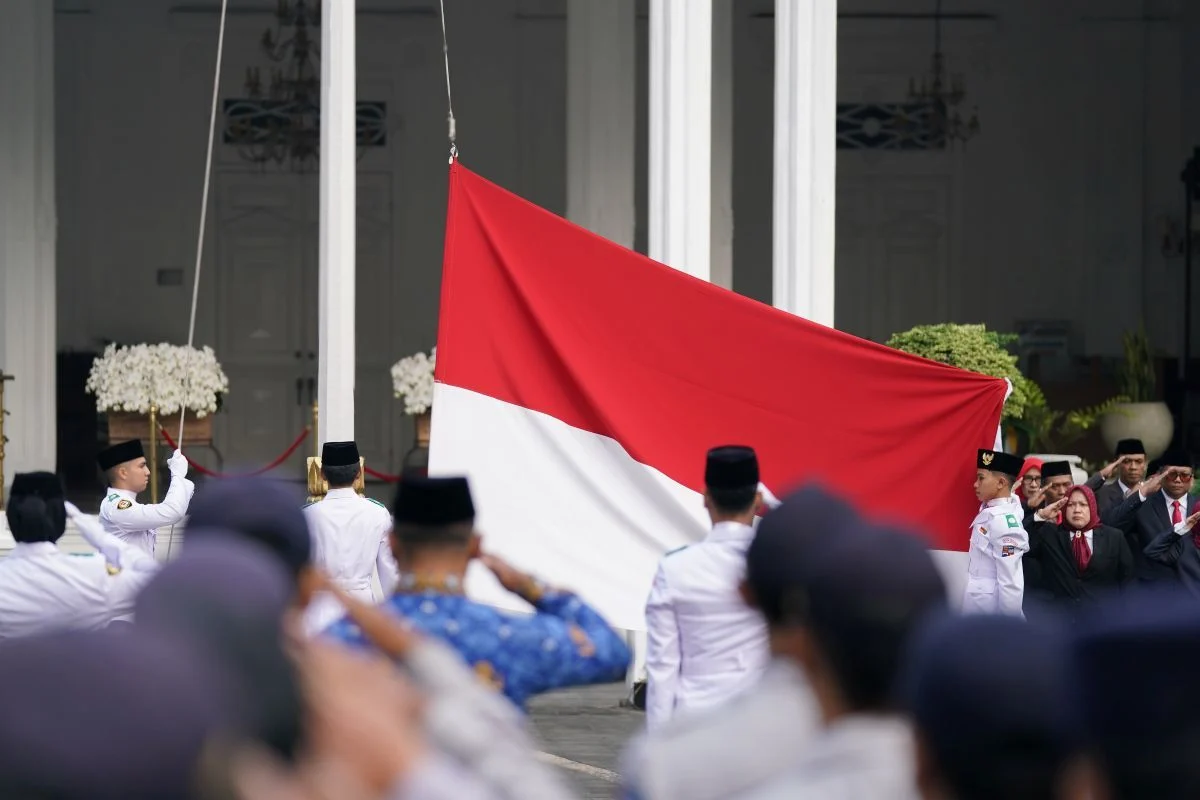
Each year, the nation hosts formal ceremonies to mark this occasion, most notably at the Monumen Pancasila Sakti in Lubang Buaya, East Jakarta. This site, the location where the bodies of the fallen officers were discovered, serves as a visceral reminder of the political violence of that era. The ceremony acts as an annual affirmation that the Pancasila remains the unshakeable foundation of the Indonesian state, serving as a bulwark against extremist ideologies.
Comparative Chronology and Context
To understand the confusion between these two dates, one must look at the specific historical contexts:
- 1945 (The Formative Stage): On June 1, the intellectual foundation was laid. This is a celebration of the vision, the democratic process, and the birth of a unified identity.
- 1965 (The Existential Stage): On September 30 and October 1, the state faced an internal collapse. The commemoration on October 1 is a retrospective assertion that the ideology survived the turmoil.
The distinction is not merely academic. Hari Lahir Pancasila is a celebration of the "how" and "why" of the state’s creation. Hari Kesaktian Pancasila is a commemoration of the state’s resilience during a period of extreme civil and political volatility. The former is forward-looking and aspirational, while the latter is reflective and defensive, focusing on the preservation of the state against internal fracturing.
Sociopolitical Implications and Public Discourse
The persistence of the confusion regarding these dates reflects the complexity of Indonesian historiography. Since the transition to the Reformasi era in 1998, the national discourse has shifted toward a more nuanced examination of the 1965 events. While the state continues to honor the "sanctity" of the Pancasila on October 1, historians and social scientists have increasingly emphasized that the focus should remain on national reconciliation and the continued application of the Pancasila’s values in modern governance.
Official responses from institutions like the Agency for the Implementation of the State Ideology (BPIP) emphasize that the two days are complementary rather than conflicting. The BPIP frequently reiterates that while the historical events differ, the objective remains the same: the cultivation of a society that upholds the principles of belief in God, humanitarianism, national unity, democracy, and social justice.
Analysis: The Role of Pancasila in Modern Indonesia
The ongoing relevance of these commemorations cannot be overstated in the context of current national challenges. In an era of global digital disruption, polarization, and shifting geopolitical alliances, Indonesian policymakers often invoke the Pancasila as the primary mechanism for social cohesion.
Government officials, such as those within the Ministry of Tourism and Creative Economy, have argued that the values embedded in the Pancasila—specifically the spirit of cooperation (gotong royong)—can strengthen the nation’s creative economy and digital ecosystems. Similarly, the Ministry of Home Affairs views the ideology as the bedrock of domestic peace, serving as a mediator for the diverse ethnic and religious identities within the country.
However, critics and academics often point out that the mere commemoration of these dates is insufficient. The effectiveness of the Pancasila as a "living ideology" depends on its tangible application. As the nation moves further from the 1945 and 1965 milestones, the challenge lies in translating these historical commemorations into actionable policies that address contemporary issues, such as income inequality, corruption, and the protection of minority rights.
Conclusion
The differentiation between June 1 and October 1 is not simply a matter of correcting calendar errors; it is about acknowledging the multi-layered history of the Indonesian nation. Hari Lahir Pancasila honors the intellectual and diplomatic labor of the founding generation, while Hari Kesaktian Pancasila serves as a solemn recognition of the state’s capacity to survive profound internal crises. By maintaining a clear distinction between the birth of the idea and the defense of the state, the Indonesian public can engage more deeply with their history, ensuring that the Pancasila remains a dynamic and relevant force for the future of the republic. As the country continues to evolve, these commemorative dates will remain essential pillars of the national identity, reminding citizens that the foundation of their state was both thoughtfully envisioned and hard-won.