
The flickering warmth of open-flame cooking and the primal allure of charcoal embers have once again taken center stage in Malaysia’s capital as GU:UM, the acclaimed modern Korean steakhouse helmed by visionary Chef Louis Han, makes a triumphant return to ATAS. Following a successful yet fleeting pop-up engagement at The RuMa Hotel and Residences in 2025, the culinary powerhouse has secured a much more substantial footprint. This time, GU:UM is anchoring itself in Kuala Lumpur through an exclusive, four-month residency running through November 30, 2026. This high-profile culinary takeover constitutes a cornerstone of ATAS Key Tables, an ambitious, ongoing dining series designed by The RuMa Hotel and Residences to bridge international culinary visionaries with local gastronomes, fostering cross-cultural dialogues through exceptional plates.
A Strategic Evolution in Fine Dining Collaboration
Unlike previous short-term culinary appearances that typically span a mere weekend or a handful of services, this extended residency represents a strategic shift in how international restaurant partnerships are forged in Southeast Asia. For Chef Louis Han, bringing GU:UM to ATAS for a prolonged four-month tenure allows for a deeper integration of his culinary philosophy within the Malaysian dining ecosystem. It moves beyond a mere menu replication, offering the kitchen brigade ample time to fine-tune imported techniques with regionally sourced ingredients, all while maintaining the exacting standards that earned Han global acclaim.
Industry analysts note that extended residencies of this caliber reflect a growing maturity in the Kuala Lumpur fine dining market. Diners are no longer satisfied with fleeting celebrity chef appearances; instead, they demand immersive, sustained encounters with world-class concepts. By anchoring GU:UM within the sophisticated dining room of ATAS, The RuMa Hotel and Residences continues to solidify its reputation as a premier incubator for boundary-pushing gastronomic experiences, aligning local luxury hospitality with internationally recognized culinary talent.

The Pedigree of a Michelin-Accredited Visionary
To understand the culinary gravity of GU:UM, one must examine the stellar professional trajectory of its founder. Chef Louis Han’s kitchen ethos has been forged in some of the most rigorous and prestigious culinary crucibles in Asia. His foundational discipline was sharpened during his time with the opening team of Meta in Singapore, a venue celebrated for its progressive Asian-European sensibilities. He subsequently honed his craft as a Sous Chef at MOSU in Seoul, an establishment renowned for its avant-garde interpretation of traditional Korean ingredients governed by minimalist luxury.
Han’s meteoric rise reached a pivotal milestone when he established NAE, a restaurant that captured a coveted Michelin star within its very first year of operation. The international culinary community further validated his innovative approach in 2022, when he made history by becoming the first Korean chef to receive the prestigious Michelin Guide Young Chef Award. This accumulated expertise directly informs GU:UM—a concept originally launched in Singapore in 2024—where the inherent rustic charm of Korean barbecue is elevated through refined French and modern global culinary techniques.
Etymology and Philosophy: The Art of the Flame
The nomenclature of the restaurant itself provides a window into its core philosophy. Derived from the Korean verb meaning to grill, roast, or cook over an open fire, GU:UM centers its entire gastronomic identity on pyrotechnic mastery. However, Chef Han’s interpretation diverges significantly from the boisterous, smoke-filled environments of traditional commercial barbecue joints. Instead, GU:UM marries the high-octane energy of a Western steakhouse with the nuanced, deeply comforting flavor profiles native to Korean households.
This synthesis of precision and comfort is immediately evident upon entering the dining room. The aroma of binchotan charcoal and wood smoke permeates the air, signaling an intense dedication to primary heat sources. Yet, rather than masking the intrinsic qualities of the proteins and vegetables, the fire acts as an amplifier, drawing out deep umami notes, caramelizing natural sugars, and imparting a sophisticated smokiness that anchors every course.

A Journey from Embers to Hearthside Comforts
The multi-course menu curated for the ATAS residency is a masterclass in pacing, structure, and emotional resonance. It is methodically divided into phases that guide the diner from delicate, refreshing preludes to unadulterated comfort food, before culminating in innovative, sweet finales.
The dining experience frequently commences with contemporary interpretations of traditional heritage dishes, such as the Yukhwae Jeon—a delicate fusion of seasoned raw beef tartare elements with pan-fried textures—and Mulhwae, a refreshing, ice-cold seafood broth designed to awaken the palate. One of the menu’s most talked-about anomalies is the Korean Fried Cauliflower (KFC), a brilliant vegetarian subversion of ubiquitous fried chicken tropes that utilizes spiced batters and glazes to achieve a deeply satisfying crunch and complex flavor profile.
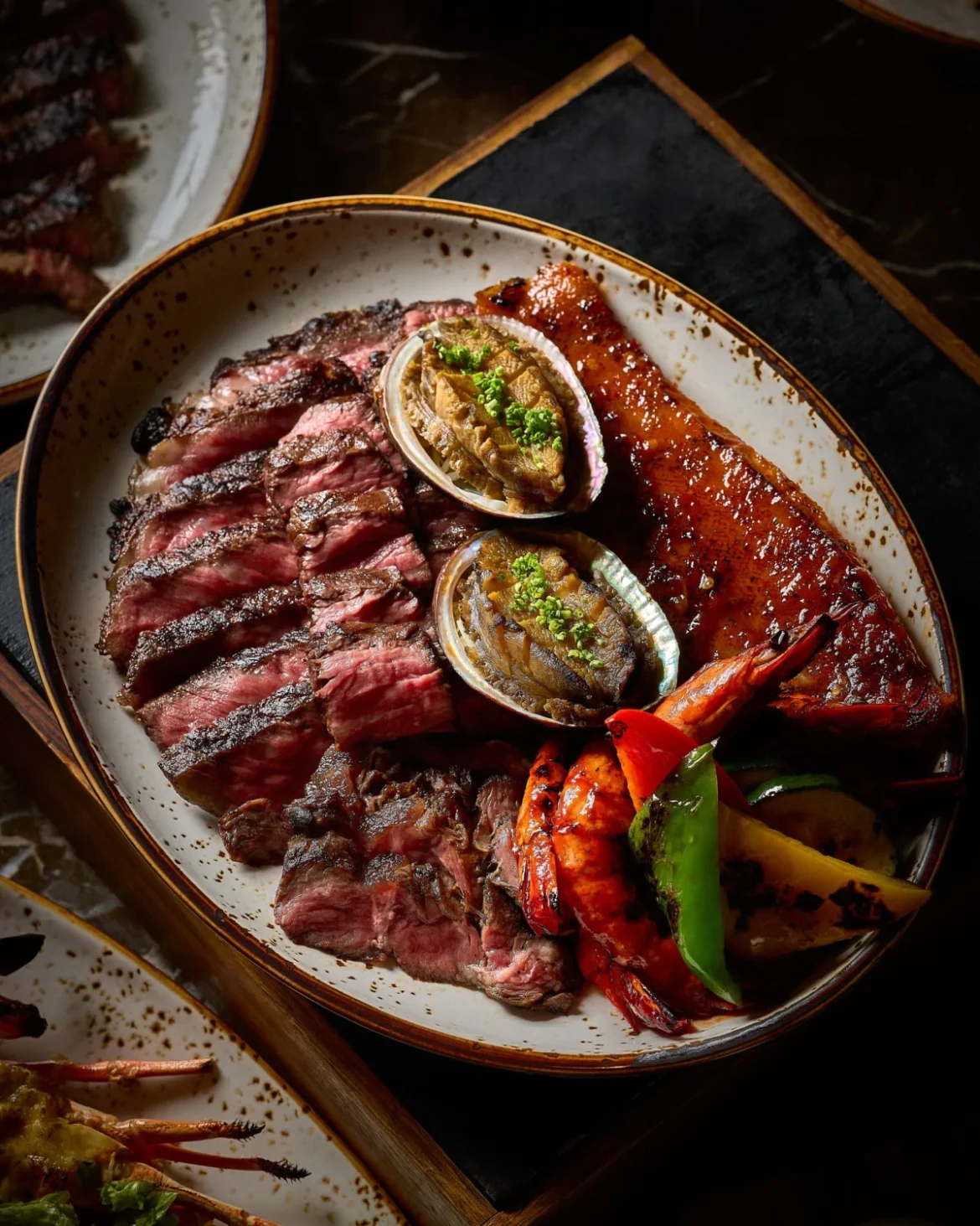
As the meal transitions into its substantial core, the focus shifts unequivocally to the charcoal grills. Meat enthusiasts are treated to the Hanwoo Lower Loin, showcasing the prized, finely marbled textures of premium Korean beef, alongside the monumental Woodae Galbi Short Rib, a beef cut known for its rich, succulent mouthfeel amplified by smoke and a deft touch of seasoning. For those seeking a bridge between land and sea, the Surf & Turf Platter offers a harmonious juxtaposition of premium grilled meats and ocean-fresh catches, showcasing the kitchen’s versatility across diverse protein classes.
Remarkably, the climax of the meal pulls back from heavy luxury to embrace the profound nostalgia of home-cooked comfort. Uncle Lulu’s Fried Rice serves up a comforting, wok-tossed staple that speaks of late-night camaraderie, while GUUM’s Cold Japchae reinvents the classic celebratory glass noodle dish into a refreshing, textural marvel well-suited for tropical climates. The savory portion concludes with a soul-warming Doenjang Jjigae, a robust stew anchored by the deep, earthy complexity of fermented soybean paste.

The sweet conclusion maintains the same high standard of cross-cultural homage. Diners can indulge in Hotteok, the beloved chewy Korean street-food pancake reimagined with refined pastry techniques, experience the bright, citrusy rejuvenation of Mandarin Bingsu, or explore the earthy sweetness inherent in the Koguma Mousse, a dessert built around the humble yet beloved sweet potato.
The Broader Implications of ATAS Key Tables
The continuation of the ATAS Key Tables series through heavy-hitting residencies like GU:UM highlights a strategic evolution within Kuala Lumpur’s high-end dining landscape. Launched in June 2026, the initiative was conceptualized not as a revolving door of transient chefs, but as a permanent platform for intellectual and culinary exchange. By integrating chefs of Han’s stature into the fabric of the hotel’s primary dining room, The RuMa Hotel and Residences encourages local culinary professionals to collaborate, share techniques, and push past conventional comfort zones.
For the Malaysian dining public, this four-month residency represents an invaluable educational and sensory opportunity. It dismantles the geographical barriers separating local gourmands from Singapore’s hyper-competitive dining scene, bringing a Michelin-pedigreed concept directly to their doorstep. Furthermore, it underscores Kuala Lumpur’s growing clout as a sophisticated gastronomic hub capable of sustaining complex, multi-month international collaborations without diluting local market enthusiasm.
As the residency progresses toward its November closing date, industry observers expect demand to surge, particularly as word-of-mouth regarding the exclusive menu items—such as the Hanwoo preparations and the inventive desserts—reaches a fever pitch. Chef Louis Han’s return to ATAS is ultimately more than a temporary culinary takeover; it is a testament to the universal language of fire, the enduring power of comfort food, and the limitless potential of modern cross-border gastronomy.
