
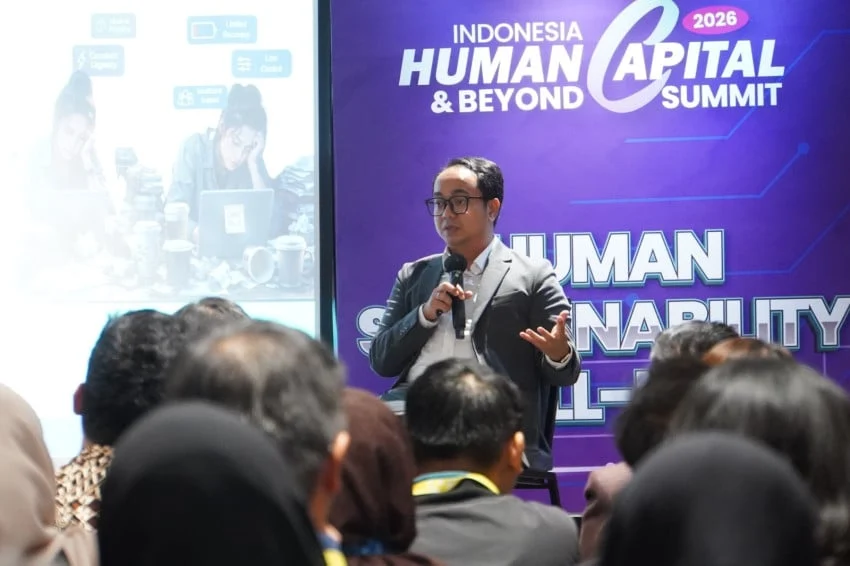
JAKARTA — The professional landscape of 2026 has undergone a profound transformation, shifting the focus of human resource management from mere productivity metrics to the holistic concept of Career Well-being (CWB). At the Indonesia Human Capital & Beyond Summit (IHCBS) 2026, held in Jakarta on September 15–16, industry experts and organizational leaders converged to address the mounting crisis of workplace burnout and the urgent need for a systematic overhaul of corporate wellness strategies.
Ivan Ahda, Director of Strategic & Advisory at KTM Solutions, emerged as a leading voice during the summit, advocating for a paradigm shift that moves the burden of mental health away from the individual and places it squarely within the framework of organizational design. As global workforce demographics shift and the demands of a hybrid, tech-integrated economy intensify, the discourse at IHCBS 2026 highlighted that failing to address career well-being is no longer just a human resources issue—it is a significant business risk.
The Shift from Personal Resilience to Organizational Responsibility
For decades, corporate wellness programs were largely centered on individual accountability. Employees were encouraged to practice mindfulness, manage their time better, and build personal resilience to cope with increasing workloads. However, the data presented at the summit suggests that this approach has reached a point of diminishing returns.
"We have spent too much time treating burnout as a personal failing, asking employees to be more resilient or better at balancing their lives," Ivan Ahda noted during his keynote address. "When burnout becomes a recurring cycle within a team, it is no longer a problem of individual stamina. It is a systemic issue involving the environment, the culture, and the very structure of daily workflows. Wellbeing must evolve from a personal initiative into a core pillar of organizational strategy."
The implications of this shift are vast. By framing burnout as an "organizational fatigue" issue rather than a lack of individual willpower, companies are beginning to map the causal links between management styles, unreasonable deadlines, and talent attrition. This transition represents a maturation of HR practices, where the success of a business is now explicitly tied to the sustainability of its human capital.
IHCBS 2026: A Hub for Future-Proofing Human Capital
The Indonesia Human Capital & Beyond Summit 2026 serves as the primary forum for HR professionals, CEOs, and government policy advisors to discuss the future of work in Southeast Asia’s largest economy. The event, which spanned two days, featured a series of high-level discussions, interactive workshops, and technological showcases designed to prepare organizations for the challenges of the late 2020s.
A key highlight of the summit was the focus on the "The Burnout Audit," a methodology presented by KTM Solutions. This approach encourages organizations to implement diagnostic tools to identify the "early warning signs" of organizational fatigue long before they manifest as mass resignations or sudden declines in performance. The audit evaluates key metrics, including communication friction, decision-making bottlenecks, and the clarity of organizational purpose, all of which contribute to the underlying stress levels of the workforce.
The Five Dimensions of Career Well-being
To provide a framework for these discussions, KTM Solutions introduced an interactive Career Well-being Assessment at the summit. This assessment categorizes well-being into five distinct but interconnected dimensions:
- Social Well-being: Evaluating the quality of interpersonal relationships within the team, the existence of a support network, and the feeling of belonging within the organizational culture.
- Psychological Well-being: Measuring the cognitive and emotional health of employees, focusing on autonomy, competence, and the ability to handle professional challenges without chronic stress.
- Environmental Well-being: Assessing the physical and digital workspace, including the tools provided, the ergonomic conditions, and the efficiency of the workflow systems.
- Physical Well-being: Addressing the basic health needs of the workforce, including sleep, energy levels, and the physical capacity to maintain sustained performance over time.
- Financial Well-being: A critical component in the current economic climate, focusing on fair compensation, financial literacy, and the feeling of security regarding one’s professional future.
By breaking down well-being into these specific categories, organizations are better equipped to implement targeted interventions rather than relying on broad, generic wellness initiatives that often fail to address the root causes of employee dissatisfaction.
Data-Driven Insights and Global Context
The urgency of the discussions at IHCBS 2026 is supported by broader global trends. According to reports from the World Health Organization (WHO) and various human capital analytics firms, the cost of burnout in terms of lost productivity, healthcare expenses, and recruitment replacement is estimated to reach into the trillions of dollars annually on a global scale.
In the Indonesian context, where the workforce is increasingly young and tech-savvy, the expectations for workplace flexibility and mental health support have skyrocketed. Data presented at the summit indicated that companies with high scores in the five dimensions of CWB showed a 25% higher retention rate compared to their peers who maintained traditional, high-pressure management structures. Furthermore, these organizations reported a 15% increase in innovation, suggesting that a well-supported workforce is not only more stable but also more capable of high-level creative output.
The Impact of Organizational Fatigue
The session titled "The Burnout Audit: Detecting Organizational Fatigue Before Turnover Occurs" provided a sobering look at how companies often ignore the precursors of a "talent exodus." Ivan Ahda explained that burnout is rarely an overnight event; it is a gradual erosion of commitment.
"The audit is about identifying the ‘silent’ indicators," Ahda explained. "When an organization notices a decline in voluntary participation in optional meetings, a shift in communication tone from collaborative to transactional, or an increase in minor errors, these are the early signals of fatigue. If leadership waits for an employee to hand in a resignation letter, it is already too late to address the systemic cause."
The implications for leadership are clear: modern management requires a shift from reactive to proactive monitoring. This involves the use of data analytics to track pulse surveys, engagement scores, and project load metrics, ensuring that the organization remains "healthy" in a structural sense.
Towards a Sustainable Future of Work
The consensus emerging from the IHCBS 2026 is that the future of competitive advantage lies in the "Humanity of the Organization." As artificial intelligence and automation take over routine tasks, the value of human workers lies in their creativity, emotional intelligence, and strategic thinking—all of which are severely compromised by chronic stress.
For corporations operating in Indonesia and beyond, the path forward involves integrating Career Well-being into the company’s annual report, treating it with the same level of importance as financial audits or market expansion plans. By adopting a "well-being by design" approach, leaders can build organizations that are not only resistant to the inevitable shocks of the modern economy but are also capable of attracting and retaining the best talent in an increasingly competitive market.
The IHCBS 2026 has set a clear precedent: the organizations of the future will be defined by their ability to harmonize high-performance demands with a sustainable human experience. As the summit concluded, the message to the business community was unambiguous—the era of ignoring the human cost of growth is over, and the era of strategic Career Well-being has officially begun.
Conclusion and Future Outlook
As industries continue to navigate the complexities of 2026, the insights shared by KTM Solutions and the broader expert community at IHCBS 2026 provide a roadmap for survival and growth. The focus on proactive burnout detection, combined with a comprehensive understanding of the five dimensions of well-being, offers a blueprint for organizational longevity.
Looking ahead, the challenge for HR leaders will be the implementation of these concepts across diverse corporate cultures. While the theory is robust, the practical application—shifting entrenched management behaviors and re-engineering workflows—will require sustained commitment from the highest levels of executive leadership. Nevertheless, the momentum gained at the summit suggests that the industry is ready for this change, recognizing that in the modern world, the most valuable asset a company possesses is a workforce that is not only productive but also fundamentally healthy and supported.
By prioritizing the individual’s role within the organization through the lens of career well-being, companies are ensuring that they are not just surviving the challenges of the 2026 landscape, but are actively setting the standard for the next decade of professional excellence.
