
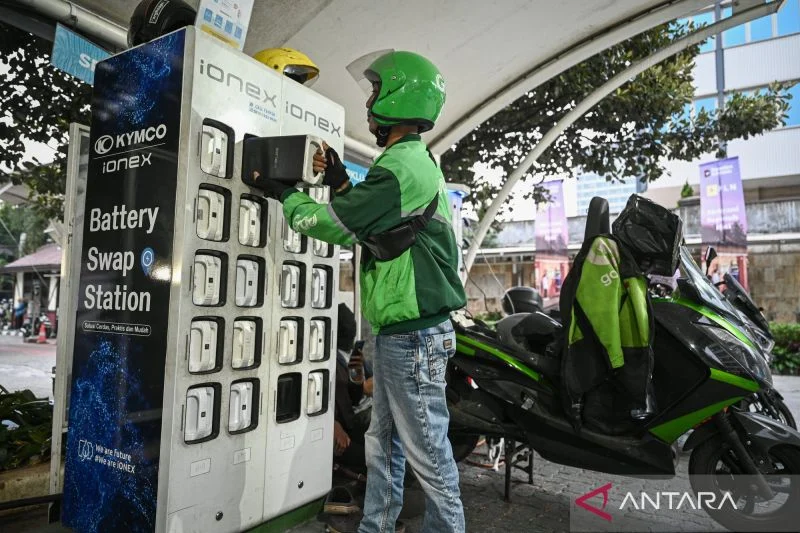
The landscape of personal mobility in Indonesia is undergoing a structural transformation, propelled by the accelerated adoption of electric motorcycles across major urban centers. As the government intensifies its push toward sustainable transportation, green energy transition, and the reduction of fossil fuel dependency, automotive manufacturers are continuously innovating to lower the barriers to entry for prospective buyers. Among the most significant industry trends reshaping the market is the introduction of the battery subscription or leasing scheme. This alternative ownership model allows consumers to purchase an electric motorcycle at a significantly reduced upfront cost, as the battery—traditionally the most expensive single component of an electric vehicle—is excluded from the initial purchase price and instead acquired through a recurring monthly service fee.
By decoupling the cost of the battery from the vehicle chassis, manufacturers have successfully redefined the economic proposition of electric mobility. As of September 2026, prevailing market data indicates that monthly battery subscription tariffs in Indonesia range dynamically from Rp84,000 to Rp250,000, depending heavily on the brand, vehicle model, energy capacity, configuration, and specific service agreements. This comprehensive analysis examines the operational mechanics, brand-specific pricing structures, economic implications, and strategic advantages of the battery-as-a-service (BaaS) model currently dominating Indonesia’s electric vehicle sector.
The Economic Rationale Behind Battery Subscription Models
To fully understand the emergence of battery leasing, one must examine the fundamental cost drivers of electric vehicle manufacturing. Batteries powered by lithium-ion technology historically account for between 30 to 40 percent of an electric motorcycle’s total production cost. Consequently, retail prices for electric two-wheelers often faced fierce resistance from price-sensitive consumers accustomed to conventional internal combustion engine (ICE) motorcycles.
To mitigate this financial friction, automotive brands introduced the subscription model. Consumers buy the motorcycle frame and electric motor outright or finance them at a lower principal value, while entering into a contractual agreement to rent the battery. This framework shifts the burden of long-term battery degradation away from the consumer. In many subscription models, manufacturers assume responsibility for battery health, guaranteeing replacements if performance degrades below a specified operational threshold, such as 85 percent of original capacity under normal usage conditions.
This service-oriented approach not only lowers upfront capital requirements but also instills consumer confidence regarding the longevity and residual value of electric motorcycles—addressing two of the primary psychological barriers hindering widespread EV adoption in developing markets.
Brand-by-Brand Breakdown of Battery Leasing Tariffs
Market competition has driven several prominent automotive brands operating in Indonesia to establish distinct subscription tiers. A detailed review of current offerings highlights the diversity of pricing structures available to Indonesian riders.
1. VinFast: Market-Leading Affordability
Vietnamese electric vehicle pioneer VinFast has established a strong foothold in the Indonesian market by implementing highly competitive pricing strategies. The company offers a specialized battery subscription framework tailored for three of its popular urban electric motorcycle models: the Evo, the Feliz II, and the Viper.
Under VinFast’s operational structure, consumers who opt for the battery-leasing scheme can secure a single-battery configuration for a monthly subscription fee starting at Rp84,000. For models requiring higher energy output necessitating two batteries, the monthly tariff is adjusted to Rp144,000. All three models utilize a dual-battery compartment cleverly integrated beneath the seat, engineered to support seamless battery-swapping infrastructure. By establishing a baseline entry fee of Rp84,000 per month, VinFast currently maintains one of the most economically accessible battery subscription tiers in the Indonesian market, successfully attracting budget-conscious commuters and commercial fleet operators alike.
2. Polytron: Performance and Degradation Protection
Indonesian consumer electronics and automotive giant Polytron has similarly embraced the battery leasing model to accelerate the distribution of its Fox series. The brand structures its leasing fees according to the performance class and battery capacity of each specific vehicle model.
For the Polytron Fox 200, the monthly battery rental fee is set at Rp125,000. Meanwhile, higher-tier models such as the Fox 500 and the Fox R carry a standardized subscription fee of Rp200,000 per month. Polytron executives have frequently emphasized that this program is strategically designed to alleviate initial purchasing pressures, thereby democratizing access to high-performance electric mobility. Furthermore, Polytron provides a vital consumer protection clause within its leasing contract: the company guarantees a direct battery replacement free of additional penalty charges if the unit’s energy storage capacity drops below 85 percent due to normal wear and tear in accordance with program guidelines.
3. ALVA: Comprehensive Service Packages via Program BEBAS
PT Alva Motor Indonesia, a prominent domestic player in the premium electric vehicle segment, approaches the market through its proprietary program designated as BEBAS (Berlangganan Baterai Sewa, or Leased Battery Subscription). This program covers its flagship lifestyle and commuter models, specifically the ALVA N3 and the ALVA CERVO.
The subscription pricing for the ALVA N3 varies depending on whether the vehicle operates on a single or dual-battery setup. For a single-battery configuration on the N3, consumers pay a monthly fee of Rp150,000. When configured with dual batteries, the monthly subscription rises to Rp250,000. Similarly, the high-performance ALVA CERVO, which utilizes a dual-battery architecture, incurs a monthly rental tariff of Rp250,000. ALVA highlights that these quoted subscription figures are all-inclusive, factoring in applicable government taxes according to the company’s transparent service terms, ensuring that users are not confronted with hidden administrative surcharges.
Comparative Overview of Monthly Lease Tariffs
To provide a clearer perspective for prospective buyers navigating the market, the structural breakdown of monthly battery subscriptions across the leading brands can be summarized as follows:
- VinFast (Evo, Feliz II, Viper): Rp84,000 (1 battery) to Rp144,000 (2 batteries) per month.
- Polytron (Fox 200): Rp125,000 per month.
- Polytron (Fox R, Fox 500): Rp200,000 per month.
- ALVA (N3 – Single Battery): Rp150,000 per month.
- ALVA (N3 & CERVO – Dual Battery): Rp250,000 per month.
Industry analysts note that these recurring costs represent exclusively the usage and maintenance rights of the energy storage unit. Consumers must continue to budget for separate operational expenditures, including home or public electricity charging costs, routine mechanical maintenance, mandatory vehicle registration taxes, and insurance policies as stipulated by regulatory authorities and individual brand guidelines.
Broader Policy Context and Government Support
The expansion of battery leasing schemes aligns seamlessly with broader national strategic objectives. The Indonesian government, through the Ministry of Industry and various legislative bodies, continues to prioritize initiatives aimed at scaling up domestic electric vehicle adoption and establishing a robust national battery manufacturing ecosystem.
Recent legislative discussions and policy formulations reflect a concerted effort to accelerate operational milestones for domestic battery cell production plants. By reducing reliance on imported energy and fostering a vertically integrated supply chain—from raw nickel processing to finished battery modules—Indonesia aims to cement its status as a regional hub for electric vehicle manufacturing.
Furthermore, government programs promoting motor vehicle electrification and conversion initiatives are continuously evaluated to ensure tangible growth. Official reports from industrial regulatory bodies indicate that the expanding population of electric motorcycles—surpassing hundreds of thousands of units nationwide—serves as a critical foundation for achieving long-term carbon emission reduction targets and fostering a sustainable green economy. Parallel commercial innovations, such as short-term rental frameworks deployed for urban transportation drivers, further demonstrate the rapid diversification of business models within the domestic EV space.
Implications for Consumers and the Market
The proliferation of battery subscription programs carries profound implications for both individual consumers and the broader automotive industry. For the everyday rider, the primary advantage lies in financial flexibility. By removing the capital-intensive barrier of purchasing a battery outright, consumers face a vastly diminished initial outlay, making the transition from conventional gasoline motorcycles to electric alternatives far more viable.
Additionally, the risk mitigation factor cannot be overstated. Because lithium-ion batteries naturally experience chemical degradation over prolonged cycles of charging and discharging, traditional ownership often leaves consumers vulnerable to exorbitant out-of-pocket replacement costs after several years of operation. Under leasing frameworks featuring guaranteed capacity retention clauses—such as those implemented by Polytron and supported by competing brands—the responsibility of battery lifecycle management shifts to the manufacturer. If a battery fails to hold an acceptable charge, the lessee is safeguarded by the service agreement.
However, consumers must exercise diligence when evaluating these programs. Long-term financial commitments, contractual mileage caps, penalty clauses for improper maintenance, and the total cumulative cost over the lifespan of the vehicle must be weighed against the upfront savings. Prospective buyers are strongly advised to analyze their daily commuting distances, assess local charging or swapping infrastructure accessibility, and perform a comprehensive cost-benefit calculation before committing to a specific ownership scheme.
In conclusion, the evolution of battery leasing in Indonesia—with current monthly rates spanning from Rp84,000 to Rp250,000—marks a maturing phase in the nation’s electric vehicle trajectory. By bridging the gap between affordability and advanced technology, these subscription frameworks are poised to accelerate mainstream acceptance, driving Indonesia closer to its ambitious clean transportation and sustainable energy goals in the years ahead.
