The landscape of the 2026 FIM MotoGP World Championship has been thrown into a state of intense uncertainty following a divergence in strategic decisions made by two of Japan’s most storied manufacturers. While Yamaha Motor Racing has officially announced its withdrawal from the upcoming Grand Prix in the Middle East, its fierce compatriot and rival, Honda Racing Corporation (HRC), has staunchly reaffirmed its commitment to participating in the event. This stark contrast in operational approach highlights the complex balancing act teams face as they navigate geopolitical instability, corporate risk management protocols, and regulatory pressures from series organizers.
The focal point of this unfolding controversy is the twentieth round of the grueling 2026 MotoGP season, scheduled to take place at the Lusail International Circuit in Qatar. Originally slated for November 6 through November 8, 2026, the event has already endured a tumultuous scheduling history that underscores the logistical nightmares confronting modern motorsport promoters.
A Chronology of Resheduling and Regional Instability
To understand the gravity of Yamaha’s withdrawal and Honda’s resolute stance, one must examine the timeline that brought the MotoGP paddock to this precarious juncture. The Qatari Grand Prix was initially positioned as the fourth round of the 2026 world championship calendar, traditionally serving as the dazzling nocturnal season-opener or early-season fixture held under the high-tech floodlights of the Losail desert facility.
However, escalating geopolitical tensions and security concerns across West Asia earlier in the year forced the hand of the sport’s commercial rights holder, Dorna Sports, operating under the umbrella of MotoGP Sports Entertainment Group (MSEG). In a bid to safeguard riders, team personnel, and equipment, organizers made the executive decision to postpone the Qatar Grand Prix, shifting it deep into the autumn of 2026 with the optimistic expectation that regional stability would be restored by November.
As the months progressed, however, the geopolitical climate in West Asia evolved into a protracted phase of unpredictability. Rather than subsiding, the security concerns persisted, casting a long shadow over the feasibility of hosting a major international sporting event in the region. Within the MotoGP paddock, these tensions fostered a deeply divided consensus among the competing manufacturers, independent teams, and logistical stakeholders. Discussions regarding whether to proceed with the Qatari fixture or cancel the overseas haul entirely became a contentious subject behind closed doors.
Yamaha’s Withdrawal and Corporate Risk Management
Amid the swirling rumors and the inability of Dorna Sports to project a definitive, unified stance on the Grand Prix’s execution, Yamaha Motor Racing took decisive action. The Iwata-based factory squad announced its formal withdrawal from the MotoGP Qatar 2026 weekend, citing corporate directives regarding travel safety and risk mitigation.
Yamaha’s decision was not made in a vacuum; it was implemented in strict alignment with the broader travel restrictions and safety policies enacted by its parent corporation. Multinational conglomerates often enforce stringent travel advisories that supersede sporting ambitions when regional stability cannot be guaranteed. By pulling out of the Lusail round, Yamaha prioritized the absolute security of its engineers, mechanics, hospitality staff, and riders, effectively removing itself from the logistical equation in West Asia.
This unilateral move, however, did not sit well with the commercial promoters. The MotoGP Sports Entertainment Group (MSEG) reportedly reacted with displeasure to Yamaha’s premature pullout, viewing it as a disruption to the championship’s contractual obligations. In the wake of Yamaha’s announcement, MSEG floated potential regulatory and financial sanctions against the Japanese manufacturer for breaching participation commitments outlined in team-association agreements. The looming threat of penalties highlights the contractual tightrope teams walk when external crises force them to make decisions that deviate from the official championship calendar.
Honda’s Unwavering Commitment to the Paddock
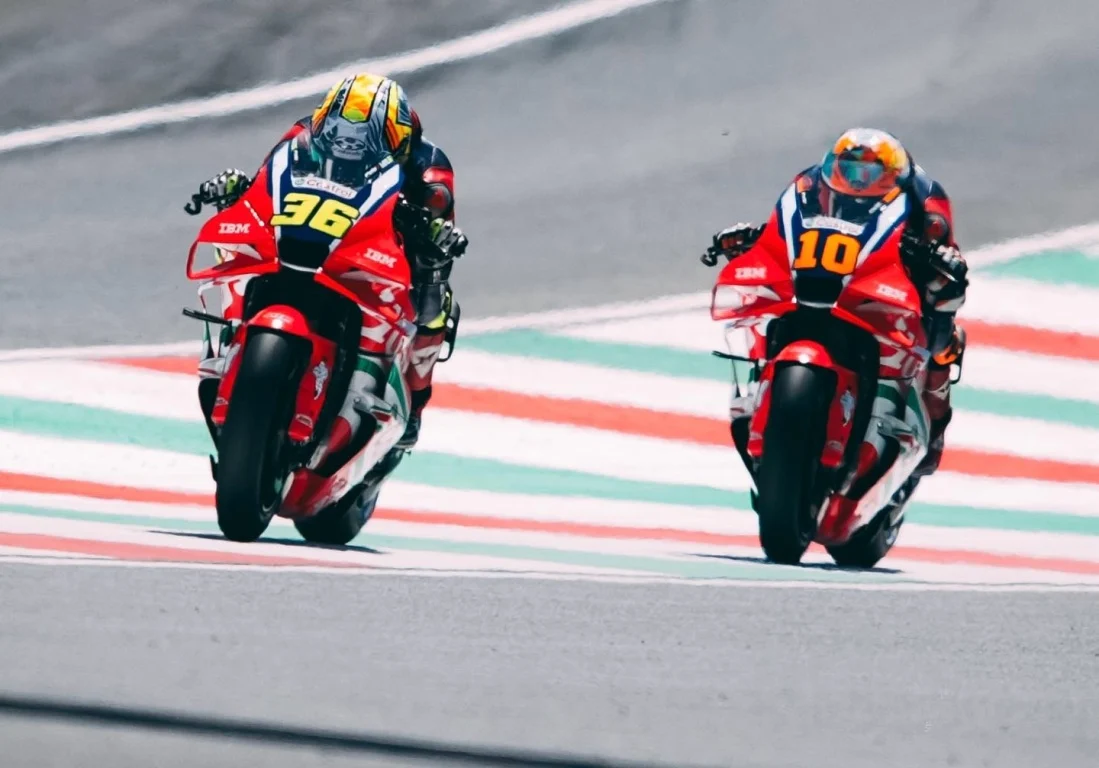
In stark contrast to Yamaha’s risk-averse stance, Honda Racing Corporation (HRC) has chosen a path of active participation. Representatives for Honda formally confirmed that the marquee manufacturer remains fully committed to fielding its RC213V machines at the Lusail International Circuit for the Qatar Grand Prix.

HRC’s decision reflects a different internal assessment of the logistical parameters and security measures in place at the circuit. While acknowledging the delicate nature of the geopolitical situation, Honda’s management emphasized the importance of honoring the championship calendar, supporting the commercial promoter, and fulfilling obligations to global fans and sponsors. For Honda, maintaining a continuous presence across all scheduled rounds is vital for data collection, brand visibility, and championship integrity, particularly as the manufacturer works tirelessly to return to the front of the premier class grid.
The divergence between Yamaha and Honda has created a fascinating dynamic within the paddock. Two brands historically bound by similar corporate philosophies and fierce on-track rivalries now find themselves taking diametrically opposed positions on a matter of international security and sporting governance.
Regulatory Implications and the Response from Dorna Sports
The contrasting actions of Yamaha and Honda have placed MotoGP Sports Entertainment Group under immense pressure. Dorna Sports, alongside the Fédération Internationale de Motocyclismo (FIM), faces the arduous task of managing a fractured grid as the race weekend approaches.
The division among teams has exposed vulnerabilities in the championship’s crisis management framework. When global events threaten the viability of a Grand Prix, the lack of a unified protocol can lead to fragmented responses—such as one factory pulling out while another presses forward. This creates a public relations challenge for the sport and complicates the television and promotional packages promised to host circuits and broadcasting partners.
Furthermore, the legal and regulatory fallout from Yamaha’s withdrawal will likely set a precedent for how future force majeure situations are handled. If MSEG proceeds with disciplinary actions or financial penalties against Yamaha, it could strain relations between the manufacturers’ association (MSMA) and the series promoter. Conversely, letting the withdrawal pass without consequence might encourage other teams to opt out of challenging flyaway rounds in the future, undermining the global footprint that Dorna Sports has worked decades to establish.
Technical, Sporting, and Logistical Repercussions
From a pure sporting perspective, the absence of the Monster Energy Yamaha MotoGP team from the Qatar grid will significantly alter the competitive landscape of the weekend. Fans will be deprived of seeing the factory YZR-M1 machines battle under the desert lights, and the championship standings will inevitably be impacted if Yamaha riders miss out on crucial points-scoring opportunities. Independent satellite teams utilizing Yamaha machinery are also forced to weigh their operational autonomy against factory-led directives.
For Honda, the decision to race means that its test and development programs will continue uninterrupted on a unique circuit layout that demands high-speed stability and exceptional rear-grip management. The data gathered during the Lusail weekend will be invaluable for Honda’s engineers as they finalize bike specifications for the subsequent season. However, the logistical burden of transporting personnel and freight into a volatile region remains a calculated risk that HRC’s logistics team must manage meticulously.
Broader Impact on the 2026 MotoGP World Championship
As the motorsport world looks ahead to the weekend of November 6–8, 2026, the situation in Qatar serves as a stark reminder of how external geopolitical forces can profoundly impact elite global athletics. The championship, which spans multiple continents and visits regions with vastly differing socio-political landscapes, is inherently vulnerable to international instability.
The events surrounding the MotoGP Qatar 2026 will likely trigger comprehensive reviews among all stakeholders—teams, manufacturers, Dorna Sports, and the FIM—concerning emergency protocols, calendar flexibility, and contractual clauses related to safety and regional conflicts. Whether the race proceeds without further disruptions or experiences additional withdrawals will depend heavily on the shifting diplomatic and security developments in West Asia over the coming weeks.
Ultimately, while Yamaha has chosen the path of caution by prioritizing corporate safety guidelines and accepting the risk of regulatory friction, Honda has doubled down on its racing DNA, committing to the tarmac of Lusail regardless of the headwinds. This divergence not only highlights the complex decision-making processes inherent in modern motorsport management but also ensures that the 2026 Qatar Grand Prix will be remembered as one of the most politically and logistically charged events in modern Grand Prix motorcycle racing history.