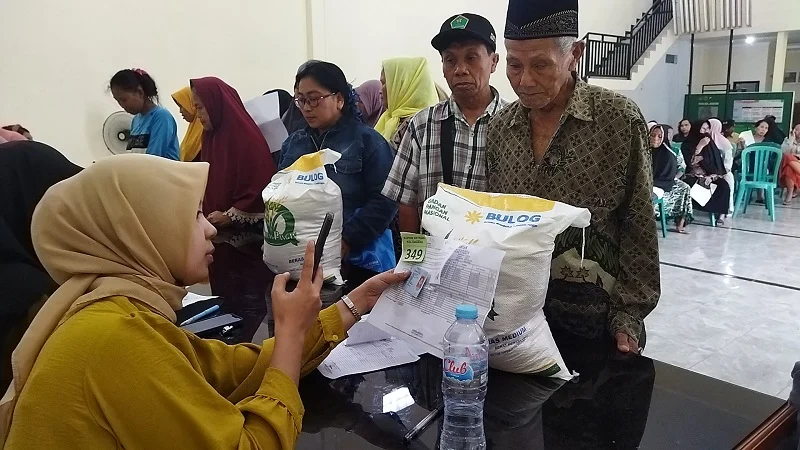
Perum Bulog continues to accelerate the distribution of food assistance as the nation navigates the final quarter of 2026. Data from the state-owned logistics agency indicates that as of November 20, 2026, the distribution of rice aid for the October-December allocation period has reached 39 percent of the total target. With nearly 1 million tons of rice slated for distribution, the program aims to provide a vital safety net for 33.2 million Beneficiary Families (PBP) across the Indonesian archipelago. This massive logistical undertaking is designed to mitigate the effects of economic volatility and ensure food security for the country’s most vulnerable populations, specifically those categorized in the lower socio-economic brackets known as desil 1 through desil 4.
The Strategic Importance of the Food Assistance Program
The government’s decision to continue the food assistance program through the end of 2026 reflects a broader strategy to maintain social stability. By providing essential commodities directly to the households that need them most, the government aims to suppress the inflationary pressure on food prices, which often disproportionately affects low-income families. Rice, being the primary staple in the Indonesian diet, is a critical component of the consumer price index. Fluctuations in its price can have immediate and severe impacts on the purchasing power of millions.
Bulog’s role as the primary executor of this policy is pivotal. By managing the supply chain from procurement to distribution, the agency acts as a buffer against market disruptions. The current phase, covering October to December, serves as a crucial intervention point before the year ends, a period historically marked by increased household expenditure and seasonal pressures.
Chronology and Evolution of the 2026 Program
The 2026 food assistance program was not a singular event but rather a phased response to ongoing economic conditions. The trajectory of this year’s efforts can be mapped as follows:
- Q1 2026 (February–March): The initial phase was launched to stabilize the market following the harvest cycles and to address lingering concerns regarding food supply stability from the previous year.
- Q2 2026 (April–June): During this period, the government focused on monitoring distribution efficiency and optimizing warehouse management to ensure that supplies were ready for the subsequent phases.
- Q3 2026 (July–September): This second major distribution window addressed the mid-year demand, ensuring that families had access to rice as the agricultural sector prepared for the transition between seasons.
- Q4 2026 (October–December): The current phase is specifically tailored to provide a bridge through the year-end festivities and the potential challenges posed by seasonal climate variations.
The systematic rollout of these phases demonstrates a calculated effort by the government to avoid supply bottlenecks and ensure a consistent flow of commodities to remote regions.
Analyzing the 39 Percent Realization Figure
The 39 percent realization rate as of November 20, 2026, has prompted discussions among agricultural analysts and government officials regarding the pace of distribution. While 39 percent may appear modest with only a few weeks remaining in the year, logistics experts point out that the final stages of the year often involve significant acceleration. Bulog typically ramps up its distribution efforts in December to ensure that the final allocations reach the beneficiaries before the Christmas and New Year (Nataru) holiday season.
The logistical complexity of distributing nearly 1 million tons of rice to 33.2 million families spread across thousands of islands cannot be overstated. Factors such as regional infrastructure, transportation bottlenecks, and localized weather conditions contribute to the variable speeds of distribution. However, the agency remains confident in its ability to meet the target within the allotted timeframe.
Official Stance and Administrative Commitment
Ahmad Rizal Ramdhani, President Director of Perum Bulog, underscored the agency’s commitment to the mission during his statement on Sunday, November 22, 2026. He emphasized that the program is not merely about moving stock from warehouses to households but about fulfilling a mandate to maintain social welfare.
"Bulog is committed to carrying out this mandate as effectively as possible," Rizal noted. "Our primary focus is ensuring that the assistance reaches the rightful beneficiaries while simultaneously easing the household expenditure burden."

Beyond the logistical mechanics, the government views this program as a proactive measure against climate-related risks. The threat of El Niño remains a concern for agricultural output, and the food assistance program serves as a strategic inventory management tool. By releasing these stocks, the government effectively stabilizes the market and prevents panic buying or price spikes that could occur if supply chains were perceived to be under pressure during the year-end period.
Broader Implications for National Food Security
The implications of this program extend beyond immediate relief. For the Indonesian economy, the effective management of the rice supply is a cornerstone of macroeconomic stability. When the government demonstrates its ability to reach 33.2 million families, it strengthens the social contract and maintains public confidence in state institutions.
From an economic standpoint, the injection of 1 million tons of rice into the household sector acts as a stimulus. By reducing the portion of income that families must spend on basic staples, the government indirectly supports spending on other necessary goods and services, thereby sustaining domestic consumption levels.
However, the program also highlights the ongoing need for systemic reform in the national rice supply chain. The dependence on large-scale government intervention suggests that the domestic market is still vulnerable to supply shocks. Agricultural economists suggest that while these short-term aid programs are essential, long-term food security will ultimately depend on increasing local production efficiency, improving post-harvest technologies, and diversifying food sources to reduce the reliance on rice.
Anticipating the Year-End Challenges
As the nation approaches the final weeks of 2026, the focus shifts to the "Nataru" period. The combination of increased demand during the holiday season and the potential for heavy rainfall associated with the monsoon season presents a dual challenge for the logistics network.
Bulog’s regional offices have been directed to prioritize distribution in areas prone to seasonal isolation. This involves pre-positioning stocks in regional warehouses to ensure that even if transportation routes are temporarily disrupted by weather, the local supply remains sufficient to meet the needs of the PBP participants.
Furthermore, the integration of data systems between the Ministry of Social Affairs and Bulog has been refined throughout the year. This ensures that the recipient list remains accurate and that leakage—the diversion of aid from intended recipients—is minimized. The use of digital verification tools has been cited as a major factor in the improved precision of the 2026 program compared to previous years.
Conclusion and Future Outlook
The current food assistance program is a testament to the scale and complexity of managing food security in the world’s fourth-most populous nation. With nearly 1 million tons of rice currently moving through the supply chain, the effort reflects a high level of coordination between government bodies and state-owned enterprises.
While the 39 percent realization rate indicates a heavy workload for the final weeks of 2026, the history of the program throughout the year suggests that Bulog has the necessary infrastructure to finalize the distribution. The success of this initiative is vital, not just for the immediate well-being of the 33.2 million recipient families, but for the broader goal of maintaining national economic stability amidst global uncertainty.
As the government evaluates the results of this year’s program, the data gathered will likely influence policy decisions for 2027. If the current model proves successful in buffering the impact of El Niño and stabilizing year-end prices, it is highly probable that similar targeted assistance strategies will continue to be a cornerstone of Indonesia’s socio-economic policy in the years to come. The resilience of the national supply chain will continue to be tested, but the current efforts represent a significant step forward in protecting the most vulnerable segments of the population from the pressures of a volatile global and domestic market.