JAKARTA — State-owned mining industry holding company PT Mineral Industri Indonesia (Persero), widely known as MIND ID, has reaffirmed its leadership position in sustainable mining transformation by rigorously implementing zero-waste principles across all operational lines. This strategic initiative ensures that every fraction of Indonesia’s rich mineral wealth is managed responsibly, delivering both long-term economic value and uncompromising environmental stewardship for future generations.
The commitment to a zero-waste framework forms an integral part of the enterprise’s broader Environmental, Social, and Governance (ESG) strategy. This vision was prominently highlighted by the MIND ID delegation at the 31st United Nations Climate Change Conference (COP31) held in Antalya, Turkey. As global economies accelerate their transition toward green energy, the responsible extraction and processing of critical minerals have taken center stage, prompting Indonesian state enterprises to set higher benchmarks for ecological preservation and resource efficiency.
Strategic Vision and Global Commitments
Selly Adriatika, Division Head of Institutional Relations at MIND ID, emphasized that as the custodian of Indonesia’s strategic mineral reserves, the holding company bears a profound mandate. This involves supplying the essential raw materials required for global energy decarbonization while meticulously safeguarding the ecological carrying capacity of the nation.
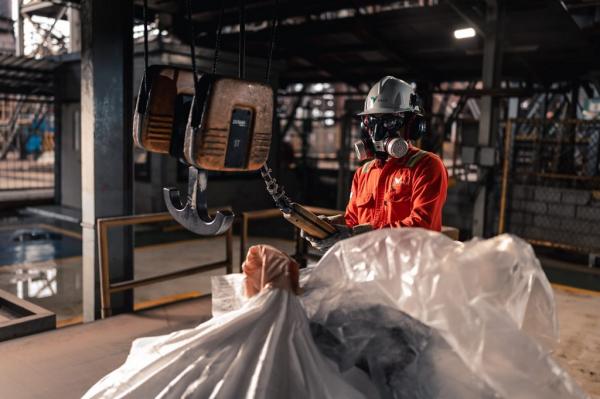
"The sovereignty of Indonesia’s natural resource management must be manifested through modern and responsible mining practices," Selly stated. "We remain steadfast in our commitment to converting every byproduct of our production processes into resources of high utility. Consequently, the national mining industry not only produces flagship commodities but also acts as a pioneer in resource efficiency and a guardian of Indonesia’s natural preservation."
The journey toward a sustainable mining ecosystem requires a multi-pronged approach that balances commercial viability with strict environmental compliance. By integrating circular economy principles into its operational DNA, MIND ID aims to decouple resource extraction from environmental degradation, setting a precedent for state-owned enterprises across the region.
Concrete Implementation Across Group Operations
The zero-waste principle is not merely a theoretical framework for MIND ID; it has been actively integrated into the daily operations of various subsidiaries within the MIND ID Group, yielding measurable, high-impact results.
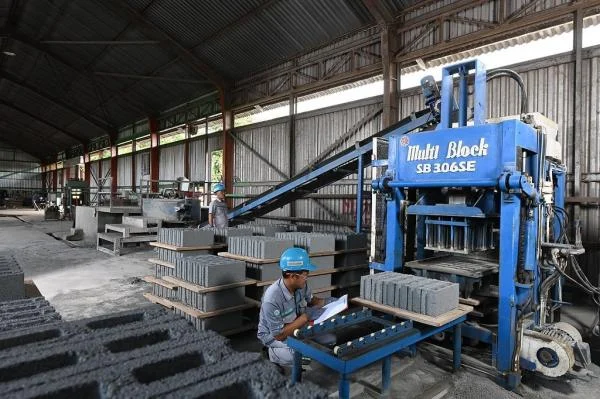
A prime example of this operational circularity can be observed within its copper operations. PT Freeport Indonesia, a key member of the MIND ID Group, successfully recycles approximately 1.5 million tons of mill tailings—the byproduct of ore processing—every year. Instead of discarding this material, the company repurposes it as an aggregate mixture for paste backfill. This innovative application is utilized to reinforce underground structures and safely support the intensive operations of its world-class underground mining complex in Papua.

Furthermore, other subsidiaries focusing on nickel, aluminum, and gold are scaling up their own circular economy initiatives. These include the utilization of fly ash and bottom ash (FABA) from captive power plants for local infrastructure development, the reclamation of former mining voids into productive agricultural and aquaculture zones, and the intensive recycling of process water to minimize the industrial footprint on local watersheds.
Chronology and Milestones of Sustainability
The push toward comprehensive sustainability within Indonesia’s mining sector has evolved systematically over recent years, driven by both regulatory pressures and a corporate desire to align with global climate accords.
- Phase 1: Foundation and ESG Alignment (2020–2022): Following the consolidation of state-owned mining assets under the MIND ID holding structure, the organization initiated a comprehensive audit of its environmental liabilities and asset potential. During this period, unified ESG Key Performance Indicators (KPIs) were established for all member companies, including PT Freeport Indonesia, PT Aneka Tambang Tbk (Antam), PT Bukit Asam Tbk, and PT Timah Tbk.
- Phase 2: Technological Integration and Pilot Projects (2023–2024): Subsidiaries began rolling out technological upgrades focused on tailings management, energy efficiency, and emission reduction. Pilot programs for zero-waste applications, such as aggregate substitution and heavy metal neutralization, were tested and validated for large-scale deployment.
- Phase 3: Scaling Circular Economy and Global Advocacy (2025–2026): With operational frameworks firmly in place, MIND ID began showcasing its circular economy models on international platforms. The presentation of these practices at COP31 in Antalya marked a milestone, positioning Indonesia not just as a raw material exporter, but as a sophisticated leader in responsible, low-emission mineral processing.
Economic and Environmental Implications
The strategic implementation of zero-waste operations carries significant implications for both the national economy and international trade dynamics.
From an economic perspective, transforming waste streams into valuable secondary inputs reduces operational expenditures associated with traditional waste disposal and lowers material procurement costs for infrastructure maintenance. For instance, utilizing tailings as paste backfill reduces the necessity of sourcing external construction aggregates, thereby optimizing the cost structure of underground mining operations in remote regions like Papua.

From an environmental standpoint, minimizing surface waste accumulation dramatically lowers the risks of acid rock drainage and ecological contamination. This proactive risk management protects surrounding biodiversity and water tables, fostering harmonious relationships with indigenous communities and local stakeholders who depend on local ecosystems for their livelihoods.
Moreover, as international markets increasingly demand green credentials—such as the European Union’s Carbon Border Adjustment Mechanism (CBAM) and stringent supply chain due diligence laws—MIND ID’s low-emission, circular-economy-driven mineral products gain a distinct competitive advantage. Global buyers of copper, nickel, and aluminum are becoming more rigorous in tracing the environmental footprint of their supply chains. By embedding zero-waste protocols directly into extraction and processing, MIND ID ensures that Indonesian commodities remain highly attractive to global technology and manufacturing giants committed to net-zero targets.
Future Outlook for Indonesia’s Mining Sector
Looking ahead, MIND ID plans to deepen its investment in research and development to discover novel commercial applications for mining byproducts. Collaborative initiatives with academic institutions and technology providers are underway to explore the extraction of critical minor elements from existing waste stockpiles, turning historical liabilities into future technological assets.
As the global energy transition accelerates the demand for transition minerals, MIND ID’s strategy demonstrates that resource nationalism and environmental sustainability are not mutually exclusive. Through disciplined execution, technological innovation, and an unwavering commitment to ESG principles, Indonesia’s mining holding company is charting a resilient course toward a cleaner, more prosperous industrial future.