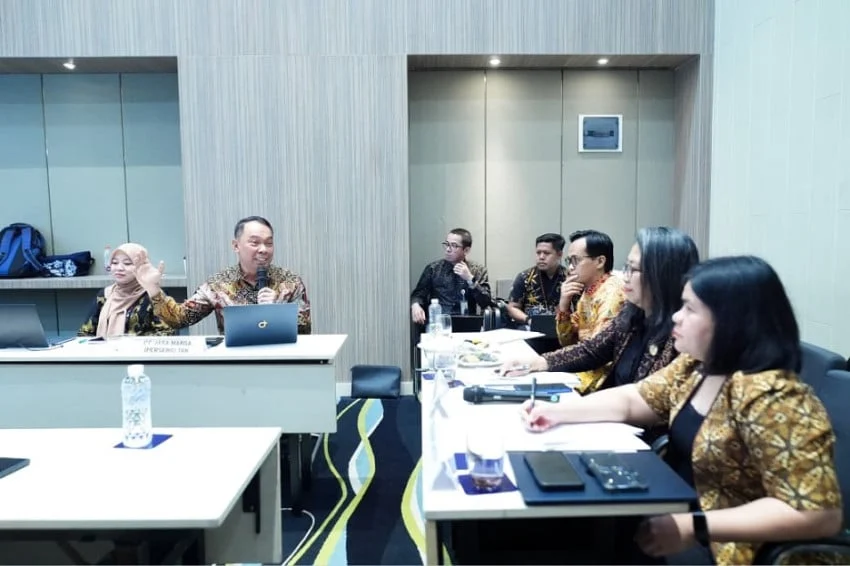
PT Jasa Marga (Persero) Tbk, the leading toll road operator in Indonesia, showcased its institutional commitment to corporate governance and transparency during the 2026 Public Information Monitoring and Evaluation (Monev KIP) test. The event, organized by the Central Information Commission (Komisi Informasi Pusat) in Jakarta on Wednesday, November 11, 2026, served as a platform for Jasa Marga to present its advancements in digital-based public information management, aiming to reinforce its status as a trusted public entity.
The Significance of the 2026 Monev KIP
The Monitoring and Evaluation of Public Information Openness (Monev KIP) is an annual assessment conducted by the Central Information Commission to gauge the level of compliance of public agencies with Law Number 14 of 2008 concerning Public Information Openness. For a state-owned enterprise like Jasa Marga, which manages critical national infrastructure, the evaluation is not merely a bureaucratic requirement but a strategic necessity.
The 2026 edition of the assessment focused on several key performance indicators, including the quality of the Pejabat Pengelola Informasi dan Dokumentasi (PPID) services, the responsiveness of digital communication channels, and the accessibility of information regarding company performance and public services. By participating in this test, Jasa Marga seeks to demonstrate how it balances its commercial responsibilities with the public’s right to know, particularly concerning toll road operations, tariffs, and construction developments.
Institutional Leadership and Vision
During the presentation, Jasa Marga President Director Rivan A. Purwantono emphasized that transparency is a fundamental pillar of the company’s ongoing transformation. According to Rivan, the digital era requires a shift in how information is disseminated—moving from reactive reporting to proactive, real-time engagement.
"We are committed to establishing Jasa Marga as a highly trusted public agency. This trust is built through governance that is not only transparent and accountable but also highly participatory and supported by advanced digital technology," Rivan stated. This vision reflects a broader corporate strategy to align operational excellence with the expectations of the Indonesian public, who rely on Jasa Marga’s infrastructure for daily mobility and logistics.
Operational Scale and the Need for Information Access
To understand the gravity of Jasa Marga’s responsibility, one must look at the sheer scale of its operations. As of late 2026, the company manages 36 toll road segments spanning a total operating length of 1,318 kilometers, out of a total concession portfolio of 1,736 kilometers.
The logistical impact is immense: approximately 3.6 million vehicles traverse Jasa Marga’s toll road network every single day. This volume of traffic generates a massive, continuous flow of data. For millions of motorists, the availability of accurate, real-time information—ranging from traffic congestion alerts and incident reports to construction schedules and toll tariff updates—is a vital service. Failure to provide this information efficiently could lead to severe traffic gridlock, increased safety risks, and public dissatisfaction.
Technological Integration: The Role of JMTC
Central to Jasa Marga’s transparency efforts is the Jasa Marga Tollroad Command Center (JMTC). Established to serve as the "brain" of the company’s operations, the JMTC integrates over 3,500 CCTV cameras and a sophisticated Intelligent Transportation System (ITS).
The technology does more than just monitor traffic; it processes data into actionable intelligence. By utilizing machine learning and predictive analytics, the JMTC can anticipate traffic patterns, allowing the company to deploy operational teams to clear accidents or bottlenecks faster than ever before. This data-driven approach is a key component of the company’s public disclosure strategy, as it ensures that the information pushed to the public via digital channels is based on verified, real-time data rather than estimates.
Enhancing Public Engagement Channels
Jasa Marga has diversified its communication channels to ensure that no segment of the public is left uninformed. These channels include:
- The Travoy Application: A comprehensive mobile application providing real-time traffic updates, route planning, and information on rest area facilities.
- Call Center 133: A 24/7 dedicated service line for emergency assistance and general inquiries.
- Corporate and PPID Websites: Dedicated portals for institutional transparency, where the public can access financial reports, regulatory disclosures, and information regarding company policies.
- Social Media Platforms: Active management of official accounts to disseminate information on current traffic conditions and travel tips.
By integrating these channels with the JMTC, Jasa Marga has created a closed-loop system where data collected from the field is almost instantaneously available to the public. This proactive disclosure model ensures that users are equipped with the information necessary to make informed travel decisions, effectively reducing the burden on physical infrastructure during peak hours.
Institutionalizing a Culture of Transparency
Beyond technology, Jasa Marga has focused on the "soft" side of governance: corporate culture. The company has implemented internal policies that mandate the proactive release of information across all units. This involves regular training for staff, the appointment of information officers at the regional level, and the establishment of clear protocols for handling public requests under the "Information Available at Any Time," "Immediate Information," and "Periodic Information" categories.
This institutionalization of openness helps mitigate the risk of information asymmetry. By standardizing the way information is categorized and shared, Jasa Marga reduces the likelihood of bureaucratic bottlenecks that often plague large, state-owned enterprises.
Implications for Future Governance
The active participation of Jasa Marga in the 2026 Monev KIP carries broader implications for the Indonesian infrastructure sector. As the country continues to expand its toll road network, the demand for transparency will only grow. Jasa Marga’s model serves as a benchmark for other state-owned enterprises in the infrastructure and transport sectors.
The assessment by the Central Information Commission is expected to provide constructive feedback that will help Jasa Marga refine its processes. Experts suggest that for a company of Jasa Marga’s size, the ultimate test of transparency is not just the ability to provide data upon request, but the ability to foster a relationship of trust with the public. When the public understands the reasons behind tariff adjustments, road maintenance schedules, or traffic management policies, they are more likely to support the company’s operational objectives.
Looking Ahead: Towards 2027 and Beyond
As the company moves past the 2026 evaluation cycle, the focus will likely shift toward further automation and the integration of artificial intelligence in public service delivery. The challenges remain significant—managing infrastructure in a country with diverse geographical and socio-economic landscapes requires constant innovation.
However, the dedication shown during the 2026 Monev KIP indicates that Jasa Marga is prepared to meet these challenges head-on. By prioritizing transparency, the company is not only fulfilling its legal obligations but is also securing its position as a sustainable and reliable partner in the nation’s economic development.
In conclusion, the presentation at the Central Information Commission was a testament to Jasa Marga’s evolving identity. No longer just a construction and toll operation company, Jasa Marga is positioning itself as a modern, information-led utility provider. By leveraging technology to serve the public interest and maintaining a rigorous standard for information disclosure, Jasa Marga is setting a high bar for corporate transparency in Indonesia’s public sector. The integration of the JMTC with a proactive communication strategy remains the cornerstone of its success, ensuring that as the roads grow longer and the traffic volume higher, the flow of information remains clear, accurate, and accessible for all.