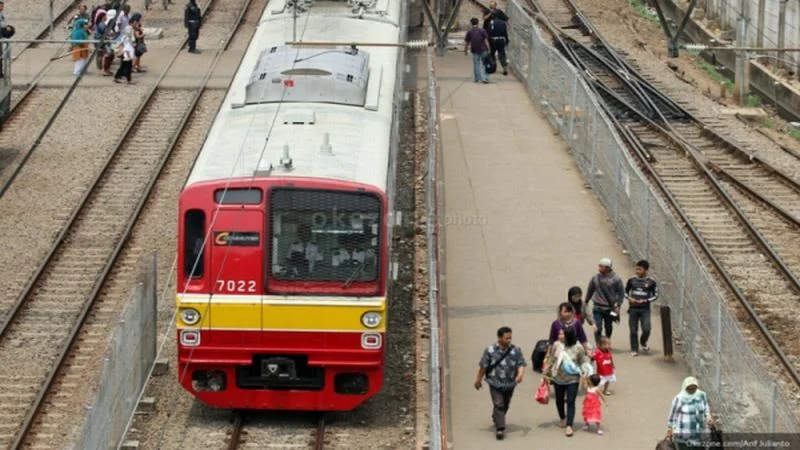
PT Kereta Api Indonesia (KAI) has officially announced a strategic overhaul of its commuter rail fleet, confirming that 86 trainsets previously imported from Japan are slated for retirement over the coming years. This decision marks a significant transition in the operational history of the KRL Jabodetabek system, as the company moves to address aging infrastructure and prioritize passenger safety. Beyond the immediate retirement of these 86 units, the broader modernization roadmap indicates that a total of 128 trainsets will reach the end of their technical lifespan within the next decade, necessitating a comprehensive fleet replacement and maintenance program.
The announcement was made by PT KAI President Director Bobby Rasyidin during a press conference in Jakarta on Thursday, November 12, 2026. Rasyidin emphasized that the move is not merely a policy choice but a technical necessity dictated by international safety standards and the mechanical degradation of the older units.
The Technical Imperative for Retirement
The commuter rail network in the Greater Jakarta area (Jabodetabek) has long relied on secondhand rolling stock sourced from Japanese railway operators. While these units proved instrumental in expanding the network’s capacity during the early stages of the system’s revitalization, they are now approaching the end of their operational cycles.
Technical experts within the railway industry note that trainsets have a finite "service life," typically measured in terms of years of service and total mileage. Beyond this threshold, the structural integrity of the car bodies, the reliability of braking systems, and the performance of traction motors become increasingly difficult to maintain. By retiring these 86 trainsets, PT KAI aims to mitigate the risk of mechanical failures that could disrupt service schedules or, more critically, compromise passenger safety.
The 128-trainset figure, which encompasses the 86 Japanese units and others nearing their limit, represents a massive portion of the current fleet. Addressing this requires a synchronized effort between procurement, local manufacturing, and infrastructural upgrades to ensure that the capacity reduction caused by the retirement of old units does not lead to overcrowding or service frequency degradation.
Procurement Strategy: The Role of PT INKA
To bridge the gap left by the decommissioned fleet, PT KAI is pursuing a two-pronged strategy: aggressive procurement of new rolling stock and strengthening domestic manufacturing capabilities through PT Industri Kereta Api (INKA).
"We have 86 trainsets from Japan that must be retired in the near future," Rasyidin stated. "This is a safety-first decision. We are optimizing our procurement through the production capabilities of PT INKA to ensure that our capacity remains consistent with the needs of the public."
The reliance on PT INKA is a central pillar of the Indonesian government’s goal to foster self-sufficiency in the transportation sector. By prioritizing locally produced trainsets, KAI aims to reduce its long-term dependency on international imports, streamline maintenance through standardized spare parts, and bolster the domestic industrial ecosystem. This transition is expected to be phased, with new, modern trainsets gradually replacing the older, retired Japanese models as they come off the production line.
Beyond Rolling Stock: The Infrastructure Challenge
KAI has recognized that simply replacing trainsets is insufficient to address the systemic challenges of the Jabodetabek commuter rail network. Modern, high-capacity trains require modern electrical and signaling systems to operate at maximum efficiency.
A significant portion of the current network’s limitations stems from outdated power distribution and signaling technology. To support the influx of newer, more energy-demanding trainsets, KAI has initiated a series of infrastructure upgrades. As a priority, the company is set to construct four new electrical substations along the Green Line, a vital artery in the commuter network.
"Improving the KRL Jabodetabek service is not just about adding more carriages," Rasyidin explained. "We must simultaneously upgrade our infrastructure, particularly our electrical systems and signaling."

The construction of these substations is scheduled to begin in November 2026, with an estimated completion timeline of six to seven months. This project is expected to stabilize power supply across the corridor, allowing for tighter headways between trains and overall improved operational reliability.
Chronology of the Modernization Effort
The current announcement follows years of discussions regarding the future of the commuter rail fleet. The timeline for this transition can be summarized as follows:
- 2023–2025: Initial assessments of the Japanese-imported fleet revealed accelerating maintenance costs and increased downtime, prompting KAI to initiate discussions with the government and PT INKA regarding a long-term fleet replacement strategy.
- Early 2026: KAI solidified its procurement plan, focusing on a combination of new imports and domestic orders to maintain capacity while transitioning away from the aging fleet.
- November 2026: Official announcement of the retirement of 86 Japanese trainsets and the commencement of the Green Line power infrastructure upgrade.
- 2027–2036: Projected period for the systematic retirement of the 128 total trainsets and their replacement with new, standardized rolling stock.
Economic and Operational Implications
The decision to retire such a large portion of the fleet carries profound implications for the Jakarta metropolitan area. As the primary mode of transport for millions of commuters, any disruption to KRL operations has a direct impact on the city’s economic productivity.
Economists have observed that the modernization of the KRL system is essential for the long-term sustainability of the Jabodetabek region. By investing in newer technology, KAI can reduce its long-term operational expenditures—specifically in the areas of specialized maintenance and legacy parts procurement—which are often higher for discontinued models.
Furthermore, the integration of newer technology will likely improve the passenger experience. Newer trainsets typically offer better climate control, advanced passenger information systems, and improved accessibility features, all of which contribute to higher ridership and public satisfaction.
However, the transition period presents challenges. KAI faces the delicate task of balancing the retirement of old units with the delivery of new ones. If the procurement process encounters delays, the system could face temporary capacity constraints. This underscores the importance of the scheduled infrastructure upgrades, as an efficient power and signaling system can help maximize the utilization of existing, newer trainsets to compensate for temporary fleet shortages.
Official Stance and Stakeholder Reaction
The government and regulatory bodies have largely supported KAI’s proactive stance on safety. The emphasis on "safety as the foundation of public transport" resonates with recent directives from the Ministry of Transportation, which has been pushing for stricter safety compliance across all public transit modes in Indonesia.
Industry analysts have noted that while the retirement of 86 trainsets is a significant undertaking, it is a necessary evolution. The transition away from the "legacy" fleet era into a period of domestically-produced, modern rail infrastructure is seen as a maturation point for Indonesia’s railway sector.
As the program progresses, stakeholders will be monitoring KAI’s ability to adhere to the production timelines set by PT INKA. The success of this transition will depend on the synergy between engineering teams, infrastructure contractors, and the logistical management of the phase-out process.
Conclusion: A New Era for Jabodetabek Commuter Rail
The retirement of 86 Japanese trainsets marks a turning point for PT KAI and the millions of passengers who rely on the KRL network daily. By acknowledging the technical limitations of the existing fleet and pairing a replacement strategy with necessary electrical and signaling upgrades, KAI is positioning the commuter rail system for the next decade of growth.
The path forward—characterized by a shift toward modern, domestically manufactured trains and robust infrastructure—reflects a broader commitment to safety and efficiency. While the retirement of the older fleet will be a complex logistical process, it remains a vital step in ensuring that the Jabodetabek rail network continues to serve as the backbone of the region’s mobility, providing a safer, more reliable service for the future. As of late 2026, all eyes remain on the execution of these upgrades, as they serve as the barometer for the future of urban transit in the nation’s capital.