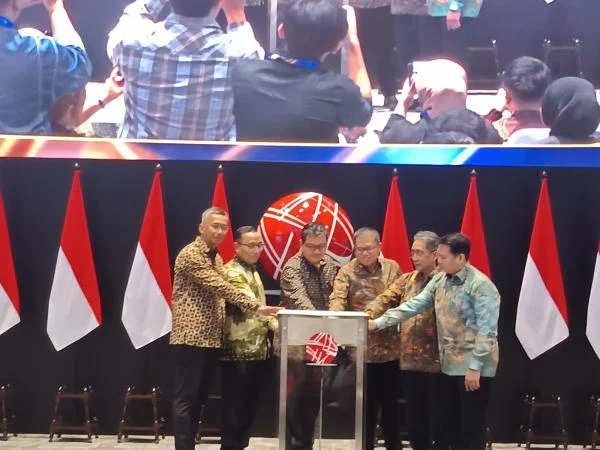
JAKARTA — The Indonesia Stock Exchange (BEI), in collaboration with PT Indonesian Capital Market Electronic Library (TICMI), has formally emphasized the critical need for robust human capital development and elevated investor literacy standards to ensure the long-term resilience and stability of the Indonesian capital market. This pivotal message took center stage during the sixth installment of the TICMI Capital Market and Business Conference (TCMBC), held at the Main Hall of the Indonesia Stock Exchange building in Jakarta on Thursday, November 12, 2026.
The high-profile gathering brought together financial regulators, academic scholars, industry practitioners, and market analysts to dissect the evolving landscape of Indonesia’s financial ecosystem. As domestic market participation continues to scale unprecedented heights, institutional leaders are increasingly directing their focus toward intellectual preparedness, risk management education, and the alignment of academic research with practical industry frameworks to safeguard market integrity and protect retail investors.
Navigating Market Growth Through Intellectual Preparedness
Opening the conference, PT Indonesian Capital Market Electronic Library (TICMI) President Director Yohanes Arts Abimanyu delivered a compelling address highlighting the complex challenges accompanying the rapid expansion of the nation’s financial exchanges. According to Abimanyu, the remarkable surge in daily trading activities, combined with a massive influx of retail investors entering the ecosystem over recent years, necessitates a profound shift in how market participants approach financial education and risk assessment.
Abimanyu pointed out that the extraordinary growth trajectory of the Indonesian capital market naturally introduces complex structural questions. These queries span multiple dimensions, including overall market quality, evolving investor behavior patterns, corporate governance standards among listed issuers, and the absolute readiness of the workforce supporting the financial sector.
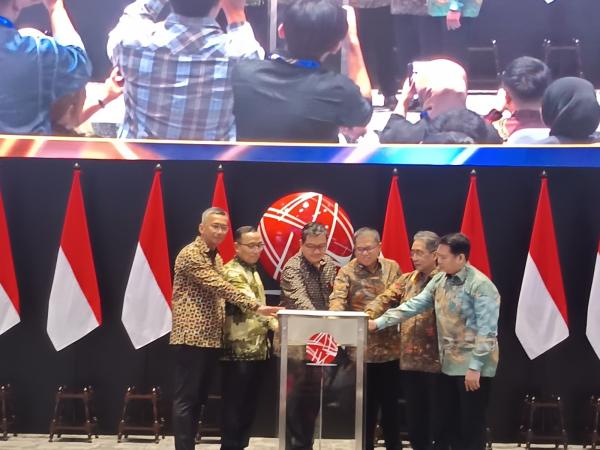
"The rapid growth of the capital market brings forth new questions regarding market quality, investor behavior, issuer governance, and the readiness of human resources, the answers to which largely originate from campus research and practitioner experience," Abimanyu stated during the conference.
He further elaborated that the complexities of modern financial markets—marked by algorithmic trading, complex financial instruments, and shifting macroeconomic conditions—cannot be navigated through intuition alone. They require structured intellectual frameworks and rigorous risk awareness that must be cultivated systematically from an early stage of professional and academic development.
Bridging the Gap Between Academia and Industry Practice
A central theme of Abimanyu’s address focused on addressing a longstanding structural inefficiency within Indonesia’s financial education ecosystem: the disconnect between academic research and commercial application. For decades, universities and business schools across Indonesia have produced extensive academic literature, master’s theses, and empirical studies concerning market efficiency, asset pricing, behavioral finance, and corporate governance. However, a vast majority of these scholarly works have remained confined to university libraries, institutional repositories, or academic journals, rarely finding their way into the hands of market regulators, policymakers, or corporate strategists.
Abimanyu revealed that this communication gap has historically deprived the domestic financial industry of valuable insights generated by academic researchers. Conversely, academic institutions have occasionally missed opportunities to align their curricula with the dynamic realities and emerging challenges faced by frontline practitioners on the trading floor.
The 6th TICMI Capital Market and Business Conference was explicitly structured to dismantle these institutional silos. By serving as an integrative bridge, the forum facilitates direct dialogue between academic researchers and industry leaders, enabling empirical studies from universities to directly influence regulatory policies, corporate governance frameworks, and investment strategies.

The Broader Regulatory Landscape: Enhanced Investor Protection Measures
The emphasis on human capital and literacy at the TCMBC directly aligns with a series of proactive measures implemented by the Indonesia Stock Exchange in late 2026 to enhance market quality and protect retail investors. In the days leading up to the conference, the exchange rolled out vital regulatory and methodological adjustments designed to address systemic vulnerabilities and provide earlier safety nets for market participants.
Just prior to the event, BEI announced a comprehensive overhaul of its methodology for detecting and categorizing troubled or distressed stocks. By modernizing these surveillance mechanisms, the exchange aims to identify financially or operationally distressed issuers much earlier in the cycle, thereby providing retail investors with timely warnings and shielding them from unexpected value destruction. This shift in surveillance methodology reflects a broader philosophical transition within the exchange from reactive punishment to proactive, intelligence-driven investor protection.
Furthermore, the exchange expanded the scope of its High-Risk Stock (HSC) monitoring framework, incorporating roughly 300 additional equities into the watch list and broadening its screening methodology to encompass all listed issuers. These strategic policy shifts underscore the urgency of the message delivered at the TCMBC: as regulatory tools become more sophisticated, the individuals utilizing them—ranging from institutional portfolio managers to everyday retail investors—must possess the requisite financial literacy and cognitive tools to interpret risk signals accurately.
The Evolution and Significance of the TCMBC Forum
Since its inception, the TICMI Capital Market and Business Conference has established itself as the premier academic and professional nexus for Indonesia’s financial sector. Over its six-year history, the conference has evolved from a niche academic symposium into a influential policy and research platform that shapes the discourse surrounding capital market development.
The 2026 edition of the conference featured a diverse array of panel discussions, research paper presentations, and strategic workshops. Academics presented empirical findings on topics ranging from digital asset integration and sustainable finance (ESG) to the behavioral biases of post-pandemic retail investors. Meanwhile, representatives from securities firms, asset management companies, and regulatory bodies provided critical commentary on the operational applicability of these studies.

Industry observers noted that the timing of the 2026 conference is particularly critical. As Indonesia positions itself as a dominant economic powerhouse in Southeast Asia, the depth and maturity of its domestic capital market will serve as a primary barometer of its economic resilience. Sustainable market growth, financial authorities argue, cannot rely solely on liquidity injections or marketing campaigns aimed at acquiring new account holders; it must be underpinned by a deep, systemic enhancement of financial literacy and professional competence.
Implications for the Future of Indonesia’s Financial Ecosystem
The discussions and outcomes of the 6th TICMI Capital Market and Business Conference carry far-reaching implications for the future trajectory of the Indonesian capital market. By explicitly linking human capital development with market resilience, BEI and TICMI are signaling a structural maturation of the national exchange.
- Elevating Retail Investor Retention: Enhanced literacy initiatives are expected to reduce churn rates among retail investors, transforming speculative traders into long-term, goal-oriented investors who understand asset allocation and risk diversification.
- Strengthening Corporate Governance: As academic research on corporate behavior is increasingly integrated into regulatory oversight, listed companies will face heightened scrutiny regarding transparency, operational efficiency, and minority shareholder protection.
- Fostering Evidence-Based Regulation: Institutionalizing collaboration between universities and the exchange ensures that future regulatory frameworks will be grounded in rigorous empirical data rather than purely reactive policymaking.
- Developing Specialized Talent: The alignment of academic curricula with industry needs will produce a new generation of finance professionals equipped with the analytical and ethical competencies required to navigate complex global financial markets.
As the Indonesian capital market continues to expand in both capitalization and complexity, initiatives like the TICMI Capital Market and Business Conference serve as vital catalysts for structural reform. By fostering a culture rooted in intellectual rigor, continuous education, and proactive risk management, BEI and TICMI are laying a solid foundation for a fair, orderly, and transparent financial marketplace capable of supporting Indonesia’s long-term economic aspirations.