
In an era where economic volatility and sudden financial emergencies can disrupt household stability, the motorcycle has emerged as one of the most critical assets for millions of individuals. Whether it serves as a primary mode of transport for daily commuting or as an essential tool for livelihood—such as in the case of gig-economy riders, delivery personnel, and mobile vendors—the vehicle often represents a significant portion of a household’s net worth. When faced with an urgent need for liquidity, owners are frequently forced to decide between two distinct financial paths: selling the vehicle outright or leveraging it through a BPKB (Vehicle Ownership Document) pawn loan. This decision requires a nuanced understanding of interest rates, long-term asset depreciation, and the immediate impact on one’s ability to generate income.
The Economic Context of Motorcycle Ownership in Indonesia
To understand the weight of this decision, one must look at the role of the motorcycle in the broader national economy. Data from the Indonesian Automotive Industry Association (GAIKINDO) and the Central Statistics Agency (BPS) consistently highlight that motorcycles remain the backbone of mobility in Southeast Asia’s largest economy. With over 120 million motorcycles registered nationwide, the vehicle is not merely a luxury; it is an economic multiplier.
For the average household, a motorcycle represents a depreciating asset that demands consistent maintenance costs. Unlike real estate or gold, a motorcycle loses value from the moment it leaves the dealership. Historically, the depreciation rate for a standard commuter motorcycle in Indonesia hovers between 10% and 15% annually, depending on the brand, model, and mileage. When a financial emergency strikes, the owner must weigh this inherent depreciation against the cost of debt service if they choose to pawn the BPKB.
Strategic Analysis: Selling vs. Pawning
The decision to liquidate or leverage an asset depends entirely on the nature of the financial emergency. Financial planners often suggest that the "sell" option should only be exercised if the asset is redundant or if the financial crisis is permanent in nature.
The Case for Selling
Selling a motorcycle provides immediate capital without the burden of future monthly installments. This is the optimal route for individuals who:
- Own multiple vehicles and can afford to relinquish one.
- Have a vehicle that is nearing the end of its reliable lifespan, thereby saving on future maintenance and repair costs.
- Are facing a structural change in income, where the cost of maintaining the vehicle (fuel, tax, insurance) outweighs the utility provided.
However, the "fire sale" phenomenon remains a major risk. When individuals are desperate for cash, they often settle for prices significantly below the market value to ensure a quick transaction. Market analysis indicates that private sellers who rush a sale can lose anywhere from 20% to 30% of the vehicle’s fair market value compared to a patient, well-researched transaction.
The Case for Pawning (BPKB Collateral)
Pawning, or using the BPKB as collateral, is designed for individuals who have a temporary cash flow gap but require the physical vehicle to continue earning an income. For a ride-hailing driver, selling the motorcycle is equivalent to terminating their employment. By choosing a secured loan, the borrower maintains possession of the bike.
The primary implication of this choice is the accumulation of interest. Depending on the lending institution—whether it is a state-owned pawnshop (Pegadaian) or a private finance company—annual percentage rates (APR) can vary significantly. Financial analysts advise that borrowers should ensure the interest rate does not exceed their projected monthly savings or surplus income, as doing so leads to a "debt trap" where the vehicle is eventually repossessed due to default.
Chronology of Financial Decision-Making
The process of securing emergency funds typically follows a standard sequence that experts recommend to avoid impulsive errors:
- Phase 1: Emergency Assessment (Day 1-2): Determine the exact amount needed. If the requirement is less than 20% of one’s monthly income, experts advise exploring emergency funds or short-term personal loans before touching asset-based collateral.
- Phase 2: Valuation (Day 3): Determine the current market value of the motorcycle using third-party automotive classifieds. This provides a baseline for both selling price and loan-to-value (LTV) ratios.
- Phase 3: Cost-Benefit Analysis (Day 4): Calculate the total cost of ownership over the loan tenure. If the loan interest, administrative fees, and insurance costs exceed the utility of the bike, selling the asset becomes the more logical fiscal choice.
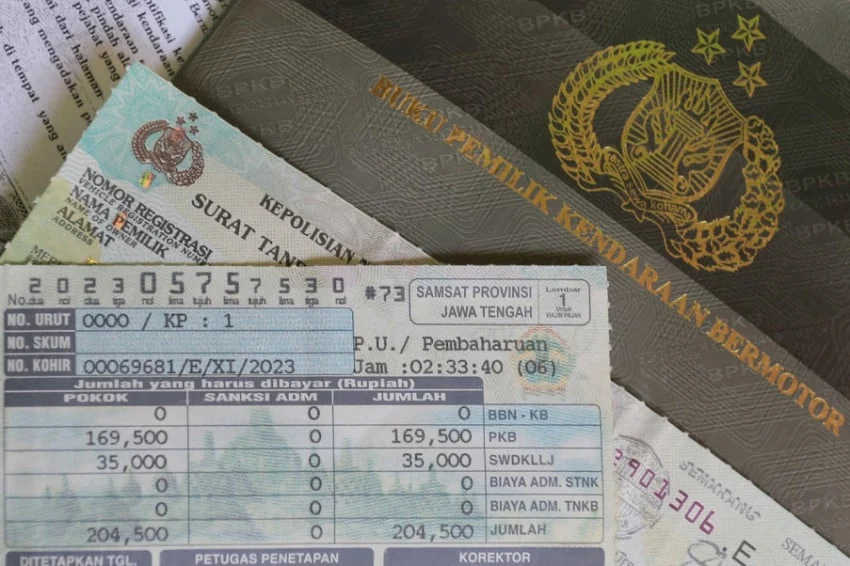
- Phase 4: Document Verification (Day 5): Preparing legal documents, including the BPKB, STNK, and proof of residency, is essential. Any discrepancy in these documents can lead to delays in loan disbursement or lower offers from buyers.
Institutional Perspectives and Regulatory Safeguards
Regulators, including the Financial Services Authority (OJK), have consistently urged the public to utilize only licensed and supervised financial institutions when pledging BPKB as collateral. The rise of predatory lending—often disguised as "instant" or "unsecured" cash—poses a significant threat to consumers.
According to industry reports, regulated pawnshops and multi-finance companies are required to provide transparent information regarding their interest rates, late fees, and the procedures for repossession. A representative from a major lending firm noted that, "The primary goal of a BPKB loan should be to bridge a temporary gap. If the borrower is already in a state of chronic financial distress, taking on a high-interest loan against a vehicle often exacerbates the situation rather than resolving it."
Broader Financial Implications
The decision to use a vehicle as a financial tool carries long-term implications for a household’s balance sheet.
Asset Depreciation vs. Debt Accumulation:
While the vehicle depreciates, the debt remains fixed. If a borrower takes a three-year loan, the motorcycle’s value may drop by 40% by the time the loan is paid off. If the vehicle is involved in an accident or is stolen during the loan period, the borrower may be left with a "negative equity" situation, where they owe the lender more than the vehicle is worth.
The Multiplier Effect:
For low-income workers, the motorcycle is an "income-producing asset." If managed correctly, the funds obtained through a BPKB loan can be used for capital investment—such as purchasing inventory for a small business or funding vocational training—which can yield returns higher than the interest paid on the loan. This is the most efficient use of such credit. Conversely, using these funds for consumer spending, such as paying off other debts or purchasing luxury goods, is widely considered a failure of financial management.
Essential Checklist for Applicants
To ensure a smooth transaction, whether selling or pawning, applicants should have the following items in order:
- Proof of Identity: A valid KTP (National Identity Card) and Family Card (KK) are mandatory to establish legal residency and age eligibility, usually between 21 and 60 years.
- Proof of Income: Pay stubs, bank statements, or proof of daily earnings for gig workers. This allows lenders to calculate the Debt-to-Income (DTI) ratio, which is critical for loan approval.
- Vehicle Legalities: Both the STNK (Vehicle Registration) and the original BPKB must be in the applicant’s name or accompanied by a notarized power of attorney if the vehicle is owned by a family member.
- Maintenance Records: A well-maintained vehicle, evidenced by regular service history logs, can increase the loan appraisal value by up to 10% compared to a vehicle with no service history.
Conclusion
The choice to sell or pawn a motorcycle is a significant financial pivot point. It demands a dispassionate look at one’s income potential, the actual market value of the vehicle, and the capacity to handle debt. By prioritizing licensed institutions, performing a thorough cost-benefit analysis, and ensuring that the borrowed capital is directed toward productive use, individuals can navigate these turbulent financial moments without sacrificing their long-term economic stability. As the national economy continues to rely on the agility provided by motorcycles, the ability to leverage these assets effectively remains a vital skill for personal financial management.