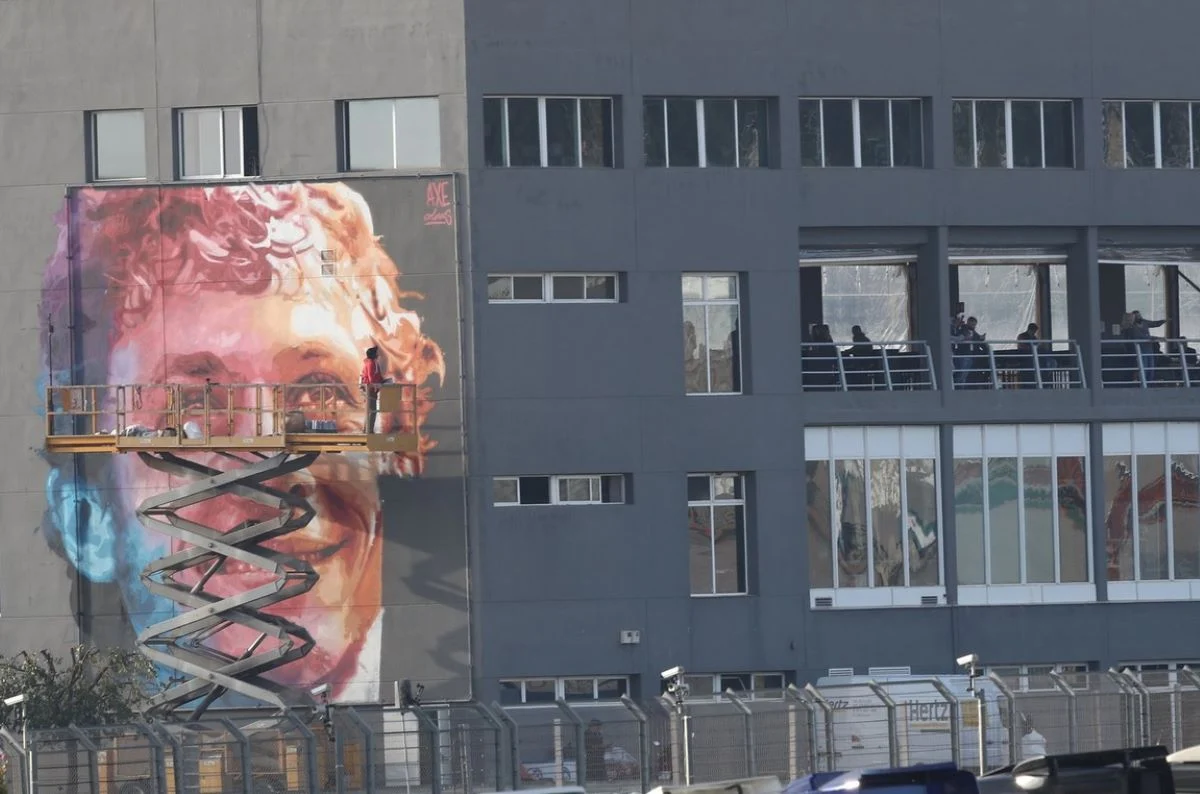
The iconic giant mural of Valentino Rossi at the Ricardo Tormo Circuit in Valencia has been officially removed ahead of the 2026 MotoGP season finale, scheduled for November 27–29, 2026. The towering street art piece, originally crafted by renowned urban artist Axe Colours, had adorned the outer walls near the main pitlane and paddock buildings since November 2021. It was commissioned specifically to commemorate the final premier-class race of the seven-time world champion’s illustrious career, which spanned over two decades and left an indelible mark on the sport of motorcycle grand prix racing.
The disappearance of the artwork, which captured the unmistakable silhouette and vibrant colors associated with Rossi’s legendary "The Doctor" persona, immediately triggered widespread speculation across global motorsport forums and social media platforms. With the final rounds of the 2026 championship intensifying, numerous fans and digital commentators theorized that the erasure was politically motivated. The prevailing rumor suggested a connection to Marc Marquez securing his eighth premier-class world championship title at the preceding Portuguese Grand Prix just one week prior. Conspiracy theories posited that circuit management sought to clear wall space to honor the newly crowned champion or to shift the historical narrative of the venue.
However, circuit authorities moved swiftly to debunk these rumors, clarifying that the decision to take down the mural was driven entirely by structural maintenance and facility modernization requirements rather than competitive milestones or rider rivalries.
Structural Integrity and Facility Renovations
Addressing the media and the passionate fan base, representatives from the Ricardo Tormo Circuit explained that the wall supporting the mural had suffered from underlying structural degradation over the years. Environmental exposure, shifting foundations, and standard material wear necessitated a comprehensive restoration of the building’s facade.
Rather than attempting to paint over or patch the damaged sections—which would have compromised the artistic integrity of Axe Colours’ original work—management decided to dismantle the mural entirely as part of a larger structural overhaul. Engineers determined that reinforcing the retaining wall was vital for safety and aesthetic compliance ahead of the influx of global media, teams, and hundreds of thousands of spectators expected for the season-closing Grand Prix weekend.
To reconcile the removal with the historical significance of the site, circuit executives invested in a modern infrastructure upgrade. In place of the painted mural, management installed a state-of-the-art digital LED screen spanning 64 square meters. This high-definition display occupies the exact location of the former artwork.
Embracing Technological Evolution and Shared History
The introduction of the massive digital screen is designed to serve a dual purpose. While its primary immediate function is to honor Rossi’s legacy continuously through dynamic visual retrospectives, high-resolution photography, and archival footage of his 2021 farewell, the screen also offers unprecedented flexibility for the circuit.
Nicolas Collado, General Manager of the Ricardo Tormo Circuit, elaborated on the strategic shift during an official press briefing.

"We wanted to maintain our tribute to Valentino Rossi, a legendary rider who specifically chose the Ricardo Tormo Circuit to bring down the curtain on his remarkable MotoGP career," Collado stated. "At the same time, this new digital installation allows us to evolve. It opens the door to incorporating broader chapters of our sport’s rich history without permanent structural limitations."
Collado directly addressed the speculation regarding Marc Marquez, acknowledging the historic nature of Marquez’s recent championship victory while contextualizing the venue’s role as a neutral home for all motorsport legends.
"Phemomena and champions like Marc Marquez, who has now matched or surpassed historic milestones, are equally part of the fabric and history of our sport," Collado added. "A modern circuit must reflect the living, breathing timeline of motorcycle racing as it unfolds, honoring past icons while welcoming contemporary achievements."
Chronology of the Valentino Rossi Mural at Valencia
To understand the cultural significance of the removal, it is necessary to examine the timeline of the mural and its relationship with the Ricardo Tormo Circuit:
- November 2021: Valentino Rossi announces his retirement from professional motorcycle racing. Renowned street artist Axe Colours is commissioned to paint a massive mural on the main paddock building of the Ricardo Tormo Circuit to honor his retirement at the Valencia Grand Prix.
- November 2021 – October 2026: The mural remains a mandatory pilgrimage site for thousands of international fans ("Yellow Family") visiting the Valencia circuit for annual MotoGP events, testing sessions, and regional championships.
- Late October 2026: Routine architectural assessments reveal structural fatigue and moisture damage on the facade supporting the painted mural, requiring urgent masonry remediation.
- Mid-November 2026: Marc Marquez clinches his eighth premier-class world championship title at the Portuguese Grand Prix, inadvertently sparking internet rumors linking his victory to structural changes at Valencia.
- Late November 2026: Circuit management removes the physical mural, initiates structural repairs, and installs the 64-square-meter digital screen just days ahead of the 2026 season finale.
Broader Implications for Circuit Branding and Fan Culture
The transition from a static painted mural to a dynamic digital display reflects a broader modernization trend within world-class motorsport venues. As circuits strive to maximize commercial viability, enhance spectator engagement, and adapt to rapidly shifting sports narratives, permanent physical installations are increasingly being replaced by adaptable digital infrastructures.
For the traditionalist fanbase, however, the loss of the physical Rossi mural marks the end of an era. Street art holds a unique, tactile place in motorcycle culture, serving as a permanent monument to human achievement. The replacement of a hand-painted tribute with a commercial-grade LED screen risks alienating purists who view digital displays as transactional rather than emotional.
Conversely, sports analysts point out that a digital medium provides a diplomatic solution for venues navigating the complex politics of rider legacies. By utilizing a rotating display, the Ricardo Tormo Circuit can honor multiple legends—from Rossi and Jorge Lorenzo to Marc Marquez and emerging champions of the future—without favoring one era over another or sparking perpetual fanbase friction.
As the paddock settles into Valencia for the final showdown of the 2026 championship, the new digital screen will receive its baptism of fire, broadcasting live telemetry, historical tributes, and real-time race data to a global audience. While the painted face of Valentino Rossi no longer looks out over the paddock wall, his presence remains embedded in the DNA of the circuit, now preserved through the light and technology of the modern era.