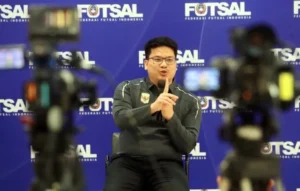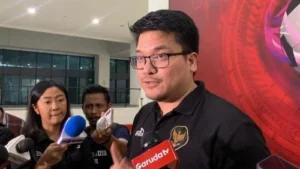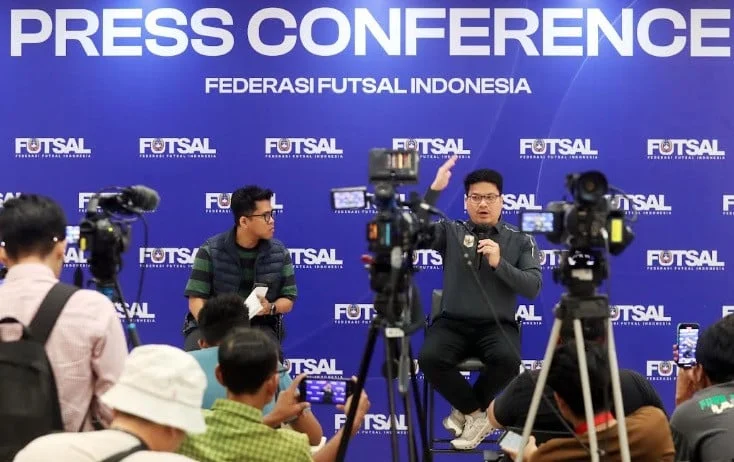
The Indonesian futsal landscape has been plunged into a period of deep uncertainty as Michael Victor Sianipar, the embattled Chairman of the Indonesian Futsal Federation (FFI), has publicly disclosed that staff members within the organization are facing systematic intimidation. This development marks a significant escalation in the ongoing power struggle between the FFI leadership and the Football Association of Indonesia (PSSI), raising concerns regarding governance, organizational autonomy, and the future of the sport in the country.
The discord stems from a contentious decision made by PSSI on November 12, 2026, which effectively terminated Michael Sianipar’s tenure as Chairman. The governing body simultaneously appointed Vivin Cahyani as the Acting Plt (Pelaksana Tugas) Chair, a move that Sianipar and his legal team contend lacks both procedural merit and adherence to the established statutes of the federation. As the FFI prepares for a controversial Extraordinary Congress (KLB) scheduled for December 11, 2026, the atmosphere within the organization has become increasingly fraught with reports of digital interference and personnel pressure.
The Chronology of a Governance Crisis
The roots of the current instability trace back to mid-November, when PSSI exercised its authority to dismiss Sianipar. The decision was delivered via a formal decree, triggering immediate pushback from the FFI leadership. According to Sianipar, the dismissal was a unilateral action that bypassed the necessary internal democratic processes required by the federation’s charter.
Following the announcement of the appointment of Vivin Cahyani, the situation rapidly deteriorated. Sianipar initiated a formal challenge against the decision, filing a report with the PSSI Ethics Committee. He is scheduled to attend a hearing with the committee on November 27, 2026, to present evidence regarding the alleged procedural violations.
The timeline of events leading up to this moment includes:
- November 12, 2026: PSSI issues a decree terminating Michael Sianipar’s chairmanship and installing Vivin Cahyani as the Acting Chair.
- Mid-November 2026: Sianipar formally disputes the legitimacy of his removal, citing statutory non-compliance.
- Late November 2026: Allegations of staff intimidation and digital breaches—including the hacking of the official Timnas Futsal and FFI Instagram accounts—surface.
- November 27, 2026: Scheduled hearing between Michael Sianipar and the PSSI Ethics Committee.
- December 11, 2026: The date slated for the PSSI-organized Extraordinary Congress (KLB) of the FFI.
Allegations of Intimidation and Digital Sabotage
The core of the recent controversy involves the treatment of the FFI workforce. Sianipar has stated that those who remained loyal to his administration or questioned the legality of the transition have been targeted. "There is pressure being applied to the staff members who support the stance I have taken," Sianipar noted, highlighting that the intimidation is intended to coerce compliance with the new administrative direction dictated by PSSI.
Beyond the workplace environment, the conflict has manifested in the digital realm. The official social media accounts of both the Indonesian Futsal National Team and the FFI were compromised, an act that Sianipar views as part of a broader strategy to destabilize his influence and undermine his communication channels with the public and stakeholders. The hacking of these platforms has hindered the federation’s ability to disseminate official information and engage with the community, further complicating the internal management of the sport.
Contextualizing the Governance Conflict
To understand the severity of this crisis, one must examine the relationship between PSSI and the FFI. While the FFI operates under the umbrella of PSSI, it maintains its own internal regulatory framework. The fundamental point of contention revolves around the extent of PSSI’s authority to intervene in the leadership of the futsal federation.
Statutory experts suggest that national sports federations are governed by strict regulations that prevent arbitrary removal of elected officials. When a parent body like PSSI overrides these statutes without following the due process—such as a vote of no confidence or an investigation by an independent disciplinary body—it invites accusations of administrative overreach. This is the crux of Sianipar’s argument: that by failing to adhere to the FFI’s own statutes, PSSI has acted in a way that renders its subsequent decisions, including the upcoming KLB, legally void.
The Upcoming Extraordinary Congress (KLB)
Despite the ongoing dispute, PSSI is moving forward with an Extraordinary Congress (KLB) on December 11, 2026. This gathering is designed to elect a new leadership structure for the FFI. In a surprising turn of events, PSSI leadership has publicly extended an invitation for Sianipar to participate in the election process as a candidate.
Sianipar, however, has firmly declined this offer. His refusal is rooted in his assertion that the KLB itself is fundamentally illegal. "I will not participate in a process that is built upon a foundation of illegality," Sianipar stated. His refusal to run for office is a strategic choice, intended to avoid legitimizing a process he views as a violation of sports governance standards. By abstaining, Sianipar maintains his position that the current transition is a breach of the status quo that cannot be rectified by a pre-determined election.
Broader Implications for Indonesian Futsal
The repercussions of this standoff extend far beyond the offices of the FFI. The sport of futsal in Indonesia has seen significant growth in recent years, with increased professionalization of the league and improved performance on the international stage. Governance crises of this nature risk stalling this momentum.
- Organizational Stability: Continuous leadership disputes create uncertainty for sponsors, players, and staff. Without a clear, legitimate administrative head, the federation risks losing the confidence of its commercial partners and the public.
- Reputational Damage: The image of Indonesian futsal is tarnished when disputes between high-level officials become public, particularly when allegations of intimidation and hacking are involved. This can negatively impact the sport’s appeal to potential investors and global partners.
- Regulatory Precedent: The outcome of the PSSI Ethics Committee hearing will set a vital precedent for how inter-organizational conflicts are resolved within the Indonesian sports ecosystem. If the committee rules in favor of Sianipar, it may force a reversal of the PSSI decree, leading to a long and complicated reconciliation process. If the committee upholds the dismissal, it may set a new standard where PSSI exerts more direct, central control over its affiliated federations.
- The Human Factor: The reported intimidation of staff suggests a toxic work environment that could lead to the loss of experienced administrative personnel. The efficiency of a sports federation relies on the institutional memory held by its staff; replacing these individuals due to political pressure could lead to operational paralysis.
The Path Forward
As the November 27 hearing approaches, all eyes are on the PSSI Ethics Committee. Their decision will determine whether the FFI can return to normalcy or if the conflict will spiral into a prolonged legal battle that could ultimately necessitate intervention from international bodies, such as FIFA or the AFC, which oversee the integrity of national football and futsal associations.
Sianipar’s insistence on procedural justice suggests that he is prepared to take the matter to higher sports arbitration bodies if necessary. Meanwhile, PSSI maintains that its actions were necessary to ensure the continuity and oversight of the federation. For the futsal community in Indonesia, the coming weeks will be critical. The resolution of this dispute will define the future of the sport’s leadership, the autonomy of the FFI, and the ethical standards governing Indonesian sports administration for years to come.
For now, the atmosphere remains tense. With the December 11 KLB looming, the question is not just who will lead the FFI, but whether the process used to install that leadership can withstand the scrutiny of both national law and international sports governance standards. The alleged intimidation and digital sabotage remain significant black marks on the current process, warranting a transparent investigation to ensure that the integrity of the sport remains uncompromised.