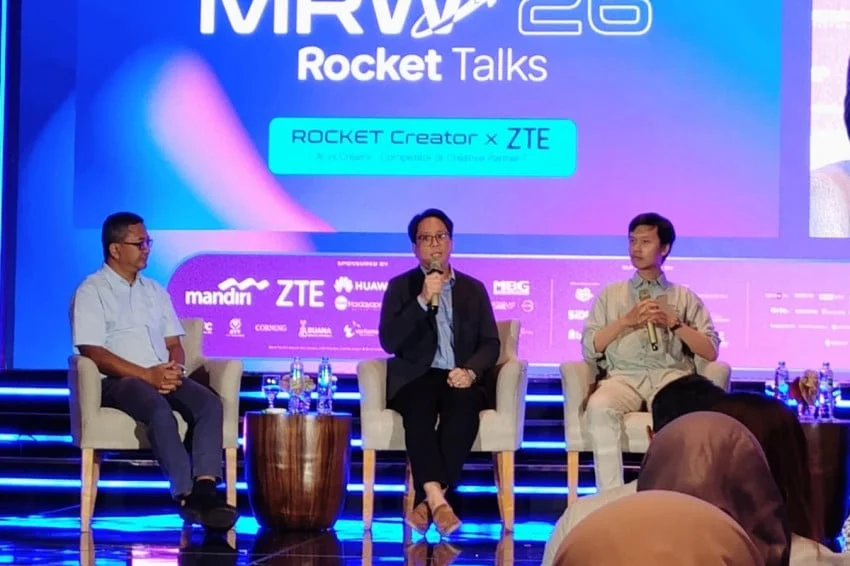
The integration of artificial intelligence into the creative sector has ignited a global debate regarding the future of human labor, artistic integrity, and the authenticity of content production. During the MRW 26 Rocket Talks, held as part of the MoraRepublic Weekend 2026 at the Grand Hyatt Jakarta on Thursday, November 26, 2026, industry experts converged to discuss the evolving landscape of digital media. Among the prominent speakers was Thaleb Wahjudi, Head of AI Production at MNC Digital Entertainment, who provided a nuanced perspective on the relationship between generative technology and human ingenuity. Wahjudi argued that the industry must move away from the binary narrative of "AI versus human" and instead embrace a collaborative model where artificial intelligence functions as a sophisticated teammate rather than a replacement for human creators.
The Evolution of AI in Media Production
The creative industry has undergone a paradigm shift over the past three years. Since the mainstream adoption of generative models in late 2022, production houses worldwide have transitioned from experimental use of AI to fully integrated workflows. MNC Digital Entertainment, a leading player in the Indonesian media landscape, has been at the forefront of this adoption, utilizing AI to streamline post-production, automate visual effects, and optimize content distribution.
However, the rapid acceleration of AI capabilities has sparked concerns regarding the commoditization of creative work. Wahjudi’s remarks at the MRW 26 Rocket Talks served as a strategic reminder that technological proficiency must be balanced with creative stewardship. By positioning AI as a collaborative tool, companies can leverage the speed of machine learning while preserving the nuanced emotional storytelling that defines high-quality entertainment.
Chronology of AI Integration at MNC Digital Entertainment
The adoption of AI at MNC Digital Entertainment did not occur in a vacuum. It was the result of a deliberate, multi-phased strategy aimed at maintaining competitiveness in an increasingly fragmented digital media market.
- Phase 1: Exploration (2023): The company began pilot programs focusing on administrative automation, such as subtitle generation, transcription, and basic image enhancement. This phase was primarily designed to reduce overhead costs and improve operational efficiency.
- Phase 2: Creative Augmentation (2024-2025): The focus shifted toward generative AI for conceptualization. Creative teams began using AI prompts to generate storyboards, character concepts, and micro-drama scripts, significantly shortening the pre-production timeline.
- Phase 3: Human-AI Synergy (2026): Current efforts are focused on the integration of AI within the final production stage. This involves using AI-driven tools to assist in editing and color grading while keeping human directors and producers at the helm of final creative decisions to ensure emotional resonance.
The Human Factor: Why Emotion Remains Untransferable
A central pillar of Wahjudi’s presentation was the inherent limitation of artificial intelligence regarding human emotion. While large language models and generative visual platforms can mimic the aesthetics of human art, they lack the lived experience required to imbue a narrative with genuine pathos.
"Secanggih-canggihnya AI, emosi ataupun perasaan itu tetap manusia yang tahu cara berpikir," Wahjudi stated. His assertion highlights a critical philosophical and technical distinction: AI operates on patterns, statistics, and historical data, whereas human creativity is often rooted in lived trauma, joy, and complex social intuition. According to Wahjudi, while an AI can generate a screenplay, it cannot understand the "why" behind a character’s decision unless a human provides the intent and context. This human-led direction is what separates content that is merely technically competent from content that resonates with an audience on a deeper level.
Market Data and the Future of the Creative Economy
The rise of AI in the creative industry is supported by significant market growth. According to recent reports from the World Economic Forum and various industry analysts, the global generative AI in media and entertainment market is projected to grow at a compound annual growth rate (CAGR) of over 20% through 2030.
However, this growth is accompanied by labor market shifts. Studies suggest that while 30% of entry-level creative tasks—such as rotoscoping, basic color correction, and script drafting—may be automated by 2027, the demand for "creative directors" who can oversee AI workflows is expected to increase by 15%. This suggests that the industry is not shrinking, but rather evolving toward a high-skill requirement model.
Official Responses and Industry Consensus
Wahjudi’s perspective aligns with a growing consensus among technology leaders and media executives. At the recent World Content Summit, leaders from major global studios expressed similar sentiments, noting that AI tools are most effective when used to remove "drudgery" from the creative process.
By offloading repetitive tasks to AI, creators gain the time necessary to focus on high-value cognitive work. This shift is expected to improve the quality of content across the board. In the Indonesian market, where the micro-drama and short-form video sectors are booming, the ability to iterate quickly using AI while maintaining a high standard of local cultural relevance is a competitive advantage.
Implications for Future Production
The implications of this "AI-as-teammate" philosophy are far-reaching. First, it necessitates a change in how media companies hire and train staff. Future production teams will require "AI-literate" creative professionals—individuals who understand the technical constraints of AI prompts but possess the artistic background to curate the output.
Second, the legal and ethical landscape will continue to evolve. As the industry relies more heavily on AI, issues surrounding copyright, intellectual property, and the ethical use of training data will become paramount. Companies like MNC Digital Entertainment are expected to lead in developing internal guidelines that prioritize ethical AI usage, ensuring that while the tool is used to enhance productivity, it does not infringe on the rights of human creators.
Finally, the shift toward human-centric AI usage ensures that the medium of film and television retains its role as a mirror of human experience. If the industry were to rely solely on generative output without human intervention, the result would likely be a recursive loop of synthetic content that lacks the spark of innovation that drives cultural progress.
Conclusion: A Collaborative Horizon
The MRW 26 Rocket Talks served as a platform for setting the standard for the next generation of digital media in Indonesia. Thaleb Wahjudi’s message is clear: the integration of AI is not a threat to be feared but a tool to be mastered. By maintaining human agency at the heart of the creative process, the industry can leverage the immense power of machine learning to push the boundaries of storytelling, visual effects, and audience engagement.
As MNC Digital Entertainment and its peers continue to refine their workflows, the focus will remain on balancing technological prowess with the irreplaceable depth of human emotion. The future of the creative industry is not one where the machine replaces the artist; it is one where the artist, empowered by the machine, achieves feats of creativity that were previously unimaginable. This collaborative future promises a more vibrant, efficient, and deeply human entertainment landscape, ensuring that even in an age of algorithms, the soul of the story remains firmly in human hands.