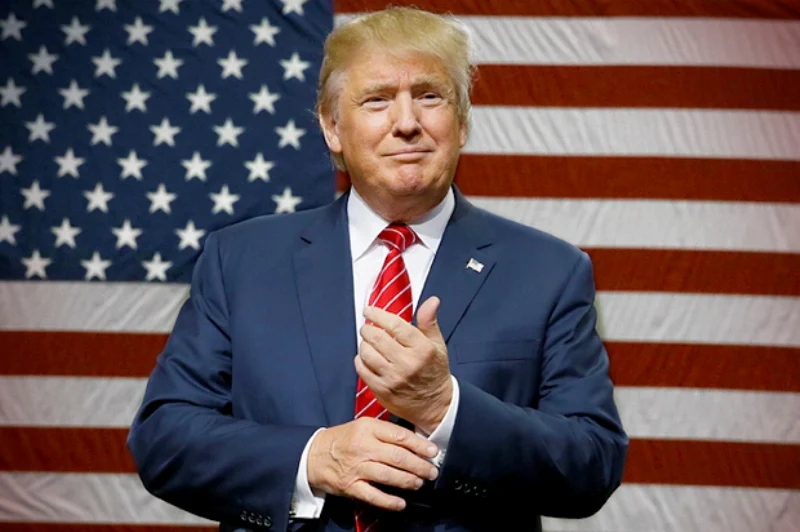
Donald John Trump was born on June 14, 1946, in the borough of Queens, New York, entering a world that would eventually be shaped by his larger-than-life persona, immense business empire, and unprecedented political career. Long before he captured global headlines as a polarizing political candidate, a reality television host, and the leader of the free world, Trump’s foundational years were defined by a strict upbringing, notable athletic and academic achievements, and a formative stint at a New York military academy designed to channel his boundless and sometimes volatile energy. Understanding the trajectory of the 45th and potentially future President of the United States requires examining the early chapters of his life—an era marked by affluence, rigorous discipline, parental expectations, and the cultivation of an unwavering competitive drive.
Main Facts and Family Background
Born as the fourth of five children to real estate developer Frederick Christ "Fred" Trump and Scottish immigrant Mary MacLeod Trump, Donald grew up in a wealthy household in Jamaica Estates, a prosperous neighborhood in Queens. The Trump family fortune was already substantial, anchored by Fred Trump’s successful housing developments targeted at middle-class families in Queens and Brooklyn.
From an early age, Donald exhibited traits that would become his trademark characteristics throughout his public life: high energy, supreme self-confidence, assertiveness, and a distinct penchant for challenging authority. While his siblings generally adhered to the quieter expectations of upper-middle-class suburban life, young Donald was notably rambunctious. Biographers and family accounts often describe him as a disruptive presence in classrooms and a child who pushed boundaries, testing the patience of both his teachers and his parents.
Recognizing that their son’s aggressive assertiveness needed proper channeling before it derailed his future, Fred and Mary Trump made a pivotal decision in 1959. When Donald turned 13, they enrolled him in the New York Military Academy (NYMA), a private boarding school located in Cornwall, New York. This intervention would fundamentally alter the course of his adolescence, instilling in him a deep appreciation for structure, physical conditioning, hierarchical discipline, and competitive achievement.
The Military Academy Years: Discipline Meets Ambition
The New York Military Academy was renowned for its strict adherence to military protocols, demanding physical fitness standards, and rigorous academic curriculum. For a teenager accustomed to the relative comforts of a wealthy Queens household, the transition was jarring. However, rather than rebelling against the rigid environment, Trump adapted remarkably well, discovering that the system rewarded ambition, physical prowess, and leadership.
According to archival records and accounts from Biography, Donald Trump quickly distinguished himself among his peers. Far from being a struggling student weighed down by disciplinary reprimands, he excelled in multiple facets of academy life. His academic performance was strong, reflecting a sharp intellect that favored applied knowledge and strategic thinking. Concurrently, he embraced the strenuous physical training regimen, utilizing sports as an outlet for his high energy and competitive instincts.
Contrary to the impression left by his later physical stature as an adult, Trump was remarkably athletic during his youth. He emerged as a standout star in several varsity sports at NYMA. In 1962, he lettered in both football and baseball, showcasing his coordination and team-oriented capabilities. The following year, in 1963, he continued his athletic dominance by excelling in soccer.
His leadership potential did not go unnoticed by the academy’s faculty and coaching staff. By 1964, Trump had risen through the ranks to become the captain of the baseball team. His leadership on the field and dedication to the sport earned him high praise, culminating in the prestigious Coach’s Award presented to him in 1964 by Ted Tobias, a renowned high school and academy baseball coach of that era.
Beyond athletics, Trump’s leadership skills were officially recognized within the military structure of the school. He was promoted to the rank of Captain, serving as an S-4 officer, where he was responsible for logistical operations within the student battalion. In this capacity, he worked alongside senior leadership to manage fellow cadets, gaining early, hands-on experience in organizational management and command hierarchy. Furthermore, to instill a sense of humility and financial independence, cadets were encouraged to participate in work-study programs; Trump spent time engaging in part-time work around the academy, learning the value of labor outside of his family’s considerable wealth.
Chronology of Educational Milestones
The progression of Donald Trump’s education maps a clear route from structured military conditioning to higher education in finance and economics, laying the essential groundwork for his eventual entry into real estate development.
- June 14, 1946: Donald John Trump is born in Queens, New York, to Fred and Mary Trump.
- 1959: At the age of 13, following behavioral challenges in conventional schools, he is enrolled in the New York Military Academy (NYMA) by his parents.
- 1962–1963: Trump establishes himself as a multi-sport athlete, starring in football, baseball, and soccer.
- 1964: Appointed captain of the NYMA baseball team, Trump receives the Coach’s Award from Ted Tobias and attains the rank of Captain S-4 officer, demonstrating early aptitude for leadership and logistics.
- 1964: Upon graduating from NYMA, Trump enrolls at Fordham University in the Bronx, New York, pursuing undergraduate studies while remaining close to his family’s business interests.
- 1966: After two years at Fordham, Trump transfers to the Wharton School of Finance and Commerce at the University of Pennsylvania, a premier institution for real estate and business education.
- 1968: Trump graduates from the Wharton School with a Bachelor of Science degree in Economics, specializing in real estate, officially stepping into the professional sphere to join his father’s company.
Transition to Higher Education: Fordham and Wharton
Having successfully navigated the rigorous environment of the New York Military Academy, Trump graduated in 1964 and prepared for university life. Initially, he chose to remain close to his New York roots, enrolling at Fordham University. For the first two years of his undergraduate education, Trump studied at Fordham, balancing his coursework with a growing awareness of the massive real estate developments taking place across New York City—projects spearheaded by his father, Fred Trump.
However, recognizing the need for a more specialized business education to prepare him for the complexities of large-scale commercial real estate, Trump set his sights on one of the most prestigious business programs in the country: the Wharton School of Finance and Commerce at the University of Pennsylvania.
Transferring to Wharton in 1966 marked a crucial turning point. The institution was renowned for producing titans of industry, Wall Street executives, and prominent entrepreneurs. Immersed in advanced coursework covering corporate finance, urban development, and economic theory, Trump refined his theoretical understanding of commerce. The academic rigor at Wharton provided him with the analytical tools necessary to evaluate market trends, secure complex financing structures, and envision mega-developments that would eventually redefine the Manhattan skyline.
In 1968, Trump graduated from the Wharton School with a Bachelor of Science degree in Economics, featuring a specialization in real estate—the exact sector in which he would build his legendary business empire. Armed with a prestigious degree, practical leadership experience from his military academy days, and the direct mentorship of his father, Trump stepped out of the academic bubble and directly into the cutthroat world of New York City real estate, founding the corporate ethos that would later define his global brand.
Supporting Data and Historical Context
The mid-20th-century socio-economic landscape of New York City served as the ultimate incubator for Trump’s business philosophy. Post-World War II America was experiencing a massive economic boom, characterized by suburban expansion, infrastructural development, and a surging demand for housing. Fred Trump’s success with Elizabeth Trump & Son (later rebranded as The Trump Organization) was emblematic of this era.
Data from historical business archives indicate that by the time Donald Trump graduated from Wharton in 1968, his father’s company was managing thousands of apartment units across Brooklyn, Queens, and Staten Island, valued in the tens of millions of dollars—a massive sum at the time. However, while his father focused primarily on middle-class housing projects in the outer boroughs, Donald envisioned a grander, more glamorous stage: Manhattan.
The decision to send Donald to a military academy was not uncommon for affluent families during the 1950s and 1960s. Elite boarding schools and military academies were frequently utilized to instill discipline, curtail delinquency, and network among the socio-economic elite. For Trump, the experience achieved its dual purpose: it curbed his rebellious impulses while forging an unshakeable self-reliance and competitive spirit. Psychologists and biographers analyzing his formative years often point to the structured, hierarchical environment of NYMA as the crucible where he developed his characteristic preference for loyalty, strength, and dominance in negotiations.
Official Responses and Perspectives
While Donald Trump’s later political campaigns elicited sharply polarized reactions from the American public and international observers, reflections on his youth and education offer a fascinating glimpse into the psychological makeup of a polarizing figure.
Former classmates and instructors at the New York Military Academy have frequently shared mixed memories of Trump during his cadet years. Some recalled him as a hyper-competitive individual who demanded excellence from himself and others, often patrolling the barracks to ensure uniform inspections met his rigorous standards. Others noted his natural charisma and ability to command respect within the student ranks, traits that undoubtedly foreshadowed his later success as a media personality and political leader.
Biographers, such as Gwenda Blair in The Trumps: Three Generations of Builders and a President, have emphasized that Donald’s time at NYMA was instrumental in transforming an unruly adolescent into a focused operator. The institutional emphasis on winning, maintaining appearances, and projecting absolute strength aligned seamlessly with the lessons taught by his father, Fred Trump, who famously operated under the philosophy that life was a competition divided into "killers and losers."
Broader Impact and Implications
The formative years of Donald Trump—spanning his upbringing in Queens, his disciplined rehabilitation at the New York Military Academy, and his elite business training at Wharton—offer critical insights into the architecture of his later career. The traits forged in his youth—resilience under pressure, acute physical and mental discipline, an obsession with winning, and an instinctive grasp of hierarchical power dynamics—became the foundational pillars of his public identity.
As an entrepreneur, these characteristics enabled him to survive high-stakes financial crises in the early 1990s and rebuild a multi-billion-dollar global brand. As a media figure, his commanding presence and willingness to court controversy kept him at the forefront of American popular culture for decades. And ultimately, as a political leader, the self-assurance and combativeness cultivated on the athletic fields and drill squares of his youth translated into a populist political style that permanently disrupted traditional American political norms.
Ultimately, the narrative of Donald Trump’s early life is not merely a biographical footnote, but the blueprint of a man who utilized discipline, ambition, and institutional training to engineer one of the most improbable and consequential ascents in modern global history.