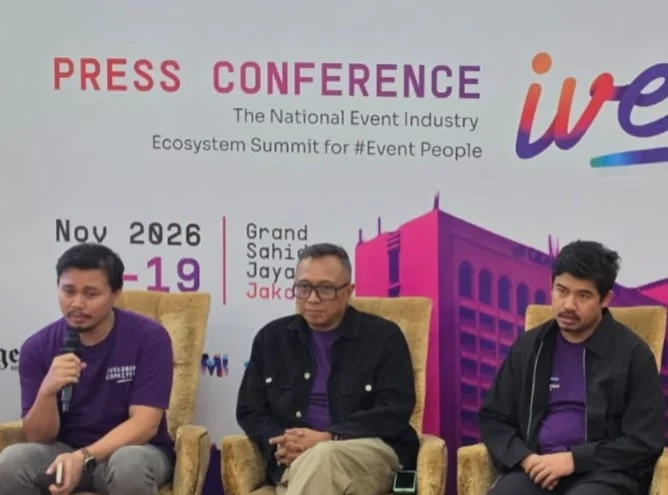
The Indonesia Event Management Summit (IVES) 2026 is poised to redefine the domestic event landscape by introducing the Experience/Event Economic Calculator (EEC), a strategic framework designed to quantify the multidimensional impact of events beyond simple ticket sales. As the industry moves toward a more data-driven future, the summit—scheduled to serve as a pivotal gathering for professionals—aims to transform the perception of event management from a support service into an indispensable pillar of the national economy.
The Evolution of IVES: A Catalyst for Professionalism
Since its inception, IVES has served as the primary forum for event organizers, creative agencies, and industry stakeholders to synchronize standards and share best practices. The 2026 edition, carrying the theme "From Invisible to Indispensable" and the rallying cry "Make It Count," represents a maturing of the sector. Following the post-pandemic resurgence, the industry has faced challenges regarding sustainability, quality control, and economic legitimacy. IVES 2026 seeks to address these by fostering a shift in narrative: shifting the focus from mere logistical execution to the creation of long-term economic and cultural value.
Introducing the Experience/Event Economic Calculator (EEC)
A central pillar of the upcoming summit is the formal introduction and implementation of the Experience/Event Economic Calculator (EEC). According to Aryo Febrian Moedanton, CEO of Konect, the current industry metrics are often fragmented and fail to capture the holistic economic footprint of major gatherings.
"Through EEC, we want to help industry players measure the economic impact alongside the experiential value generated by an event," Moedanton stated. "This measurement becomes the foundation for improving the quality of implementation and demonstrating the tangible contribution of the industry to the broader economy."
The EEC is designed to track a comprehensive range of data points. Rather than focusing solely on ticket revenue or total attendance—metrics often criticized for their superficiality—the EEC incorporates:
- Direct Multiplier Effects: Spending in the local hospitality sector, including hotels, dining, and retail.
- Logistical Ecosystem Impact: Revenue generated by local transportation providers, production crews, and equipment rental firms.
- Induced Economic Activity: The long-term impact of brand exposure and business collaborations initiated during the event.
- Social Value: The qualitative impact on regional visibility and community engagement.
The Economic Context: Why Measurement Matters
The Indonesian creative economy, which encompasses event management, has historically been a significant contributor to the national GDP. According to data from the Ministry of Tourism and Creative Economy, the creative sector has consistently contributed over 7% to the national GDP in recent years. However, the event industry—comprising concerts, festivals, conferences, and exhibitions—has struggled to articulate its specific weight in these figures.
Without standardized metrics, organizers often find it difficult to secure institutional funding, government grants, or corporate sponsorships. By adopting a unified tool like the EEC, the industry aims to provide empirical evidence that events are not just "spending" hubs but "economic catalysts." This shift is particularly critical as Indonesia seeks to position itself as a regional hub for international-scale events, competing with Singapore, Thailand, and Malaysia for the tourism and MICE (Meetings, Incentives, Conferences, and Exhibitions) market.
Intellectual Property and Long-Term Viability
A key sub-theme of IVES 2026 is the cultivation of Intellectual Property (IP). Chandra Samhari, Head of Marketing & Promotion at Musica, highlighted that the industry’s current reliance on transient trends is a limiting factor for growth.
"The development of works or intellectual property in the music industry requires a strong identity, consistent strategy, and the ability to build relationships with audiences so that they are not just popular for a moment," Samhari noted.
This perspective underscores a shift toward sustainability. If event organizers can successfully own or develop the IPs associated with their events—such as original festival concepts, recurring conference brands, or unique concert experiences—they can build an asset base that increases in value over time. This professionalization of IP management is seen as a necessary evolution to ensure the longevity of Indonesian event brands in an increasingly globalized market.
Technical Excellence as the Foundation of Trust
While the economic metrics provide the framework for growth, the technical execution remains the bedrock of the industry. Reza Pamungkas, Chairman of the Presidium of the Indonesian Event Association (API), emphasized that public trust is the most fragile commodity in the event business.
"The success of a performance is not sufficiently measured by sold-out tickets," Pamungkas argued. "Technical readiness, production quality, and team coordination are essential factors to ensure the quality of the event and the experience promised to the audience can be met."
The emphasis on technical standards comes in response to a series of high-profile event management challenges that occurred globally in the early 2020s, ranging from overcrowding concerns to production failures. By prioritizing rigorous production standards, the Indonesian event management community is signaling a commitment to international safety and quality benchmarks, which is a prerequisite for attracting global tours and large-scale international conventions.
Broader Implications for the National Economy
The implications of the standardization proposed at IVES 2026 extend beyond the event industry. If the EEC becomes the industry standard, it will allow policymakers to better allocate resources for infrastructure development. For instance, if an area can prove through EEC data that it consistently hosts events with high regional economic impacts, it creates a stronger case for investments in transportation hubs, venue facilities, and digital connectivity.
Furthermore, the integration of technology in measurement aligns with Indonesia’s broader digital transformation goals. By digitizing the tracking of economic activities at events, organizers can provide real-time data to stakeholders, facilitating faster decision-making and more efficient resource allocation.
Challenges and Future Outlook
Despite the enthusiasm surrounding the IVES 2026 agenda, experts acknowledge that the transition to standardized metrics will face challenges. Chief among these is the lack of universal data sharing. Many private event organizers treat attendance and financial figures as confidential trade secrets. Persuading these entities to share, even anonymized, data for the sake of an industry-wide index will require a significant shift in corporate culture.
Moreover, the technical training required to implement the EEC effectively across diverse event types—from small-scale community workshops to massive international music festivals—will necessitate a comprehensive educational outreach program. IVES 2026 is expected to provide the initial roadmap for this training, likely through workshops and partnerships with academic institutions and industry associations.
Conclusion: A Pivotal Moment for Indonesia’s Creative Sector
As Indonesia prepares for the 2026 summit, the industry stands at a crossroads. The combination of economic measurement, IP development, and strict technical standards forms a trifecta that could propel the nation’s event management industry into a new era of professionalism.
By moving "From Invisible to Indispensable," the sector is effectively asserting its place in the national economic narrative. If the initiatives discussed at IVES 2026 are successfully implemented, the event industry will no longer be viewed merely as a source of temporary entertainment, but as a sophisticated, high-impact engine of economic development and cultural soft power. The road ahead requires collaboration, data transparency, and an unwavering commitment to the "Make It Count" philosophy, but for a nation that thrives on communal activity and vibrant cultural expression, the potential for growth is immense.