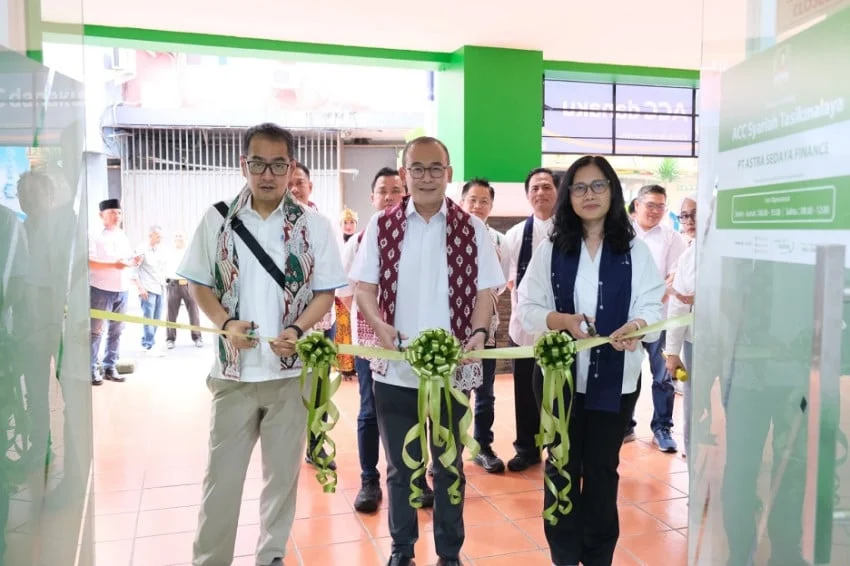
Astra Credit Companies (ACC), a leading financing institution in Indonesia, has officially reinforced its commitment to supporting the national Islamic economy by inaugurating its fifth dedicated Sharia branch office. Situated in the vibrant city of Tasikmalaya, West Java, the new facility marks another significant milestone in the company’s ongoing decentralization strategy and its ambition to broaden ethical financial inclusion across the archipelago. The grand opening event, held on Tuesday, November 24, 2026, brought together key executive members of ACC, regional stakeholders, and local business leaders to celebrate the integration of advanced Sharia-compliant financial solutions into the local economic ecosystem.
The newly established ACC Syariah Tasikmalaya branch is strategically located within the prominent commercial hub of Ruko Asia Plaza, along Jalan HZ Mustofa Blok B9-B11, in the Tugujaya sub-district of Cihideung. This prime location places the institution at the epicenter of Tasikmalaya’s bustling commercial district, ensuring high accessibility for both retail and commercial clients seeking alternative, values-based financing options. The inauguration ceremony was graced by a high-ranking delegation from ACC’s corporate headquarters and regional divisions, including Chief Operating Officer Devy Santoso Jayadi, EVP Retail AR Management Dean, EVP Retail Operation Jeanny Fransisca Simbolon, and Head of ACC Sharia Business Unit Wisnu Wardhana. Also in attendance were key operational leaders from West Java, namely Area Sales Rudi Wiseno, Area Operation Thedy Suanda, and Area AR Aryandi Wisnu Dwiputro, alongside the newly appointed branch leadership of ACC Syariah Tasikmalaya.
Strategic Rationale Behind the Expansion into Tasikmalaya
The decision to establish the fifth ACC Syariah branch in Tasikmalaya is far from arbitrary; it is the result of meticulous market research and a deep understanding of the region’s socio-economic landscape. Famously recognized across Indonesia as the "City of Santri" due to its rich Islamic heritage, numerous traditional boarding schools, and profoundly religious community, Tasikmalaya presents a fertile ground for the propagation of Islamic financial products.
During the inauguration, Chief Operating Officer Devy Santoso Jayadi elaborated on the strategic importance of the region. He emphasized that Tasikmalaya combines a strong cultural affinity for Islamic principles with a dynamic, rapidly growing local economy centered around textile manufacturing, embroidery, and small-to-medium enterprises (SMEs). This unique combination makes the city an ideal environment for introducing financial products that operate on the principles of fairness, transparency, and risk-sharing, which are inherent to Islamic economics.
Furthermore, the expansion aligns seamlessly with the broader national strategy spearheaded by the Indonesian government and the Financial Services Authority (Otoritas Jasa Keuangan or OJK) to elevate the nation’s financial literacy and inclusion indices. Despite being home to the largest Muslim population in the world, Indonesia’s Islamic finance market share has historically lagged behind conventional banking sectors. By establishing physical outposts in regional economic centers like Tasikmalaya, institutions like ACC play a pivotal role in bridging this gap, demystifying Sharia financial products, and integrating previously underserved segments of the population into the formal financial grid.
Comprehensive Product Offerings Tailored to Modern Consumer Needs
To cater to the diverse and evolving financial requirements of the Tasikmalaya community, ACC Syariah Tasikmalaya is equipped to deliver a comprehensive suite of fully compliant Sharia financial services. Head of ACC Sharia Business Unit Wisnu Wardhana detailed the extensive portfolio available at the new branch during the launch event.
The primary offerings include conventional auto financing structured under Sharia principles, covering both new and used vehicles. This allows customers to acquire personal or commercial transportation without compromising their religious convictions regarding interest (riba). In addition to vehicle financing, the branch provides cash facility solutions designed to help individuals manage liquidity needs or fund pressing personal expenditures through transparent, contract-based arrangements.
Recognizing the deep religious devotion of the local populace, ACC Syariah Tasikmalaya also features specialized Hajj financing services. This product is meticulously designed to help prospective pilgrims secure their religious obligations by facilitating early registration for the mandatory pilgrimage quota, alleviating the burden of lump-sum cash outflows.
Perhaps most notably, the branch introduces one of ACC’s newest and most innovative products: Precious Metal (Logam Mulia) Financing. This offering comes on the heels of surging
consumer interest in safe-haven assets. Recent interactive surveys conducted by ACC revealed a striking economic trend among Indonesian consumers, wherein approximately 80% of surveyed respondents expressed a preference for investing in gold rather than spending discretionary funds on vacations or non-essential luxury goods. By integrating gold financing into its regional branch network, ACC Syariah provides Tasikmalaya residents with a secure, inflation-hedged investment vehicle that adheres strictly to Islamic commercial jurisprudence.
The Evolution and Chronology of ACC’s Sharia Expansion
The opening of the Tasikmalaya branch represents the latest chapter in a carefully orchestrated institutional roadmap. ACC’s journey into the Islamic finance sector began with the establishment of its dedicated Sharia Business Unit (Unit Usaha Syariah or UUS), designed to operate parallel to its conventional operations while adhering to the oversight of the National Sharia Board of the Indonesian Ulema Council (DSN-MUI).
Over the past several years, ACC has methodically scaled its physical footprint to meet surging consumer demand for ethical financial alternatives. Following the initial rollout of its dedicated Sharia branch network in major metropolitan areas, the company shifted its focus toward secondary cities and regional economic corridors where demand for Islamic banking and financing solutions has experienced exponential growth.
The timeline of the current expansion phase highlights a deliberate, data-driven approach. Following comprehensive regional demand assessments conducted throughout previous fiscal years, ACC identified West Java as a top-priority province due to its high demographic concentration and vibrant entrepreneurial ecosystem. The Tasikmalaya branch joins a growing network of specialized offices, following successful launches in other key economic centers. Each new branch opening is preceded by rigorous staff training, regulatory compliance audits, and community outreach programs to ensure seamless integration into the local financial fabric.
Broader Economic Implications and Industry Impact
The inauguration of ACC Syariah in Tasikmalaya carries significant implications for the regional economy of West Java and the broader national Islamic finance landscape. From a macroeconomic perspective, the injection of accessible, ethical capital into a regional market stimulates entrepreneurial activity and supports the growth of local businesses. SMEs, which form the backbone of Tasikmalaya’s economy—particularly in the trade, culinary, and garment sectors—frequently encounter barriers when attempting to secure traditional bank financing. Sharia-compliant financing models, which emphasize profit-and-loss sharing and asset-backed transactions, offer a viable and often more equitable alternative for business owners seeking capital expansion.
Moreover, the physical presence of a dedicated Sharia institution acts as an educational catalyst. Financial literacy remains one of the primary hurdles in the development of Indonesia’s Islamic economy. Many consumers remain hesitant to engage with financial institutions due to a lack of understanding regarding the operational mechanics of Sharia banking—such as the distinction between mudharabah (profit-sharing), musyarakah (joint venture), and murabahah (cost-plus financing) contracts. By operating local branches staffed by trained financial advisors, institutions like ACC actively demystify these concepts through direct consumer engagement, seminars, and localized outreach initiatives.
From an industry perspective, ACC’s continued investment in its Sharia business unit underscores a broader commercial trend: mainstream financial institutions are increasingly recognizing that ethical finance is not merely a niche market, but a powerful engine for sustainable growth. As environmental, social, and governance (ESG) criteria gain prominence among global and domestic investors, the inherent ethical framework of Islamic finance positions institutions like ACC favorably to attract conscientious consumers and institutional partners alike.
Future Outlook and Strategic Commitments
Looking ahead, the leadership team at Astra Credit Companies has signaled that the expansion of the Sharia network will not stop in Tasikmalaya. The company’s strategic blueprint for the coming years includes continuous evaluation of emerging economic hubs across Indonesia, with the ultimate objective of making ethical financial services universally accessible.
As digital transformation continues to reshape the financial sector, ACC is also working on integrating its physical branch capabilities with robust digital platforms. This hybrid approach ensures that customers in regions like Tasikmalaya can enjoy the personalized advisory services of a physical branch while leveraging the convenience of digital application processes, mobile payment integrations, and online account management.
In conclusion, the grand opening of the fifth ACC Syariah branch in Tasikmalaya on November 24, 2026, is far more than a routine corporate expansion. It represents a convergence of cultural alignment, strategic economic forecasting, and corporate social responsibility. By bridging the gap between sophisticated financial products and regional communities, ACC continues to solidify its position as a transformative force in Indonesia’s ongoing journey toward a robust, inclusive, and sustainable Islamic economy.