The Masjid Al-Aqsa, situated within the ancient limestone walls of the Old City of Jerusalem, stands as one of the most revered sanctuaries in the Islamic world, representing the first Qibla for Muslims and the site of the Prophet Muhammad’s miraculous Night Journey (Isra’ Mi’raj). For many Indonesian Muslims, the opportunity to perform the Umrah pilgrimage in Saudi Arabia is frequently viewed as a gateway to visiting this third holiest site in Islam. However, the journey from the Hijaz to the Levant is fraught with logistical complexities, primarily centered on the rigorous and time-consuming visa application processes required to enter the territory currently under Israeli administrative control. As travel agencies in Indonesia report a surge in interest for "Umrah Plus" packages, experts emphasize that spiritual fervor must be matched by meticulous administrative preparation, particularly regarding the 40-day visa processing window that serves as a mandatory threshold for entry.
The Critical Window: Understanding the 40-Day Visa Requirement
Navigating the administrative landscape of the Middle East requires a sophisticated understanding of geopolitical realities. Syam Resfiadi Amirysah, the Director of Patuna Syam Resfiadi Amirysah (Patuna), a prominent figure in Indonesia’s religious travel industry, has highlighted that the most significant hurdle for pilgrims is the procurement of the necessary entry permits. Because Indonesia does not maintain formal diplomatic relations with Israel, the process for obtaining a visa to visit Jerusalem—and by extension, Masjid Al-Aqsa—does not follow standard bilateral protocols. Instead, Indonesian citizens must rely on group visa manifests processed through specialized channels, often involving intermediaries in neighboring countries such as Jordan or Egypt.
According to Amirysah, the processing time for these visas is strictly mandated at 40 working days. This duration is not a mere suggestion but a rigid administrative requirement that reflects the depth of security screenings conducted by the issuing authorities. In practical terms, this necessitates that pilgrims finalize their registration and submit all requisite documentation at least two months prior to their scheduled departure date. This buffer allows for the compilation of the "manifest," a comprehensive data set that includes the full names of the pilgrims, their contact information, the names and phone numbers of their parents, and high-quality scans of their passports.
The complexity of this timeline cannot be overstated. Amirysah notes that for a departure scheduled on the 10th of a given month, confirmation of visa approval—or denial—is often only received as late as the 5th or 7th of that same month. This narrow window between approval and departure creates a high-pressure environment for both travel agencies and pilgrims. Consequently, the industry standard has shifted toward encouraging a 60-day lead time to ensure that all security clearances are obtained without jeopardizing the entire itinerary.
Strategic Logistics: The Jordan and Egypt Gateways
The journey to Al-Aqsa for Indonesian pilgrims typically follows one of two primary logistical routes, often integrated into a broader Umrah itinerary. The first and most common route is through the Hashemite Kingdom of Jordan. Pilgrims usually fly from Saudi Arabia to Amman before traveling by land to the King Hussein Bridge (also known as the Allenby Bridge), which serves as the primary crossing point between Jordan and the West Bank. This crossing is managed by Israeli authorities, and it is at this juncture that the group visa manifests are scrutinized.
The second route involves entering through Egypt, specifically via the Taba border crossing in the Sinai Peninsula. This route is often chosen by those who wish to combine their pilgrimage with a visit to historical sites in Cairo and the Sinai, such as Mount Sinai (Jabal Musa). Regardless of the entry point, the requirement for the Israeli-issued visa remains the constant variable. Since the Palestinian Authority does not issue its own independent visas that are recognized at these border crossings, the Israeli permit is the only legal instrument that allows Indonesian passport holders to reach the Al-Aqsa compound.
Travel agencies play a vital role in coordinating with local partners in Amman or Cairo to ensure that the manifest is submitted to the Israeli Ministry of Interior well in advance. These local partners act as guarantors for the groups, a necessary step in the absence of direct diplomatic missions. The coordination between Indonesian agencies and their counterparts in the Levant is a testament to the sophisticated network of religious tourism that has developed over the decades to facilitate these spiritual journeys.
The Religious Significance and the "Umrah Plus" Phenomenon
The drive to visit Al-Aqsa is rooted deeply in Islamic eschatology and tradition. The mosque is not merely a historical monument but a living symbol of faith. According to various Hadiths, a prayer offered in Masjid Al-Aqsa is significantly more meritorious than prayers offered elsewhere, surpassed only by the rewards of praying at the Masjid al-Haram in Mecca and the Masjid an-Nabawi in Medina. This "three-mosque" journey is a spiritual aspiration for many, leading to the rise of the "Umrah Plus Al-Aqsa" package.
In the post-pandemic era, there has been a notable shift in the consumption patterns of Indonesian pilgrims. While standard Umrah remains the priority, there is a growing demographic of middle-to-upper-class travelers who seek a more comprehensive religious and historical experience. These travelers are willing to navigate the higher costs and longer preparation times associated with visiting Jerusalem. Data from the Association of Indonesian Hajj and Umrah Organizers (Himpuh) indicates that packages including Al-Aqsa have seen a steady 15-20% increase in demand year-on-year, provided the regional security situation remains stable.
The "Umrah Plus" model also offers an economic advantage by consolidating travel costs. Since the pilgrim is already in the Middle East, the incremental cost of adding a four-to-five-day excursion to Jerusalem and Jordan is significantly lower than organizing a standalone trip from Jakarta. This logistical efficiency, however, is entirely dependent on the successful acquisition of the visa, making the 40-day rule the lynchpin of the entire operation.
Geopolitical Context and Security Implications
The feasibility of visiting Al-Aqsa is inextricably linked to the volatile geopolitical climate of the region. Jerusalem remains one of the most contested cities in the world, and the Al-Aqsa Mosque compound—known to Jews as the Temple Mount—is often the flashpoint for regional tensions. For Indonesian pilgrims, this means that their travel plans are subject to sudden changes based on the security situation on the ground.
Israeli authorities maintain strict control over who enters the compound, and entry can be restricted based on age, nationality, or prevailing security alerts. For Indonesian groups, the visa process serves as the primary security filter. The requirement for parent names and detailed personal data is part of a broader vetting process designed to identify any potential security risks. While the vast majority of Indonesian pilgrims are granted entry without issue, the process remains opaque, and denials are occasionally issued without detailed explanation, adding an element of uncertainty to the planning process.
Furthermore, the lack of diplomatic ties between Jakarta and Jerusalem means that Indonesian pilgrims do not have access to traditional consular assistance while in the territory. Travel agencies fill this void by providing 24-hour assistance through their local partners. This reliance on private networks highlights the unique nature of Indonesian religious tourism in the Levant, where the spiritual mission must navigate a landscape of political sensitivity and administrative rigor.
Historical Context: A Mirror of Reflection
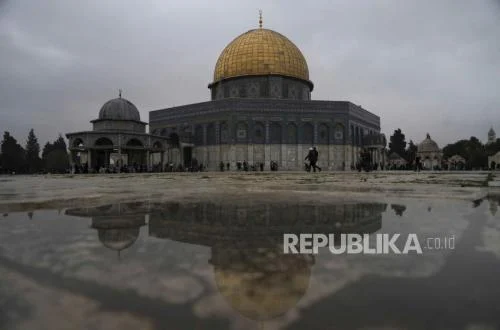
The visual of the Dome of the Rock reflected in rain puddles on a cold Friday in Jerusalem, as captured in early 2023, serves as a poignant reminder of the site’s enduring allure. The Al-Aqsa compound, covering approximately 14 hectares, is a masterpiece of Umayyad, Abbasid, and Ottoman architecture. The Dome of the Rock, with its iconic golden dome and intricate tile work, remains one of the most photographed structures in the world.
For the pilgrim, the experience of standing in the same courtyard where prophets are believed to have prayed is the culmination of a lifelong dream. The cold winters of Jerusalem, where temperatures can drop significantly compared to the arid heat of Mecca, offer a starkly different environment for worship. This contrast in climate and atmosphere adds to the profound emotional impact of the journey. However, to reach this moment of reflection, the traveler must first overcome the "paper wall" of bureaucracy.
The 40-day visa rule is a relatively modern development in the history of the site, reflecting the increased securitization of the borders over the last two decades. In the past, border crossings were occasionally more fluid, but the current system of pre-approved manifests has become the standardized protocol. This evolution has forced Indonesian travel agencies to become more professional and data-driven, ensuring that every pilgrim’s documentation is beyond reproach.
Broader Impact on the Travel Industry and Future Outlook
The requirement for a 40-day processing period has significant implications for the business models of Indonesian travel agencies. It necessitates a longer sales cycle and more robust cash flow management, as deposits and payments must be secured much earlier than for a standard Umrah trip. Agencies that specialize in Al-Aqsa tours must also maintain a high level of expertise in Middle Eastern politics to advise their clients accurately.
Moreover, the success of these tours has a ripple effect on the economies of Jordan and Palestine. Indonesian pilgrims are known for their significant spending power, contributing to the local economies in Amman and East Jerusalem through hospitality, transportation, and retail. For many Palestinian shopkeepers in the Old City, the arrival of Indonesian groups is a vital source of income, fostering a sense of solidarity between the two Muslim-majority regions.
Looking forward, the demand for Al-Aqsa visits is expected to remain resilient, driven by the deep religious convictions of the Indonesian populace. However, the industry remains at the mercy of regional stability. Any escalation in conflict can lead to immediate border closures or visa suspensions, as seen during various periods of unrest in the last decade. Consequently, travel insurance and flexible booking policies have become essential components of the "Umrah Plus" package.
Conclusion: Preparation as a Form of Devotion
In the world of religious pilgrimage, the physical journey is often viewed as an extension of the spiritual one. For the Indonesian pilgrim, the arduous task of gathering documents, submitting personal data, and waiting for the 40-day visa processing window is a test of patience and sincerity. As Syam Resfiadi Amirysah and other industry leaders suggest, the key to a successful visit to Al-Aqsa lies in the marriage of faith and foresight.
By understanding the logistical hurdles and respecting the administrative timelines, pilgrims can ensure that their journey to the "Blessed Land" is as seamless as possible. The 40-day rule, while demanding, is the gateway to a site that has stood for over a millennium as a beacon of Islamic history and identity. As more Indonesians look toward Jerusalem to complete their spiritual "three-mosque" journey, the role of clear information and early preparation will only grow in importance, ensuring that the reflection of the Dome of the Rock continues to be witnessed by generations of pilgrims to come.