The trajectory of public service and corporate leadership often intersects in unexpected ways, producing figures whose careers span multiple distinct professional eras. Among the notable public servants who navigated the complex worlds of private enterprise, maritime logistics, national politics, and international diplomacy is Dato’ Seri Zahrain Mohamed Hashim. Born into a prominent sphere of Malaysian public life, Zahrain’s 62-year journey reflects a profound evolution from an academic background in mathematics to a formidable corporate executive, a political figure during Malaysia’s turbulent reformasi era, and ultimately a representative of his nation abroad.
To understand the comprehensive scope of Zahrain’s professional identity is to examine a case study in Malaysian institutional development, regional trade logistics, and political realignment. His career offers a granular look at how private sector efficiency can be translated into public administration and how corporate acumen shapes legislative and diplomatic priorities.
Early Life and Academic Foundations in the United Kingdom
Zahrain Mohamed Hashim’s formative years laid a rigorous intellectual foundation that would eventually govern his approach to complex organizational management. Eschewing the immediate pull of family business interests or early political ambitions, a young Zahrain pursued higher education in the United Kingdom, focusing heavily on mathematics. In an era when quantitative analysis was increasingly recognized as the backbone of modern industrial planning, his academic credentials from British universities equipped him with the analytical tools necessary to dissect operational bottlenecks and forecast macroeconomic trends.
Despite holding degrees that could have easily placed him in the upper echelons of financial engineering or academic research, Zahrain chose a path that combined structural logistics with executive leadership. His early transition into the corporate sphere was characterized by a pragmatic desire to apply mathematical models to real-world logistical challenges—a methodology that would soon revolutionize how Malaysia’s northern maritime gateways operated.
Revolutionizing Penang’s Maritime Logistics and Port Administration
The pivotal turning point in Zahrain’s professional life occurred in 1993 with his appointment as the head of the Penang Port Commission. At the time, the port was facing increasing pressure to modernize its operations to keep pace with the surging tiger economies of Southeast Asia. As a father of four balancing familial responsibilities with high-stakes public administration, Zahrain stepped into a role that required both bureaucratic diplomacy and aggressive commercial strategy.
His tenure at the Penang Port Commission was marked by a series of structural overhauls that streamlined cargo handling, reduced turnaround times for container vessels, and enhanced overall port productivity. Recognizing his transformative leadership, authorities appointed him as the Executive Director of Penang Port Sdn Bhd, a position he held for seven eventful years.
During this leadership window, Penang Port experienced unprecedented growth. Zahrain was instrumental in opening new international shipping lanes, effectively reestablishing Penang as a critical node in regional and global maritime supply chains. His administrative success did not go unnoticed by his peers. Soon, he emerged as a recognized authority on port management, frequently invited to international seminars and industry forums to lecture on best practices in maritime logistics.
Institutional Leadership and Industry Advocacy
Zahrain’s influence extended far beyond the operational boundaries of Penang. His commitment to raising industry standards led him to become an active member of the International Cargo Handling Coordination Association (ICHCA), where he contributed to global dialogues on cargo safety and port efficiency.
Perhaps his most enduring structural contribution to Malaysia’s domestic logistics network was his role in the formation of the Federation of Malaysian Port Operating Companies (FMPOC). Tasked with unifying the nation’s fragmented port operators, Zahrain was elected as the organization’s inaugural president. In this capacity, he served as a vital bridge between private enterprise and federal policymakers, lobbying for regulatory frameworks that fostered trade competitiveness while maintaining strict national safety standards.
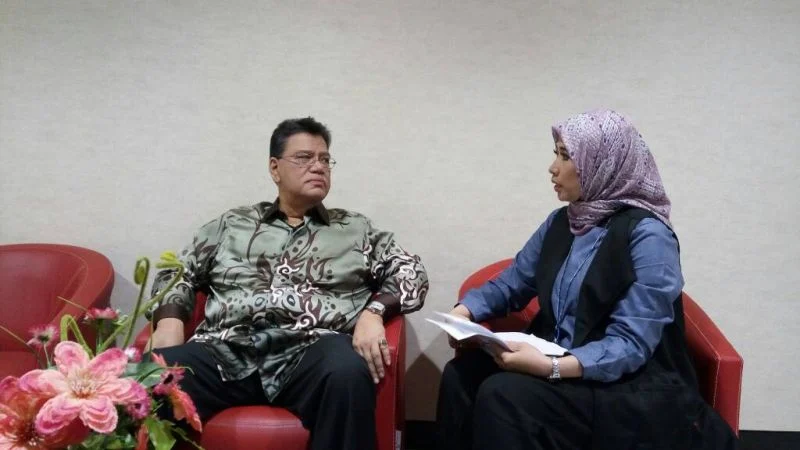
Reflecting on this foundational decade of his career during a Special Dialogue program at the Okezone media offices in Jakarta on June 7, 2017, Zahrain remarked, “At that time, I thought about continuing the family business. Becoming the head of the port in Penang was my focus. I spent 10 years working in that port.” This decade of intensive infrastructure management provided him with a masterclass in the intersection of commerce, government regulation, and national economic development.
Transitioning from Corporate Success to Political Engagement
Despite achieving remarkable success and stability in the corporate and maritime sectors, Zahrain felt a persistent pull toward broader public service. For him, corporate wealth accumulation and executive accolades did not provide ultimate fulfillment; rather, direct engagement with civic welfare and national governance became his primary vocation.
This calling drew him into the turbulent waters of Malaysian politics. Zahrain initially aligned himself with the United Malays National Organization (UMNO), the dominant political party in Malaysia’s ruling Barisan Nasional coalition at the time. Through dedication and grassroots organizing, he successfully secured the position of Head of the Tanjong UMNO Division.
However, Malaysian politics at the turn of the millennium was undergoing profound tectonic shifts. Driven by ideological divergences and a shifting political landscape that demanded greater institutional accountability and reform, Zahrain made a major pivot. In 2004, he severed his ties with UMNO and crossed the aisle to join the Parti Keadilan Rakyat (PKR), a prominent opposition party led by key reformist figures. This move placed him at the vanguard of the political opposition during a period when the political hegemony of the ruling coalition was increasingly challenged by a revitalized electorate.
Chronology of Key Career Milestones
To comprehensively map the progression of Dato’ Seri Zahrain Mohamed Hashim, a distinct chronological timeline highlights his multifaceted career path:
- Early Years and Education: Completed undergraduate and postgraduate studies in Mathematics at universities in the United Kingdom.
- 1993: Appointed as head of the Penang Port Commission, initiating a decade-long leadership tenure in Malaysia’s maritime logistics sector.
- Late 1990s: Served as Executive Director of Penang Port Sdn Bhd, driving international route expansions and operational modernization.
- Port Industry Leadership: Became an active member of the International Cargo Handling Coordination Association (ICHCA) and served as the founding president of the Federation of Malaysian Port Operating Companies (FMPOC).
- Early 2000s: Entered formal politics, winning election as the Head of the Tanjong UMNO Division.
- 2004: Resigned from UMNO to join the Parti Keadilan Rakyat (PKR), aligning with the reformasi political movement.
- June 7, 2017: Participated in a Special Dialogue at the Okezone headquarters in Jakarta, reflecting on his professional journey from corporate logistics to public service.
Analysis of Implications: From Domestic Reform to International Diplomacy
The career trajectory of individuals like Zahrain Mohamed Hashim provides valuable insights into the mechanics of political and administrative mobility in emerging democracies. Figures who transition from technical corporate leadership into political agitation often bring a unique brand of pragmatism to legislative bodies. Their background in quantitative analysis and resource allocation can alter how policy debates are framed—shifting discussions away from purely ideological rhetoric toward evidence-based governance.
Furthermore, Zahrain’s journey underscores the fluidity of political alignments in modern Southeast Asian democracies. The ability of leaders to pivot across party lines reflects the dynamic, and at times volatile, nature of coalition politics in Malaysia, where ideological realignment is frequently used as a vehicle to challenge entrenched power structures.
Broader Context and Official Perspectives
Observers of Malaysian politics note that figures with robust administrative credentials are essential for bridging the gap between political promises and bureaucratic execution. When technocrats enter the political sphere, they frequently serve as stabilizing forces who understand the intricate regulatory frameworks required to implement national policy.
While Zahrain’s transition from a corporate executive to an opposition politician marked a period of personal and professional risk, it also demonstrated a broader trend among Malaysia’s educated elite: a growing refusal to remain passive observers of national governance. By stepping out of the predictable confines of boardroom management and into the unpredictable arena of public representation, leaders of his generation helped reshape the contours of modern Malaysian political discourse.
Conclusion
Dato’ Seri Zahrain Mohamed Hashim remains a compelling figure whose life’s work traverses multiple domains of Malaysian society. From calculating complex mathematical equations in British lecture halls to steering the strategic growth of Penang Port, and subsequently navigating the high-stakes world of national politics, his career is a testament to adaptability and civic commitment. As historical assessments of Malaysia’s development continue to evolve, the contributions of technocrats-turned-politicians like Zahrain will be studied as critical components in the nation’s ongoing administrative and political maturation.