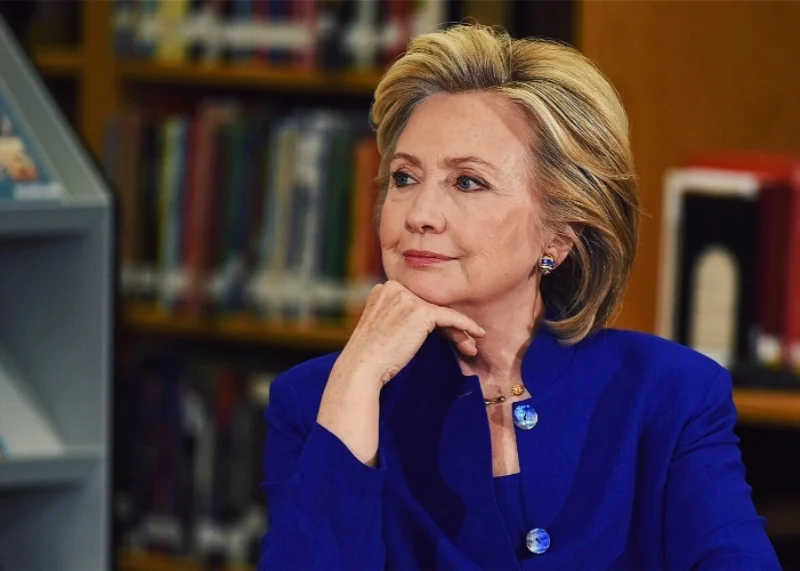
Hillary Diane Rodham Clinton, born on October 26, 1947, in Chicago, Illinois, has etched her name indelibly into the annals of American political history. Her journey from a young law student at Yale University, where she met her future husband and fellow legal scholar Bill Clinton, to becoming a formidable force in national and international politics is a narrative of ambition, resilience, and groundbreaking achievements. The year 2016, marked by her historic presidential candidacy, served as a pivotal moment, culmination of decades of public service and a testament to her enduring influence.
Early Life and Education
Born into a middle-class Republican family, Hillary Rodham’s early life was shaped by a strong emphasis on education and civic engagement. Her father, Hugh Rodham, owned a successful textile business, while her mother, Dorothy Howell Rodham, was a homemaker. Young Hillary excelled academically, graduating from Wellesley College in 1969 with a degree in political science. Her time at Wellesley was significant, as she delivered a notable speech at the 1969 Wellesley commencement, challenging the status quo and setting a precedent for her future activism. This intellectual curiosity and drive led her to Yale Law School, graduating in 1973. It was within the hallowed halls of Yale that her path intersected with Bill Clinton, a fellow law student who would become her partner in both life and politics.
A Developing Political Partnership
The early years of the Clintons’ marriage were marked by a shared commitment to public service. While Bill Clinton pursued his political career in Arkansas, culminating in his governorship, Hillary Rodham Clinton established herself as a respected legal professional and advocate. She worked at the Children’s Defense Fund and later at the Rose Law Firm in Little Rock, Arkansas, becoming the first lady of Arkansas in 1979. Her influence was far-reaching, advising on issues related to children’s welfare and healthcare reform.
First Lady of the United States (1993-2001)
When Bill Clinton was elected President of the United States in 1992, Hillary Clinton assumed the role of First Lady, a position she redefined with her active engagement in policy initiatives. Breaking from the traditional ceremonial duties, she championed significant legislative efforts, most notably the Health Insurance Portability and Accountability Act (HIPAA) of 1996 and the State Children’s Health Insurance Program (SCHIP). Her involvement in healthcare reform, though ultimately unsuccessful in its initial comprehensive form, demonstrated her commitment to addressing critical societal needs and her willingness to tackle complex policy challenges. During her tenure as First Lady, she also played a crucial role in advocating for women’s rights both domestically and internationally, co-founding the Vital Voices Global Partnership.
Transition to the Senate
The political landscape shifted for Hillary Clinton in 1998. As her husband’s second term neared its end, an opportunity arose for her to enter elected office. Following the resignation of Senator Daniel Patrick Moynihan, she was urged by influential figures within the Democratic Party to consider a run for his seat as Senator for New York. Demonstrating her political acumen and widespread appeal, Hillary Clinton successfully won the election in November 2000, becoming the first former First Lady to hold elected office.
Senator from New York (2001-2009)
During her two terms in the U.S. Senate, Senator Clinton focused on issues critical to her constituents in New York and the nation. She served on key committees, including the Senate Armed Services Committee and the Senate Committee on the Judiciary, where she was involved in oversight of national security matters and legal reforms. Her voting record indicated a consistent alignment with Democratic Party platforms, advocating for issues such as economic development, healthcare access, and post-9/11 security measures. She was a vocal critic of the Bush administration’s handling of the Iraq War, a stance that would later inform her own presidential ambitions.
The 2008 Presidential Primary Challenge

In January 2007, then-Senator Clinton announced her candidacy for President of the United States, embarking on a highly anticipated and closely watched primary race against then-Senator Barack Obama. The Democratic primary was a fierce contest, characterized by policy debates, contrasting leadership styles, and a historic surge of enthusiasm for Obama’s message of change. Despite a strong campaign, Clinton ultimately conceded the nomination to Obama in June 2008, a decision that, while disappointing for her supporters, underscored her commitment to party unity.
Secretary of State (2009-2013)
Following Barack Obama’s victory in the 2008 presidential election, President-elect Obama appointed Hillary Clinton as his Secretary of State. This appointment was seen as a strategic move to bring experienced leadership and a seasoned diplomat into his administration. As the nation’s chief diplomat, Secretary Clinton traveled extensively, engaging in complex international relations and diplomatic efforts. Her tenure was marked by significant events, including the aftermath of the Arab Spring, the ongoing conflict in Afghanistan, and the evolving relationship with China. She played a key role in the diplomatic efforts surrounding the raid that killed Osama bin Laden in 2011. Her time as Secretary of State solidified her reputation as a capable and dedicated public servant on the global stage.
The 2016 Presidential Election: A Historic Bid
In April 2015, Hillary Clinton officially launched her second presidential campaign, aiming to become the first female President of the United States. The Democratic primary race this time pitted her against Senator Bernie Sanders, who represented a progressive challenge to her more centrist platform. Clinton ultimately secured the Democratic nomination, becoming the first woman to do so from a major political party.
The general election campaign against Republican nominee Donald Trump was one of the most polarizing and contentious in modern American history. It was a battle of contrasting visions for the country, marked by intense media scrutiny, debates over policy, and personal attacks. Clinton’s campaign focused on issues such as economic inequality, healthcare, climate change, and gun control, while Trump’s campaign centered on themes of national sovereignty, immigration restriction, and a critique of the political establishment.
Key policy proposals from Clinton included expanding access to affordable healthcare, investing in infrastructure, and raising the minimum wage. Her campaign aimed to build on the Obama administration’s legacy while addressing persistent challenges facing American families. She emphasized her experience and readiness to lead, drawing on her years as First Lady, Senator, and Secretary of State.
Despite winning the popular vote by nearly three million votes, Hillary Clinton narrowly lost the Electoral College to Donald Trump, a result that sent shockwaves across the nation and ignited widespread debate about the electoral system. The election outcome was a profound disappointment for her campaign and her supporters, who had hoped for a historic breakthrough in American politics.
Post-2016 Political Engagement
Following the 2016 election, Hillary Clinton remained an active voice in public discourse. She has continued to write, speak, and advocate on issues she holds dear, particularly women’s rights and democratic values. Her book, "What Happened," published in 2017, offered a personal reflection on her 2016 campaign and the factors she believed contributed to her defeat. She has also been a vocal critic of the Trump administration and has lent her support to Democratic candidates in subsequent elections.
Legacy and Enduring Influence
Hillary Clinton’s political career is marked by numerous firsts and a sustained impact on American policy and public life. She shattered glass ceilings, demonstrating that women could reach the highest levels of political power. Her dedication to policy, her tireless work ethic, and her deep understanding of complex issues have left an undeniable mark on the nation. While the outcome of the 2016 presidential election remains a subject of analysis and debate, Hillary Clinton’s journey is a significant chapter in the ongoing evolution of American democracy, inspiring future generations of leaders and continuing to shape the national conversation. Her contributions as First Lady, Senator, and Secretary of State have irrevocably altered the landscape of American public service, leaving a legacy that will be studied and discussed for years to come.