
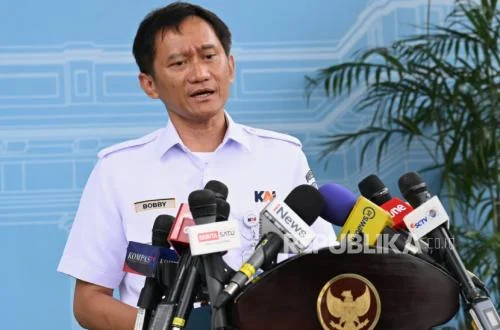
JAKARTA – PT Kereta Api Indonesia (Persero) (KAI), Indonesia’s state-owned railway operator, has set an ambitious target to make 5G WiFi connectivity available for its long-distance train passengers starting June 2026, strategically coinciding with the peak holiday season. This initiative marks a significant leap in KAI’s ongoing efforts to enhance passenger experience and modernize its extensive railway network. The announcement was made by KAI President Director Bobby Rasyidin following a pivotal tripartite strategic memorandum of understanding (MoU) signing ceremony held at Tanah Abang Station, Jakarta, on Wednesday, April 15, 2026.
Addressing Connectivity Gaps: A New Era for Passenger Experience
Bobby Rasyidin acknowledged the persistent challenges faced by passengers regarding internet connectivity onboard trains. "Currently, there are numerous complaints about poor internet quality on trains; streaming services are often unsatisfactory. To address this, we are committed to delivering 5G networks to significantly improve internet services starting June-July 2026," Rasyidin stated, emphasizing KAI’s responsiveness to customer feedback. This move is directly aimed at rectifying the existing connectivity deficiencies, which have long been a source of frustration for travelers attempting to stay productive or entertained during their journeys.
The integration of 5G WiFi is a cornerstone of KAI’s broader strategy to elevate the in-train entertainment and productivity ecosystem. By ensuring faster and more reliable internet access, KAI aims to empower passengers to seamlessly stream videos, engage in online work, or maintain uninterrupted communication throughout their travels. This upgrade is not merely about providing internet; it is about transforming the entire travel experience, making it more comfortable, convenient, and aligned with the demands of the digital age. In a country with high smartphone penetration and a digitally native population, robust connectivity is no longer a luxury but an expectation, and KAI’s initiative directly responds to this evolving passenger need.
The initial rollout of the 5G WiFi service will prioritize high-demand routes that experience heavy passenger traffic during holiday periods. These include the popular corridors connecting Jakarta to major cities such as Semarang, Yogyakarta, and Surabaya. Specific train services, including the executive-class KA Taksaka and other Argo-class trains operating along the northern Java line, have been identified as early beneficiaries of this technological upgrade. This strategic phased implementation ensures that the improved services are first deployed where they can have the maximum impact on passenger satisfaction and operational efficiency, catering to the most frequented routes and premium services.
A Foundational Partnership for Digital Transformation
The ambitious 5G deployment is underpinned by a groundbreaking strategic tripartite Memorandum of Understanding (MoU) signed between PT Kereta Api Indonesia (Persero) (KAI), PT Solusi Sinergi Digital Tbk (SURGE), and PT Huawei Tech Investment (Huawei). This partnership signifies a concerted effort to accelerate the adoption of cutting-edge 5G and Artificial Intelligence (AI) technologies across Indonesia’s entire railway system, moving beyond just passenger WiFi to encompass critical operational aspects.
The MoU outlines a collaborative framework focused on three primary areas of innovation:
- ICT Infrastructure Cooperation: Building a robust digital backbone for future railway operations.
- 5G FRMCS Network and Applications: Enhancing safety and efficiency through advanced mobile communication systems.
- AI-based Freight Wagon Detection: Revolutionizing freight logistics and maintenance with intelligent automation.
This comprehensive approach highlights KAI’s vision to not only improve passenger amenities but also to modernize its core operational capabilities, leveraging technology to create a safer, more efficient, and more responsive railway network. The partnership with SURGE, a prominent digital infrastructure provider in Indonesia, and Huawei, a global leader in ICT and 5G technology, brings together diverse expertise crucial for the successful execution of such a large-scale transformation.
Pillars of Digital Advancement: A Detailed Look at the MoU
The ICT infrastructure cooperation outlined in the MoU is foundational. It encompasses the establishment of a resilient backbone network, pervasive wireless coverage at all stations and depots, and the deployment of scalable cloud solutions. This comprehensive infrastructure is designed to ensure business continuity, provide the flexibility necessary for future service expansion, and support the myriad digital applications that will power KAI’s modern operations. A robust ICT backbone is critical for seamless data flow, enabling everything from real-time train tracking and ticketing systems to advanced security monitoring and predictive maintenance, all while preparing for the inevitable growth in digital service demand.
Beyond passenger WiFi, a crucial element of the collaboration is the development and implementation of the 5G Future Railway Mobile Communication System (FRMCS). This advanced communication network is poised to dramatically enhance railway safety, operational efficiency, and overall service quality. FRMCS, the global standard for railway mobile communications, provides a high-bandwidth, low-latency platform essential for critical railway applications. It facilitates real-time communication between train drivers, control centers, and trackside personnel, supports advanced signaling systems, and enables the integration of Internet of Things (IoT) devices for continuous monitoring of train components and infrastructure. As part of this initiative, a pilot project is slated for the Rangkasbitung-Tanah Abang line, focusing specifically on improving level crossing safety and implementing intelligent train dispatch systems. This targeted deployment will allow KAI to test and refine the FRMCS capabilities in a live operational environment before broader rollout, ensuring optimal performance and reliability.
The third pillar, AI-based freight wagon detection, represents a significant stride in modernizing KAI’s freight operations. This technology involves the application of AI-powered video analytics to intelligently detect faults and provide automatic alerts on freight trains. By leveraging AI, KAI aims to move beyond traditional, often manual, inspection methods. This system can identify anomalies, wear and tear, or potential mechanical issues in real-time, significantly increasing turnaround efficiency by reducing the need for extensive manual inspections. The benefits extend to enhanced safety for cargo transport, minimized downtime due to unforeseen mechanical failures, and optimized logistics chains, thereby contributing to the overall economic efficiency of railway freight services in Indonesia. This application of AI positions KAI at the forefront of smart logistics within the region.
Background and Context: KAI’s Modernization Journey
KAI’s journey towards digital transformation is not new. Over the past decade, the company has steadily invested in modernizing its services, transitioning from manual ticketing to sophisticated e-ticketing platforms and mobile applications that have significantly streamlined the passenger experience. These early digital initiatives laid the groundwork for KAI to become a more customer-centric and technologically adept organization. However, the rapidly evolving digital landscape and increasing passenger expectations for ubiquitous connectivity necessitated a more radical upgrade, particularly for long-distance travel where journeys can span many hours.
Indonesia, with its vast archipelago and growing economy, relies heavily on its transportation infrastructure. KAI plays a pivotal role in connecting major cities and facilitating both passenger and freight movement across Java and parts of Sumatra. The demand for railway services has been consistently growing. For instance, KAI reported handling over 350 million passengers in 2023, a significant increase from previous years, reflecting a resurgence in post-pandemic travel and a growing preference for rail travel due to its efficiency and comfort. This surge in passenger numbers amplifies the urgency for enhanced digital services.
The decision to implement 5G is also informed by Indonesia’s high digital literacy rates and widespread smartphone adoption. A 2023 report indicated that over 80% of Indonesia’s population actively uses the internet, with mobile devices being the primary access point. Passengers now expect to remain connected for work, entertainment, and communication even while on the move. By providing reliable 5G WiFi, KAI is not only meeting this expectation but also enhancing its competitive edge against other modes of transport, such as intercity buses and domestic airlines, by offering a superior and more productive travel environment.
Statements and Industry Insights
From KAI’s Perspective: Bobby Rasyidin’s statements underscore KAI’s unwavering commitment to innovation and customer satisfaction. "Our vision is to transform KAI into a world-class railway operator that not only moves people and goods efficiently but also enriches their journey with unparalleled digital experiences," Rasyidin is understood to have articulated, emphasizing the strategic importance of this 5G and AI integration. "This partnership with SURGE and Huawei is a testament to our dedication to leveraging the best available technology to achieve that vision, ensuring safety, efficiency, and comfort for all our stakeholders."
SURGE’s Contribution: Representing PT Solusi Sinergi Digital Tbk, a spokesperson might have highlighted their expertise in deploying extensive digital infrastructure. "SURGE is proud to contribute our robust digital infrastructure capabilities to KAI’s ambitious modernization program," a representative could have stated. "Our experience in building and managing high-capacity networks across Indonesia positions us perfectly to ensure the seamless deployment and operation of the 5G connectivity along KAI’s critical routes. This collaboration is a vital step towards achieving Indonesia’s digital transformation goals, extending connectivity even to moving environments."
Huawei’s Technological Prowess: Huawei, as a global technology giant, brings invaluable experience in 5G and AI solutions for smart railways worldwide. "Huawei is committed to supporting Indonesia’s digital agenda and is honored to partner with KAI and SURGE in this transformative project," a Huawei executive might have commented. "Our advanced 5G and AI technologies, specifically tailored for railway applications, will not only enhance passenger experience but also revolutionize operational efficiency and safety. We believe this initiative will set a new benchmark for smart railway systems in Southeast Asia, showcasing the power of intelligent connectivity."
Broader Impact and Implications
The deployment of 5G WiFi and the broader 5G+AI integration by KAI carries profound implications across various sectors:
Enhanced Passenger Experience: The most immediate and tangible impact will be on passengers. Reliable 5G connectivity will transform travel time into productive work hours or enjoyable leisure, improving overall satisfaction and potentially encouraging more people to choose train travel. This includes seamless video calls, online gaming, access to cloud-based work applications, and high-definition streaming, all previously challenging on moving trains.
Operational Efficiency and Safety: The implementation of 5G FRMCS and AI-based detection systems will lead to significant improvements in KAI’s operational efficiency. Real-time data transmission for train control, predictive maintenance of infrastructure and rolling stock, and enhanced communication protocols will reduce delays, prevent accidents, and optimize resource allocation. The pilot project on the Rangkasbitung-Tanah Abang line, specifically targeting level crossing safety and intelligent dispatch, highlights the direct correlation between this technology and improved safety records.
Economic Development: A more efficient and digitally advanced railway system will contribute directly to Indonesia’s economic growth. Enhanced freight logistics will support industries by reducing transportation costs and improving supply chain reliability. Increased passenger comfort and connectivity could also boost domestic tourism, making remote destinations more accessible and attractive for digital nomads and vacationers alike. Furthermore, the infrastructure development required for 5G deployment will create jobs and foster technological expertise within the country.
Technological Leadership: By embracing 5G and AI on such a comprehensive scale, KAI is positioning Indonesia as a leader in smart transportation within Southeast Asia. This initiative demonstrates a commitment to adopting cutting-edge technologies for public services, potentially inspiring other sectors and regional railway operators to follow suit.
Challenges and Future Outlook: While the benefits are substantial, KAI and its partners will undoubtedly face challenges. Deploying extensive 5G infrastructure along thousands of kilometers of railway lines, often through diverse geographical terrains, requires significant investment and meticulous planning. Ensuring consistent signal coverage, managing cybersecurity risks, and continuous maintenance of the advanced systems will be critical for sustained success.
However, the strategic vision and robust partnership suggest KAI is well-prepared to navigate these complexities. The targeted June 2026 launch for passenger WiFi, coinciding with the holiday season, signals KAI’s intent to deliver tangible improvements in the near term, while the broader MoU lays a long-term roadmap for a truly intelligent and interconnected railway system. This ambitious endeavor is set to redefine railway travel and operations in Indonesia, ushering in an era of unprecedented connectivity, safety, and efficiency.