The long-standing legal saga of the First Travel Umrah scam has entered a critical new phase following the Indonesian Supreme Court’s decision to grant a Judicial Review (PK) filed by the company’s founders, Andika Surachman and Anniesa Hasibuan. In response to this landmark ruling, which mandates that assets previously seized by the state be returned to the victims rather than being forfeited to the national treasury, the affected pilgrims are now calling on the Indonesian government to immediately establish a specialized task force. This team would be responsible for conducting a comprehensive inventory of all remaining assets and ensuring a fair and transparent distribution process for the tens of thousands of individuals who lost their life savings in the fraudulent scheme.
Fadjar Panjaitan, one of the many victims who has spent years seeking justice, emphasized the necessity of government intervention to manage the logistical complexities of the asset return. Speaking on Thursday, January 5, 2023, Panjaitan highlighted that the Supreme Court’s decision requires extreme precision in execution to prevent further victimization. He argued that without a formal government-led inventory team, the process of identifying, valuing, and distributing assets could become chaotic, potentially leaving many victims without their rightful share of the restitution.
The core of the victims’ concern lies in the sheer scale of the fraud. First Travel, once a prominent travel agency specializing in Umrah pilgrimages, collapsed in 2017, leaving approximately 63,000 pilgrims stranded and defrauded of nearly Rp 900 billion (approximately $60 million USD). For years, these victims have fought against earlier court rulings that had ordered the perpetrators’ luxury assets—ranging from high-end real estate to sports cars—to be seized by the state, a move that effectively barred the victims from recovering any financial compensation.
The Landmark Supreme Court Ruling and Legal Shift
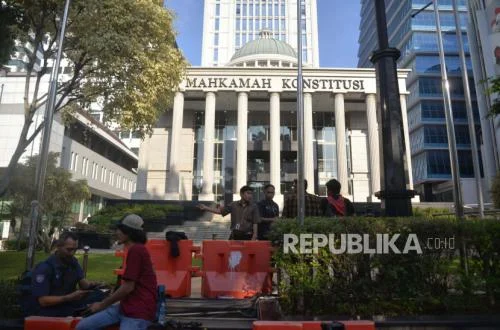
The recent decision by the Supreme Court to grant the Judicial Review (PK) represents a significant reversal in the Indonesian judiciary’s approach to the First Travel case. In the original 2018 trial at the Depok District Court, and the subsequent appeals, the court ruled that the evidence and assets of First Travel should be confiscated by the state. This was based on the interpretation that the assets were the proceeds of crime and, under certain interpretations of the law at the time, should be surrendered to the national coffers.
However, the legal team for Andika Surachman and Anniesa Hasibuan argued in their PK petition that the assets should be used to fulfill the company’s obligations to its customers. Boris Tampubolon, the legal counsel for the defendants, confirmed that the Supreme Court had granted the request, although he noted that the official copy of the verdict had not yet been formally received. Tampubolon expressed appreciation for the ruling, stating that the return of assets to the rightful owners—the pilgrims—was the primary objective of their legal challenge.
This shift is seen as a victory for victim-centric justice. Legal analysts suggest that the ruling acknowledges the unique nature of the First Travel case, where the "state loss" was non-existent compared to the massive private loss suffered by individual citizens. By reclassifying the assets as the property of the victims, the court has set a precedent for future cases involving mass-scale consumer fraud in Indonesia.
A Chronology of the First Travel Collapse
The First Travel case remains one of the largest financial scandals in modern Indonesian history. To understand the current urgency for an inventory team, one must look at the timeline of the agency’s rise and fall:
- 2011–2015: The Rise of First Travel. Founded by Andika Surachman and his wife Anniesa Hasibuan, the company gained massive popularity by offering "Umrah Promo" packages at significantly lower prices than the market average. While most agencies charged upwards of Rp 20 million, First Travel offered packages for as low as Rp 14 million.
- 2016: Signs of Instability. Reports began to emerge of delayed departures and thousands of pilgrims being left in limbo. The company used a Ponzi-style scheme, utilizing funds from new registrants to pay for the travel of earlier customers.
- August 2017: Police Intervention. Following a wave of complaints, the Indonesian National Police’s Criminal Investigation Agency (Bareskrim) arrested Andika and Anniesa. The Ministry of Religious Affairs officially revoked the company’s operating license.
- 2018: Criminal Conviction. The Depok District Court sentenced Andika Surachman to 20 years in prison and Anniesa Hasibuan to 18 years. The court also ordered that their assets be seized by the state, sparking immediate outrage among the 63,000 victims.
- 2019–2021: Failed Appeals. Higher courts and the Supreme Court (at the cassation level) upheld the original sentence and the state’s seizure of assets.
- 2022–2023: The Judicial Review. The defendants filed for a PK, leading to the recent decision to return assets to the victims.
The Asset Dilemma: Depreciation and Missing Value
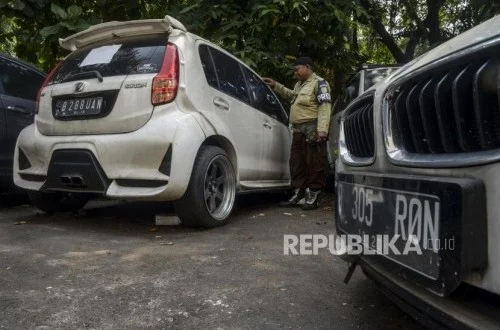
While the Supreme Court’s decision is a moral and legal victory, the practical reality of restitution is grim. Suwindra, another victim of the scam, expressed skepticism regarding the total value of the assets currently held by the state. He noted that many of the luxury items seized in 2017—including a fleet of vehicles and various properties—have significantly depreciated in value over the last five years of legal battles and storage.
"The problem is that the assets can no longer be expected to cover the losses because their value has decreased significantly," Suwindra remarked. The inventory of seized items originally included luxury cars like Hummer and Ferrari, several residential properties in elite areas of Bogor and Jakarta, and high-end fashion items belonging to Anniesa Hasibuan, who was also a known fashion designer. However, the maintenance of these assets while in state custody has been a point of contention, with reports suggesting many vehicles have fallen into disrepair.
Furthermore, Suwindra and other victims have pointed toward third-party involvement that has yet to be fully addressed by the courts. Specifically, they have called for the government to investigate assets allegedly held by Umar Bakadam of Kanomas, a business associate of the First Travel founders. Suwindra claims that the assets currently held or controlled by Bakadam are potentially more valuable and "liquid" than those seized by the state.
"I want the assets held by Mr. Umar to be withdrawn through the PK of the two defendants as well," Suwindra stated. He revealed that he had attempted to bring this matter to the attention of the Coordinating Minister for Political, Legal, and Security Affairs, Professor Mahfud MD, but has yet to receive a formal response. The victims believe that a thorough inventory must look beyond the items currently in the hands of the Attorney General’s Office and include a trace of all funds funneled to business partners and subsidiaries.
The Role of the Attorney General’s Office and the Ministry of Religious Affairs
The execution of the Supreme Court’s ruling falls under the jurisdiction of the Attorney General’s Office (Kejaksaan Agung). The process of returning assets in a case involving 63,000 claimants is unprecedented in Indonesian law. Traditionally, the prosecutor’s office handles the auction of seized goods, but the distribution of proceeds to such a large pool of victims requires a sophisticated administrative framework.
Victims are advocating for a multi-agency approach involving:
- The Attorney General’s Office: To manage the legal execution and auction of physical assets.
- The Ministry of Religious Affairs: To provide the verified database of the 63,000 pilgrims who were registered with First Travel.
- The Ministry of Finance: To oversee the valuation and transparent disbursement of funds.
- The Financial Transaction Reports and Analysis Center (PPATK): To conduct a final "follow the money" audit to ensure no hidden assets remain.
Fadjar Panjaitan warned that without this coordinated effort, there is a high risk of "first-come, first-served" distribution or, worse, funds being depleted before all victims are reached. "We must ensure that no victim is left behind. It would be a second tragedy if the assets are divided and exhausted while thousands still haven’t received their rights," he said.
Broader Implications for the Umrah Industry and Legal Reform
The First Travel scandal has already led to tighter regulations within the Indonesian Ministry of Religious Affairs regarding Umrah and Hajj travel agencies. The "Umrah Promo" packages that fueled the scam are now strictly monitored, with the government setting a "Floor Price" (Referensi Harga Umrah) to prevent predatory pricing and Ponzi schemes.
However, the legal resolution of this case will set a vital precedent for how Indonesia handles mass-consumer fraud. If the government successfully manages the inventory and distribution of First Travel assets, it will provide a blueprint for other ongoing cases, such as the Abu Tour and Sipoa Group scams.
The case also highlights the need for a "Victim Trust Fund" model in Indonesian law. Legal experts argue that in cases of mass fraud, assets should be immediately placed in a managed trust rather than being categorized as state evidence, which subjects them to years of depreciation and legal limbo.
Analysis of the Road Ahead
The road to full restitution remains long and fraught with challenges. Even if every known asset of First Travel is liquidated today, it is highly unlikely that the total will reach the Rp 900 billion required to refund every victim in full. Estimates suggest that the current value of seized assets may only cover 10% to 20% of the total losses.
This reality places the government in a difficult position. The victims’ demand for an inventory team is not just about counting what is there; it is a demand for transparency in how the "shortfall" is managed. Will the distribution be proportional (pro-rata), or will it prioritize those with the lowest incomes who lost their life savings?
Moreover, the focus on Umar Bakadam and other business associates suggests that the victims are prepared to push for further legal actions to recover funds from third parties. This could lead to secondary lawsuits and further prolong the process.
The Indonesian government now faces a test of its commitment to consumer protection and judicial fairness. The establishment of an inventory team, as requested by Fadjar Panjaitan and Suwindra, would be a significant first step in providing closure to 63,000 citizens who have waited over half a decade for the return of their funds and the fulfillment of their spiritual aspirations. As the legal community awaits the formal release of the Supreme Court’s PK verdict, the eyes of the nation remain on the Ministry of Law and Human Rights and the Attorney General’s Office to see how this complex restitution will be realized.