
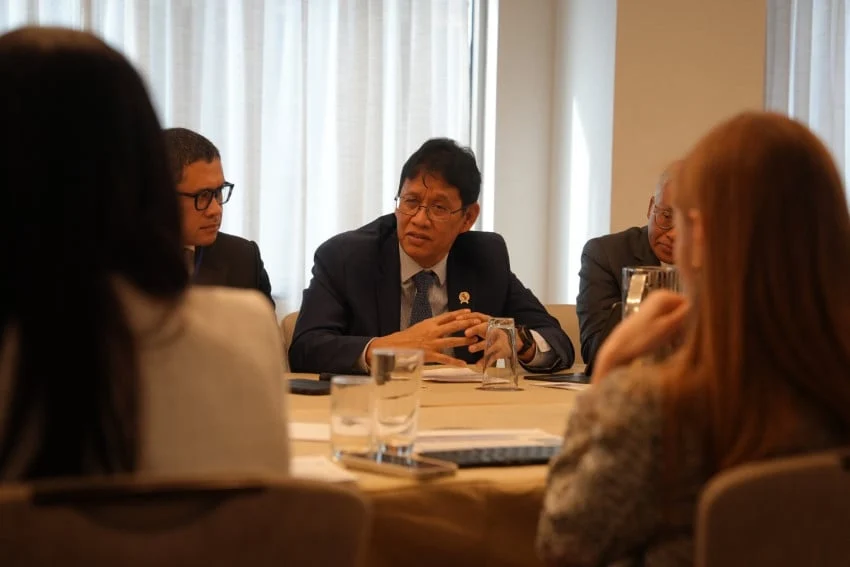
Indonesia’s Minister of Finance, Purbaya Yudhi Sadewa, successfully concluded a series of high-level investor meetings and engagements with prominent international financial institutions in Washington D.C., United States, on Wednesday, April 15, 2026. The comprehensive outreach initiative garnered a notably positive response from entities including the International Monetary Fund (IMF) and the World Bank, as well as a diverse group of major global investors. This widespread endorsement underscores a growing confidence in Indonesia’s capacity to adeptly balance robust economic growth objectives with prudent fiscal sustainability, particularly against a backdrop of persistent global economic volatility and geopolitical shifts.
The strategic engagements in the U.S. capital were part of a broader effort by the Indonesian government to articulate its economic vision, fiscal policy frameworks, and investment opportunities to key global stakeholders. Minister Sadewa’s delegation engaged in a packed schedule that included bilateral meetings, courtesy calls with the Managing Director of the IMF, discussions with senior officials from the World Bank, and crucial consultations with representatives from leading international credit rating agencies such as S&P Global Ratings. A significant component of the itinerary involved direct interactions with eighteen major institutional investors, among them financial titans like Goldman Sachs and Fidelity Investments, all keen to gain deeper insights into Indonesia’s economic trajectory and policy credibility.
Navigating Global Headwinds: Indonesia’s Fiscal Resilience
Minister Sadewa emphasized that these meetings served as a critical platform to comprehensively detail Indonesia’s fiscal strategies, particularly its nuanced approach to stimulating economic growth without placing undue strain on the state budget (Anggaran Pendapatan dan Belanja Negara, APBN). The core message conveyed was Indonesia’s unwavering commitment to fiscal discipline and macroeconomic stability, even as it pursues an ambitious development agenda. This commitment is viewed as paramount in a global economic landscape characterized by elevated inflation, tightening monetary policies by major central banks, and the lingering effects of supply chain disruptions exacerbated by ongoing geopolitical tensions.
The international community’s positive reception was notably centered on the perceived strength of Indonesia’s economic fundamentals. Minister Sadewa highlighted that while some international parties had previously expressed reservations or posed questions regarding how Indonesia intended to accelerate economic growth while simultaneously upholding stringent fiscal discipline, these concerns were substantially allayed following the detailed expositions provided by the Indonesian delegation. This dialogue was crucial, especially given earlier candid assessments and robust discussions on economic projections and methodologies between Indonesian officials and some multilateral institutions. The ability to articulate and demonstrate a credible path forward proved instrumental in mitigating initial skepticism and fostering a more optimistic outlook.
A Chronology of Strategic Engagements
The intensive schedule in Washington D.C. unfolded over several days, meticulously planned to maximize engagement with a diverse array of stakeholders. The overarching objective was to reinforce Indonesia’s narrative as a stable, attractive, and responsibly managed emerging market economy.
Early April 2026 (Pre-Meetings): Preparatory meetings and briefing sessions were conducted within the Indonesian Ministry of Finance and with diplomatic missions to fine-tune the presentation of Indonesia’s economic data, policy achievements, and future outlook. This included detailed analyses of global economic trends and their potential impact on Indonesia.
April 14, 2026 (Arrival & Initial Consultations): Minister Sadewa and his delegation arrived in Washington D.C. and likely held internal coordination meetings, followed by initial informal discussions or courtesy calls, setting the stage for the more formal engagements.
April 15, 2026 (Core Engagements – as reported): This was a pivotal day, as cited in the original report.
- Bilateral Meetings: Strategic one-on-one sessions were held with key officials from various international bodies and potentially sovereign wealth funds or government agencies of other nations. These discussions often delve into specific areas of cooperation, technical assistance, or policy coordination.
- Courtesy Meeting with IMF Managing Director: A significant engagement underscoring Indonesia’s commitment to multilateral cooperation and adherence to international financial norms. Discussions would have covered global economic prospects, regional stability, and Indonesia’s contribution to global economic resilience.
- Meetings with World Bank Officials: These discussions likely focused on Indonesia’s development agenda, infrastructure financing, climate change initiatives, and poverty reduction strategies, where the World Bank plays a crucial advisory and funding role. It provided an opportunity to address and reconcile any past differences in economic assessments, moving towards a shared understanding of Indonesia’s economic trajectory.
- Meetings with International Credit Rating Agencies (e.g., S&P Global Ratings): These interactions are vital for maintaining and potentially improving Indonesia’s sovereign credit ratings. The delegation would have presented updated fiscal data, debt management strategies, and reform agendas to assure agencies of the country’s creditworthiness.
- Investor Meetings (18 Major Institutions): This was a core focus. Minister Sadewa presented to representatives from major global financial institutions like Goldman Sachs, Fidelity Investments, and likely other prominent asset managers, hedge funds, and pension funds. The agenda for these meetings revolved around:
- Indonesia’s Growth Policy Direction: Outlining strategies for sustainable economic expansion, including sector-specific growth drivers (e.g., manufacturing, digital economy, green economy).
- Budget Management and Fiscal Prudence: Detailing revenue generation, expenditure prioritization, and debt management frameworks designed to ensure long-term fiscal health.
- Credibility and Sustainability Assessment: Addressing investor questions on the robustness and long-term viability of Indonesia’s economic policies, including legal and regulatory frameworks.
Following Days (Post-April 15, 2026): While not explicitly detailed, such high-level visits often include follow-up discussions, networking events, and possibly public speaking engagements or press conferences to disseminate the key takeaways more broadly. The positive feedback received serves as a strong foundation for continued dialogue and potential future collaborations.
Supporting Data: Anchoring Confidence in Fundamentals
The positive international response is firmly rooted in Indonesia’s robust economic fundamentals and a consistent track record of prudent macroeconomic management. Over recent years, Indonesia has demonstrated remarkable resilience, navigating global shocks with a combination of fiscal flexibility and structural reforms.
Economic Growth: Indonesia’s Gross Domestic Product (GDP) growth has generally remained robust, often exceeding 5% in pre-pandemic years and rebounding strongly post-pandemic. For instance, in 2022, Indonesia’s economy grew by 5.31%, the highest in a decade, followed by a solid 5.05% in 2023. Projections for 2024 and 2025 by institutions like the IMF and World Bank typically place Indonesia’s growth between 4.9% and 5.2%, a commendable rate given global uncertainties. This consistent performance signals an expanding domestic market and a dynamic economy.
Fiscal Discipline: The government has shown a strong commitment to fiscal consolidation. After temporarily breaching the 3% of GDP fiscal deficit ceiling during the pandemic to support the economy, Indonesia successfully brought its deficit back below 3% in 2023, ahead of schedule. The 2024 State Budget targets a deficit of 2.29% of GDP, further demonstrating this commitment. This disciplined approach reassures investors and rating agencies about the government’s ability to manage its finances responsibly.
Debt Management: Indonesia’s debt-to-GDP ratio remains well below that of many developed and emerging economies, typically hovering around 38-40%. This conservative level provides substantial fiscal space and reduces sovereign risk. In contrast, the average debt-to-GDP ratio for emerging market and developing economies (EMDEs) is often significantly higher, highlighting Indonesia’s relative strength.
Inflation Control: Bank Indonesia (BI), the central bank, has been proactive in managing inflation, employing a combination of monetary policy tools and close coordination with the government. While global commodity price spikes have presented challenges, core inflation has generally been kept within target ranges. For example, after peaking due to energy price adjustments, annual inflation steadily declined, returning to BI’s target range of 2.5% ± 1% in the latter half of 2023 and is projected to remain stable through 2024-2026.
Foreign Exchange Reserves: Indonesia maintains a healthy level of foreign exchange reserves, providing a strong buffer against external shocks and supporting rupiah stability. These reserves have consistently exceeded the international adequacy standard of three months of imports.
Credit Ratings: Indonesia has maintained its investment-grade credit ratings from all three major international agencies – Fitch Ratings (BBB), Moody’s Investors Service (Baa2), and S&P Global Ratings (BBB). These stable outlooks reflect the agencies’ confidence in Indonesia’s macroeconomic stability, prudent fiscal management, and resilient economic growth prospects. The discussions with S&P Global Ratings in Washington D.C. would have been crucial in reinforcing these positive assessments.
Official Responses and Inferred Reactions
From the Indonesian Ministry of Finance (Purbaya Yudhi Sadewa):
Minister Sadewa’s statements consistently conveyed optimism and satisfaction with the outcomes of the meetings. His emphasis on the positive responses from both multilateral institutions and private investors reflects a successful communication strategy that effectively showcased Indonesia’s economic strengths and credible policy direction. The reduction in "initial skepticism" highlights the persuasive power of direct engagement and comprehensive data presentation. The high interest from global investors, particularly from the U.S., in Indonesian financial instruments (fixed income and equity) is a tangible measure of success.
From the IMF and World Bank (Inferred):
While specific direct quotes from IMF and World Bank officials were not provided, the reported "positive response" implies an acknowledgment of Indonesia’s efforts in fiscal consolidation, structural reforms, and macroeconomic stability. These institutions typically advocate for policies that promote sustainable growth, prudent debt management, and an attractive investment climate. Indonesia’s commitment to these principles, along with its active participation in global economic dialogues, would naturally lead to positive appraisals. The World Bank, for instance, has often lauded Indonesia’s progress in poverty reduction and human capital development, while the IMF frequently commends its resilience in managing external shocks. The ability to address previous points of divergence, such as economic projections or reform urgency, and demonstrate a convergence of views further strengthens this positive relationship.
From Major Investors (Inferred):
The interest from institutional investors like Goldman Sachs and Fidelity Investments signifies a keen appetite for emerging market opportunities that combine growth potential with stability. Their focus on "growth policy direction" and "budget management" underscores their need for predictable and credible policy environments. Investors are typically looking for:
- Stability: A stable political and economic environment minimizes risk.
- Growth Potential: Opportunities for capital appreciation and attractive returns, often driven by a large domestic market and structural reforms.
- Policy Predictability: Clear and consistent government policies regarding investment, taxation, and regulation.
- Fiscal Prudence: Assurance that government finances are well-managed, reducing the risk of sovereign default or currency depreciation.
- Attractive Valuations: Comparative advantages in terms of asset pricing relative to developed markets.
The high interest in both fixed income (bonds) and equity markets suggests confidence in both the government’s ability to service its debt and the potential for corporate earnings growth in Indonesia.
Broader Impact and Implications
The successful investor meetings and positive feedback from international financial bodies carry significant implications for Indonesia’s economic trajectory and international standing.
Enhanced Investor Confidence and Capital Inflows: The endorsement from major institutions and investors can translate directly into increased foreign direct investment (FDI) and portfolio investment. Higher investor confidence generally leads to lower borrowing costs for the government and Indonesian corporations, as perceived risk diminishes. This inflow of capital can fund crucial infrastructure projects, stimulate job creation, and foster technological transfer, supporting long-term economic growth.
Strengthened International Credibility: A positive assessment from the IMF, World Bank, and leading rating agencies reinforces Indonesia’s image as a responsible and reliable player in the global economy. This credibility is vital for multilateral cooperation, securing development financing, and advocating for its interests on the international stage. It also validates Indonesia’s homegrown economic policies and its capacity to manage its economy effectively.
Support for Long-Term Development Goals: Increased capital inflows and reduced borrowing costs provide the government with greater flexibility to pursue its ambitious development agenda. This includes investments in critical infrastructure (roads, ports, digital networks), human capital development (education, healthcare), and the transition to a green economy, which requires substantial financing. The interest from global investors in sustainable investment opportunities within Indonesia can further accelerate these efforts.
Rupiah Stability: Increased investor confidence and capital inflows typically strengthen the domestic currency. A stable rupiah is crucial for managing inflation, reducing the cost of imports, and providing a predictable environment for businesses. This stability is a key indicator of economic health and attractiveness to foreign capital.
Validation of Fiscal Reforms: The positive response serves as a validation of the government’s ongoing efforts to implement fiscal reforms, diversify revenue streams, and enhance spending efficiency. It encourages continued commitment to these reforms, which are essential for building a resilient and sustainable economy capable of withstanding future shocks.
Looking Ahead: Sustaining the Momentum
While the positive outcomes from the Washington D.C. meetings are a significant achievement, the Indonesian government recognizes the continuous effort required to maintain this momentum. The global economic environment remains dynamic, with ongoing challenges and emerging opportunities.
To sustain this positive trajectory, Indonesia will need to:
- Continue Fiscal Prudence: Maintain strict adherence to fiscal targets and debt management strategies to ensure long-term sustainability.
- Advance Structural Reforms: Accelerate reforms aimed at improving the ease of doing business, enhancing labor market flexibility, and boosting productivity to attract further investment and unlock growth potential.
- Invest in Human Capital and Infrastructure: Prioritize investments that enhance the competitiveness of its workforce and improve connectivity across the archipelago.
- Promote Green Economy Initiatives: Leverage its natural resources and commitment to sustainability to attract green financing and position itself as a leader in renewable energy and sustainable development.
- Maintain Active Dialogue: Continue proactive engagement with international financial institutions, investors, and rating agencies to transparently communicate its economic policies and address any emerging concerns.
The successful engagements in Washington D.C. represent a pivotal moment for Indonesia, reaffirming its economic resilience and strengthening its position as an attractive investment destination amidst a complex global landscape. The endorsements received are not merely accolades but a foundation upon which Indonesia can build further confidence, secure vital capital, and advance its national development aspirations.