
The Government of Indonesia, through the Ministry of Finance, has expressed unwavering confidence in the ability of state-owned enterprises (BUMN) to take over and manage the complex operations of PT Freeport Indonesia (PTFI). This assurance comes as the divestment process of the gold and copper mining giant continues to be a focal point of national economic policy. Sonny Loho, the Director General of State Assets at the Ministry of Finance, emphasized that Indonesian state firms possess the necessary expertise and maturity to handle world-class mining assets, dismissing concerns regarding the technical or managerial readiness of domestic entities.
Speaking at the Ministry of Finance headquarters in Jakarta on Wednesday, November 11, 2015, Sonny Loho highlighted that two major state-owned mining entities, PT Aneka Tambang (Persero) Tbk (ANTM) and PT Inalum (Persero), are being positioned as the primary vehicles for the share acquisition. He argued that the track record of Indonesia’s state-owned mining sector is sufficient evidence of their capability. "They are certainly capable; there is no reason to doubt them. Our mining companies are already performing at a high level," Loho stated, urging the public and stakeholders to move past anxieties regarding the transition of control from foreign to domestic hands. He stressed that a sense of national courage and confidence is essential for the country to reclaim its resource sovereignty.
The Context of the Divestment Mandate
The divestment of PT Freeport Indonesia is not merely a corporate transaction but a fulfillment of long-standing legal and constitutional mandates. Under the 1991 Contract of Work (CoW) and subsequently reinforced by Law No. 4 of 2009 concerning Mineral and Coal Mining, foreign mining companies operating in Indonesia are required to gradually divest their shares to Indonesian participants, including the central government, regional governments, or state-owned enterprises.
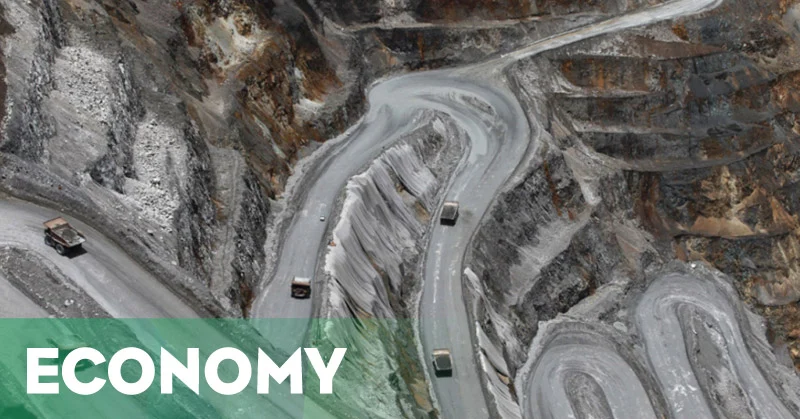
By late 2015, the negotiations between the Indonesian government and Freeport-McMoRan (the parent company of PTFI) had reached a critical juncture. The government’s objective was to ensure that the state, through its various arms, eventually secured a majority stake or at least a significant enough share to influence strategic decision-making. The push for BUMN involvement is seen as a strategic move to ensure that the profits and operational benefits of the Grasberg mine—one of the largest gold and copper deposits in the world—accrue directly to the Indonesian people.
Profiling the Key State-Owned Players
The two companies identified as the frontrunners in this acquisition, PT Aneka Tambang (Antam) and PT Inalum, bring different strengths to the table. Antam is a diversified mining and metals company with extensive experience in the exploration, mining, processing, and marketing of nickel ore, ferronickel, gold, silver, and bauxite. Its long history of operating across the Indonesian archipelago has provided it with deep technical knowledge of the country’s unique geological challenges.
PT Inalum, on the other hand, has historically been the nation’s sole producer of aluminum. However, its role was significantly expanded under the administration of President Joko Widodo to serve as the nucleus of a state-owned mining holding company. The strategic intent behind utilizing Inalum is its strong balance sheet and its capacity to raise the substantial capital required for an acquisition of this magnitude. By 2015, the government was already laying the groundwork for what would eventually become the Mining Industry Indonesia (MIND ID) holding company, designed to consolidate state mining assets to increase leverage and operational efficiency.
A Chronology of the Freeport-Indonesia Relationship
To understand the weight of Sonny Loho’s statements, one must look at the historical timeline of Freeport’s presence in Papua:
- 1967: Freeport Sulphur (now Freeport-McMoRan) signs the first Contract of Work with the Indonesian government under the newly enacted Foreign Investment Law. This made Freeport the first foreign investor in the New Order era.
- 1973: Production begins at the Ertsberg mine.
- 1988: The massive Grasberg deposit is discovered, significantly extending the life and profitability of the operation.
- 1991: A second Contract of Work is signed, granting Freeport a 30-year term with the possibility of two 10-year extensions. This contract included the initial divestment clauses.
- 2009: Indonesia passes the Mineral and Coal Mining Law, which mandates that all mining contracts be converted into Special Mining Business Licenses (IUPK) and requires increased domestic processing (downstreaming) and divestment.
- 2014-2015: Intense negotiations occur regarding the extension of the contract beyond 2021, the construction of a domestic smelter, and the valuation of the shares to be divested.
The 2015 period was particularly volatile, as the government insisted on a 10.64% stake divestment as part of a larger roadmap toward 51% ownership. Sonny Loho’s comments were intended to stabilize market sentiment and reinforce the government’s firm stance that Indonesia would no longer be a passive bystander in its own resource wealth.
Technical Challenges and Managerial Readiness
One of the primary arguments used by critics of the divestment plan is the technical complexity of the Grasberg mine. As the mine transitions from a massive open-pit operation to one of the world’s largest underground block-caving operations, the technical requirements are immense. Block caving involves undermining an ore body and allowing it to collapse under its own weight, a process that requires precision engineering and significant capital expenditure.
However, the Ministry of Finance and the Ministry of SOEs have argued that "Indonesianization" of the workforce is already well-advanced. At the time of Loho’s statement, over 95% of the workforce at PT Freeport Indonesia was already comprised of Indonesians, including many in high-level engineering and management roles. The government’s perspective is that while the capital and top-level corporate control might have been foreign, the operational "brain" of the mine was already largely domestic. By transferring ownership to BUMNs, the government aims to marry this existing technical talent with national strategic interests.
Economic and Strategic Implications
The successful takeover of Freeport shares by BUMNs carries several profound implications for the Indonesian economy:
1. Fiscal Contributions and Dividends
Direct ownership by state enterprises means that the dividends previously sent to Phoenix, Arizona (the headquarters of Freeport-McMoRan), would instead flow into the Indonesian state treasury. This provides the government with additional non-tax revenue to fund infrastructure, education, and healthcare.
2. Downstreaming and Industrialization
A key pillar of Indonesia’s economic policy is "downstreaming"—moving from being an exporter of raw ores to a producer of high-value metal products. With BUMNs in control, the government can more effectively enforce the mandate to build domestic copper smelters, ensuring that the value-added processes remain within the country.
3. Regional Development in Papua
The presence of Freeport is a cornerstone of the Papuan economy. Increased state control is expected to lead to better alignment between the mine’s operations and the development needs of the local Papuan communities. This includes improved corporate social responsibility (CSR) initiatives and more integrated regional planning.
4. National Sovereignty
Beyond the balance sheets, the divestment is a matter of national pride. Reclaiming control over "Vital Objects of the State" is seen as a fulfillment of Article 33 of the 1945 Constitution, which mandates that the earth, water, and natural resources contained therein shall be controlled by the state and used for the greatest prosperity of the people.
Reactions from Industry Analysts
While the government maintains an optimistic outlook, industry analysts have noted that the path forward is not without hurdles. Financial analysts point out that the valuation of Freeport’s shares remains a contentious issue. The government argues that the valuation should not include the value of the mineral reserves (which belong to the state), while Freeport-McMoRan has historically sought a market-based valuation that includes those reserves.
Furthermore, some mining experts suggest that BUMNs will need to maintain a collaborative relationship with international partners to ensure continued access to global markets and specialized technology. Sonny Loho’s call for "courage" acknowledges these risks but suggests that the cost of inaction—allowing the status quo of foreign dominance to continue—is higher than the risks associated with taking over the operations.
Conclusion: Toward a New Era of Mining
The statements made by Sonny Loho in late 2015 served as a precursor to a transformative period in Indonesia’s mining history. By asserting that BUMNs are ready and capable, the Ministry of Finance signaled to the international community that Indonesia is moving toward a more assertive and self-reliant economic model.
The divestment of PT Freeport Indonesia is more than a simple change in shareholders; it represents a shift in the global commodities landscape where resource-rich nations are increasingly demanding a greater share of the value chain. As PT Aneka Tambang and PT Inalum prepare for their expanded roles, the focus will remain on their ability to maintain operational excellence at Grasberg while delivering on the promise of increased national prosperity. The government’s message remains clear: the era of doubting Indonesian capability is over, and the era of domestic management of the nation’s greatest assets has begun.
