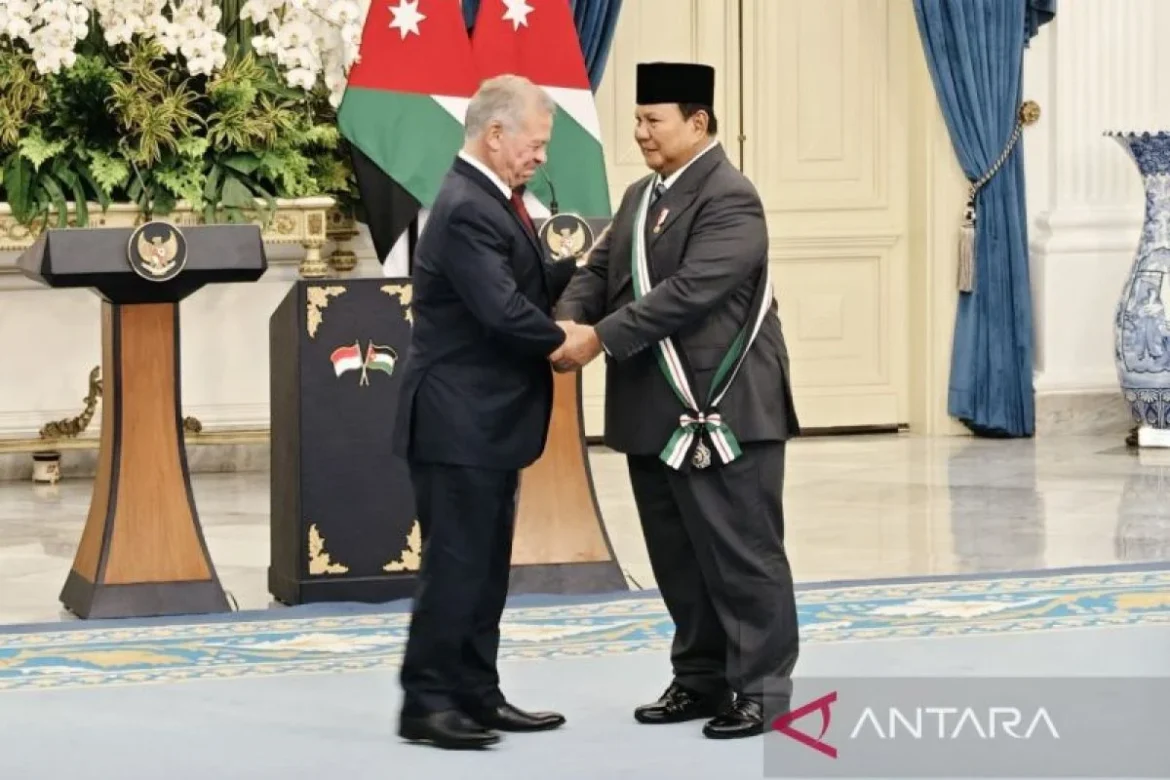
Jakarta prepares for a significant diplomatic engagement as His Majesty King Abdullah II bin Al-Hussein of the Hashemite Kingdom of Jordan arrived for a state visit to Indonesia on Friday afternoon, October 20, 2025. The visit underscores the growing strategic importance of bilateral relations between the two nations, further cemented by a remarkable and enduring personal friendship between the Jordanian monarch and Indonesian President Prabowo Subianto. This high-profile visit is anticipated to strengthen cooperation across various sectors, from economic ventures to defense and geopolitical alignment, particularly concerning regional stability and the Palestinian issue.
Upon his arrival, King Abdullah II is scheduled to hold a crucial meeting with President Prabowo Subianto. The agenda includes discussions with representatives from Danantara Indonesia, signaling a focused interest in specific economic partnerships. A key highlight of the visit will be the signing of several bilateral Memoranda of Understanding (MoUs), formalizing commitments and setting the framework for future collaborations. This visit is part of a broader tour by King Abdullah II to several Asian countries, including Japan, Vietnam, Singapore, and Pakistan, emphasizing Jordan’s active engagement with the Asia-Pacific region.
A Deepening Bilateral Relationship
The reciprocal nature of this high-level engagement is notable. President Prabowo Subianto had previously undertaken a visit to Jordan on April 14, 2025, where he held a private meeting with King Abdullah II at the Al Husseiniya Palace in Amman. That meeting, which took place on the second day of President Prabowo’s visit to the kingdom, was characterized by an extraordinary display of personal camaraderie, with King Abdullah II himself driving President Prabowo to his hotel in downtown Amman. This gesture, highly unusual for a head of state, speaks volumes about the depth of their long-standing personal relationship, which has now evolved to influence state-to-state diplomacy.
The diplomatic ties between Indonesia and Jordan, established in 1950, have historically been cordial, rooted in shared Islamic values and a commitment to regional peace and multilateralism. However, the ascension of both King Abdullah II and President Prabowo to their respective nations’ highest offices in recent years—King Abdullah II in 1999 and President Prabowo, inaugurated on October 20, 2024—has injected a new dynamism into the relationship. Their personal bond, forged over decades and through shared professional experiences, is now a powerful catalyst for enhanced state-level cooperation.
A Bond Forged in Service: The Personal Connection
The personal friendship between King Abdullah II and President Prabowo Subianto is a unique aspect of this bilateral relationship, predating their current roles as heads of state. Both leaders share a distinguished military background, having graduated from the prestigious U.S. Army Ranger School at Fort Benning, Georgia. This shared experience in elite military training laid the foundation for a bond built on mutual respect, discipline, and a deep understanding of strategic leadership.
Their first documented meeting occurred on December 4, 1995, during the inauguration ceremony of Prabowo Subianto as the Commander General (Danjen) of Kopassus, Indonesia’s elite special forces command. At the time, both men were leading their respective countries’ special forces units; Prabowo as Danjen Kopassus and King Abdullah II (then Prince Abdullah) as the Commander of Jordan’s Special Forces in 1994. This shared professional path, involving leadership of highly specialized military units, provided a common ground for their early interactions and solidified their mutual admiration.
The friendship endured and deepened during a challenging period for Prabowo. When he left Indonesia in 1998 amid political turmoil, he sought refuge and spent a period of self-exile in Jordan. His arrival in Jordan was met with exceptional respect and honor, a testament to his bond with the then-Prince Abdullah. It is widely reported that during this time, Prabowo was even offered Jordanian citizenship, an offer he respectfully declined, choosing to retain his Indonesian nationality. This episode highlights the profound personal trust and support that characterized their relationship, transcending national borders and political circumstances.
Their paths crossed again in 2014 when King Abdullah II made a state visit to Indonesia. This earlier visit, while significant for bilateral relations, lacked the direct personal dynamic of two heads of state that characterizes the current engagement. Now, with both men at the pinnacle of their nations’ leadership, their long-standing friendship is poised to elevate the strategic partnership between Indonesia and Jordan to unprecedented levels. King Abdullah II ascended the throne in 1999, while President Prabowo Subianto assumed the highest office in Indonesia in October 2024, bringing their personal and professional trajectories to a powerful confluence.
Strategic Dialogue and Economic Imperatives
The current state visit is expected to yield concrete outcomes, particularly in economic cooperation. The meeting with representatives from Danantara Indonesia and the focus on phosphate cooperation point towards a strategic alignment in resource management and industrial development. Jordan possesses the fifth-largest phosphate reserves globally, and phosphate rock is one of its primary natural resources and key exports. This makes Jordan a vital partner for countries like Indonesia, which rely on phosphate for agricultural fertilizers and other industrial applications.
-
Bilateral Memoranda of Understanding: The forthcoming signing of MoUs is anticipated to cover various sectors. These could include trade facilitation, investment promotion, defense cooperation, cultural exchange, and technical assistance. Given the emphasis on Danantara Indonesia, an MoU related to mining, resource processing, or agricultural inputs is highly probable. Such agreements would provide the legal and operational frameworks for deeper collaboration, enabling joint ventures, technology transfer, and market access.
-
Economic Cooperation: Trade and Investment Outlook: While specific figures for 2025 are still emerging, bilateral trade between Indonesia and Jordan has shown consistent growth over the past decade. In 2023, the total trade volume between Indonesia and Jordan reached approximately USD 260 million. Indonesia’s main exports to Jordan typically include palm oil, tires, paper products, and textiles, while its imports from Jordan are primarily phosphate, potash, and other mineral products. The current visit is expected to set ambitious targets for increasing this trade volume and diversifying the basket of goods and services exchanged. Investment flows, though modest historically, are ripe for expansion, particularly in sectors where both countries hold competitive advantages or have strategic needs, such as energy, infrastructure, and digital economy.
-
The Significance of Phosphate Resources: Jordan’s substantial phosphate reserves present a unique opportunity for Indonesia. Indonesia, a major agricultural producer, has a consistent demand for phosphate fertilizers to boost crop yields and ensure food security for its large population. By securing a reliable supply chain for phosphate from Jordan, Indonesia can enhance its agricultural resilience. Conversely, Jordan can benefit from Indonesian expertise in processing and manufacturing, potentially attracting investment in downstream industries related to phosphate. This strategic partnership in a critical resource area highlights the practical and mutually beneficial aspects of the visit.
Geopolitical Resonance and Regional Stability
Beyond economic ties, the visit carries significant geopolitical weight. Both Indonesia and Jordan are influential voices in their respective regions, committed to promoting peace and stability. Jordan, a key player in the Middle East, holds a crucial role in the Israeli-Palestinian conflict, particularly as the custodian of Muslim and Christian holy sites in Jerusalem. Indonesia, the world’s most populous Muslim-majority nation, has historically been a staunch supporter of Palestinian independence.
-
Shared Stance on Global and Regional Issues: The ongoing conflict in Gaza will undoubtedly be a central topic of discussion. Both King Abdullah II and President Prabowo Subianto have consistently called for a lasting ceasefire, humanitarian aid, and a two-state solution based on international law. Their joint statement following the visit is expected to reiterate these positions, sending a strong, unified message from two significant global actors. This alignment on a critical international issue underscores their shared commitment to justice and human rights, enhancing their collective diplomatic leverage.
-
Defense and Security Cooperation: Given their respective backgrounds in special forces and their current roles as commanders-in-chief, discussions on defense and security cooperation are highly probable. This could involve intelligence sharing, joint military exercises, counter-terrorism strategies, and defense industry collaboration. Indonesia, a rising defense manufacturer, could explore opportunities to supply defense equipment to Jordan, while Jordan’s extensive experience in regional security challenges could offer valuable insights. Such cooperation would enhance the security capabilities of both nations and contribute to regional stability in their respective spheres.
A Broader Asian Tour
King Abdullah II’s visit to Indonesia is contextualized within a broader diplomatic tour of Asia. This itinerary, which includes Japan, Vietnam, Singapore, and Pakistan, signifies Jordan’s strategic pivot towards strengthening ties with dynamic Asian economies and influential regional powers. The tour reflects Jordan’s foreign policy objective of diversifying its partnerships beyond traditional Western allies, seeking new avenues for economic cooperation, investment, and diplomatic support on critical regional issues. For Indonesia, being a key stop on this tour reaffirms its growing stature as a significant player in global diplomacy and economics.
Looking Ahead: The Future of Indonesia-Jordan Ties
The state visit of King Abdullah II to Indonesia marks a pivotal moment in the bilateral relationship. It leverages a unique personal friendship at the highest echelons of power to drive strategic national interests. The outcomes of this visit—from the signing of MoUs to enhanced dialogue on regional and global issues—are expected to lay a robust foundation for deeper and more diversified cooperation in the years to come. As both nations navigate complex geopolitical landscapes and pursue ambitious development agendas, the strengthened bond between Jakarta and Amman, underpinned by the personal rapport between their leaders, promises a future of mutual benefit and enhanced regional influence. The engagement is a testament to the power of personal diplomacy in shaping international relations and fostering enduring partnerships.