
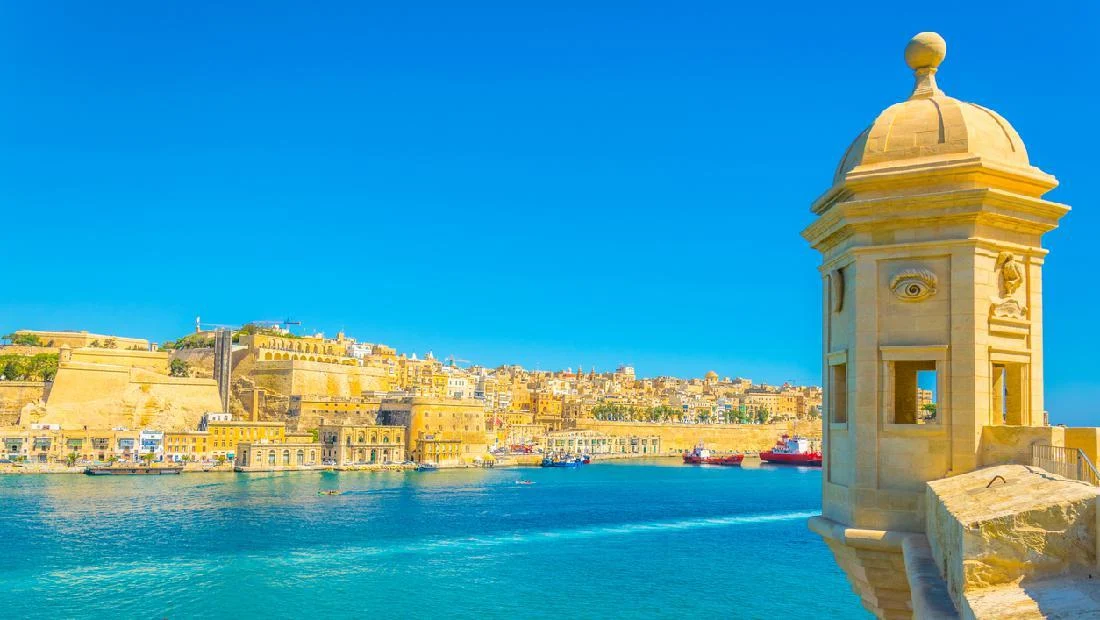
The Maltese judicial system has delivered a firm message regarding public decorum and the behavior of foreign visitors following a highly unusual incident in the historic city of Isla. Sean Graham Purves, an 18-year-old tourist from Scotland, found his Mediterranean holiday ending in a courtroom rather than at the airport after he was arrested for walking completely naked through the public streets of one of Malta’s most traditional neighborhoods. The incident, which occurred during the final hours of his vacation, has sparked a broader conversation regarding the responsibilities of tourists and the preservation of local cultural standards in a nation that is currently seeing record-breaking numbers of international visitors.
Detailed Chronology of the Incident in Isla
On the morning of what was supposed to be his final day in Malta, Sean Graham Purves was staying in Isla—also known as Senglea—one of the historic "Three Cities" located across the Grand Harbour from the capital, Valletta. According to police reports and evidence presented in court, the incident unfolded at approximately 10:00 AM. While the area was bustling with morning activity, local residents and fellow tourists were shocked to witness a young man walking down St. Angelo Street without a single stitch of clothing.
The act was not a brief momentary exposure but a sustained walk through the public thoroughfare. The entire episode was captured clearly by local Closed-Circuit Television (CCTV) cameras installed along the street. The footage showed Purves navigating the urban landscape in total nudity, an act that was immediately reported to the local authorities by stunned bystanders.
The Malta Police Force responded rapidly to the reports. Officers were dispatched to the area and successfully tracked Purves to the location where he was last sighted by witnesses. He was taken into custody without further incident. Upon his arrest, it was revealed that Purves had been vacationing with a group of friends and had allegedly decided to engage in the act as a "souvenir" or a final prank to mark the end of his trip.
Legal Proceedings and the Judicial Verdict
Following his arrest, Purves was brought before the Maltese Magistrates’ Court, presided over by the sitting magistrate. The prosecution filed several charges against the teenager, primarily focusing on violations of public decency and morality. Under the Maltese Criminal Code, acts that offend public morals or involve indecent exposure in a public place are treated with significant gravity, particularly in residential and historical areas.
Purves, represented by legal counsel, entered a guilty plea to all charges. His defense team argued that the act was not motivated by malice or a desire to cause harm. Instead, they characterized it as a momentary lapse in judgment—an "iseng" or mischievous act intended as a bit of fun before returning home to Scotland. The defense emphasized his youth and his lack of a prior criminal record in the country, hoping for a lenient sentence that would allow him to return home as planned.
However, the court took a different view of the matter. The presiding magistrate noted that while Purves was only 18 years old, he had reached the age of legal majority. In the eyes of the Maltese law, an 18-year-old is an adult and must be held fully accountable for their actions. The court emphasized that being a tourist does not grant an individual immunity from local laws or the right to disrespect the cultural and moral standards of the host community.
The final sentencing was significant:
- Imprisonment: Purves was sentenced to one month in prison, effective immediately.
- Financial Penalty: A fine of €100 (approximately Rp 2 million) was imposed.
- Deportation and Ban: Perhaps most significantly, the court issued an order prohibiting Purves from entering Malta for a period of three months following his release.
Cultural Context: Why Isla and St. Angelo Street Matter
To understand the severity of the reaction, one must look at the location of the incident. Isla (Senglea) is not a secluded beach resort where such behavior might—though still illegal—be viewed with less shock. It is a fortified city with a deep religious and historical heritage. St. Angelo Street is a residential and commercial artery within a community that prides itself on traditional Mediterranean values and Roman Catholic traditions.
Malta is a country where the intersection of modern tourism and traditional life is a delicate balance. Public nudity is strictly prohibited on all Maltese beaches (with the exception of very specific, unofficial remote spots), and walking naked through a city center is considered a profound affront to the local population. The quick police response and the court’s firm sentence reflect the state’s commitment to protecting the "public peace" and the "moral fabric" of its communities.
Statistical Background: Malta’s Tourism Boom
The incident involving Mr. Purves comes at a time when Malta is experiencing an unprecedented surge in tourism. According to data cited by Malta Today, the island nation reached a historic milestone in 2025, welcoming a total of 4.02 million tourists. This represents a massive increase for a country with a local population of just over 500,000 people.
The influx of visitors has brought immense economic benefits to the archipelago, which is famed for its UNESCO World Heritage sites like Valletta, its stunning Barok architecture, and the crystal-clear waters of the Blue Lagoon in Comino. However, this volume of tourism also brings challenges, including "over-tourism" and an increase in incidents involving "loutish" behavior or cultural clashes.
The Scottish market remains one of the significant contributors to Malta’s tourism sector. Data from the Malta Tourism Authority (MTA) indicates that British tourists (including those from Scotland, England, and Wales) consistently rank among the top three nationalities visiting the islands. While the vast majority of these visitors are respectful, high-profile incidents of public intoxication or indecency often lead to calls for stricter enforcement of local regulations.
Official Responses and Inferred Implications
While the Malta Police Force and the Ministry for Tourism have not issued a specific joint statement regarding this individual case, the judicial outcome aligns with the government’s broader strategy of "quality over quantity." In recent policy discussions, Maltese officials have signaled a shift toward attracting tourists who respect the local culture and environment, rather than those who view the islands as a lawless playground.
Local residents in Isla expressed a mixture of bewilderment and frustration. Community leaders have often pointed out that while tourists are welcome, the "Three Cities" are living communities, not theme parks. The act of walking naked at 10:00 AM—a time when children are going to school and the elderly are heading to church or the market—is seen as a lack of basic respect for the people who live there.
Legal experts in Malta suggest that the one-month prison sentence serves as a "deterrent sentence." By ensuring that Purves faced immediate incarceration rather than just a suspended sentence or a fine, the court is sending a clear signal to other travelers that "last-day pranks" can have life-altering legal consequences.
Analysis: The Rise of "Last-Day" Tourist Misconduct
Sociologists and tourism experts have identified a growing trend in global travel often referred to as "disinhibited vacation behavior." This phenomenon occurs when individuals feel a sense of anonymity while abroad, leading them to engage in risks or behaviors they would never consider in their hometowns. The "last-day" incident is a specific subset of this, where the traveler feels that since they are leaving the jurisdiction within hours, they are immune to the long-term consequences of their actions.
In the case of Sean Graham Purves, the 10:00 AM timing suggests a high level of bravado or peer-pressured "dare" culture, which is often fueled by social media "clout" or the desire to create a "legendary" holiday story. However, the integration of extensive CCTV networks in Maltese cities and the efficiency of the local police have made it increasingly difficult for such acts to go unpunished.
Conclusion and Future Outlook
The case of the Scottish teenager serves as a cautionary tale for the millions of tourists who flock to the Mediterranean each year. Malta remains a "gem of the Mediterranean," offering a unique blend of ancient history and natural beauty. However, the 2026 legal proceedings against Purves highlight that this beauty is protected by a rigorous legal framework intended to uphold public order.
As Malta continues to navigate its status as a top-tier global destination, the balance between being a welcoming host and a strict enforcer of social norms will remain a priority. For Sean Graham Purves, the cost of a few minutes of "fun" was a criminal record, a prison cell, and a ban from one of Europe’s most beautiful island nations. For the people of Isla, the swift action of the police and the courts provides some reassurance that their streets—and their standards of decency—will be defended.
The 4.02 million tourists expected to visit in the coming years will likely find a Malta that is as beautiful as ever, but also one that is increasingly intolerant of behavior that treats its historic streets as a stage for public indecency. The message from the Valletta courts is clear: respect the land, or face the law.