
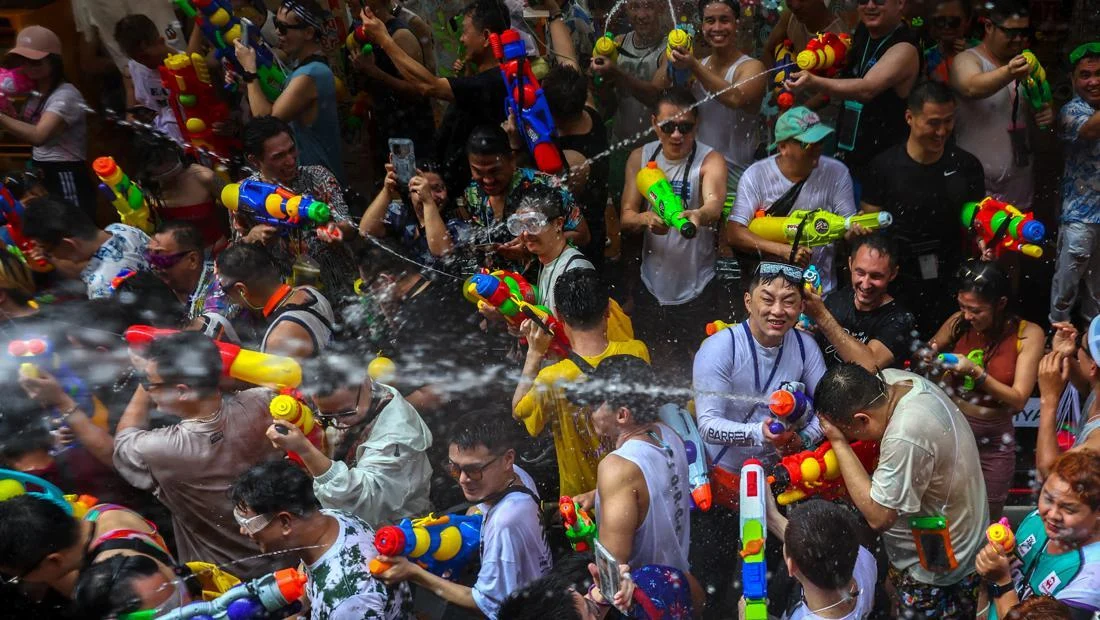
The 2026 Songkran Festival, Thailand’s most celebrated cultural event and a cornerstone of its global tourism appeal, has reached a critical juncture as authorities grapple with a surge in road fatalities and instances of unruly behavior by international visitors. While the festival is renowned for its vibrant water fights and traditional New Year rituals, the 2026 celebrations have been overshadowed by a series of incidents in Phuket and a grim tally of traffic accidents across the kingdom. As the nation concludes the primary festivities, the Ministry of Tourism and Sports, alongside local law enforcement, is facing renewed pressure to balance the promotion of "Soft Power" cultural exports with the rigorous enforcement of public safety and order.
Public Disturbance and Arrests in Phuket
In the world-famous resort town of Phuket, specifically within the bustling Patong district, the festive atmosphere was interrupted by a confrontation between law enforcement and a group of international tourists. On Sunday, April 12, 2026, Patong Police were called to Prachanukhro Road following reports of a group of tourists acting in a manner that significantly disrupted public order and safety.
According to reports from Nation Thailand, the group, later identified as seven French nationals, was accused of excessive behavior during the water-splashing activities. Witnesses and police reports indicate that the tourists had effectively blocked sections of the road, preventing the flow of traffic. Furthermore, their methods of spraying water were described as aggressive and harassing toward commuters and pedestrians who were not necessarily participating in the festivities.
Initial attempts by patrolling officers to de-escalate the situation were met with resistance. While the officers instructed the group to disperse and move their water-splashing activities away from the main thoroughfare to ensure the safety of motorists, several members of the group refused to comply. This defiance led to the eventual arrest of the seven individuals. They were transported to the Patong Police Station, where they were charged with causing a public nuisance and disturbing the peace. Following the payment of fines and a formal warning regarding their future conduct, the tourists were released, though the incident has sparked a wider conversation regarding tourist behavior during national holidays.
Directives for Local Businesses and Residents
The fallout from the incident on Prachanukhro Road prompted immediate administrative action from the Patong Police. In an effort to prevent a recurrence of such disruptions, authorities conducted a sweep of the area to communicate directly with shop owners and residents. Business operators along the Prachanukhro corridor were officially advised against placing large water barrels or "water stations" directly on the asphalt or in positions that would encourage revelers to congregate in the middle of the street.
Local officials emphasized that while the tradition of splashing water is a fundamental part of Songkran, it must not infringe upon the rights of others to use public infrastructure. The police noted that while officers themselves are frequently targeted with water—a gesture usually accepted as part of the festive spirit—there is a clear line between celebratory play and conduct that endangers the public or halts the local economy’s logistics.
The Grim Reality of the "Seven Dangerous Days"
Beyond the issues of public order in tourist hotspots, the 2026 Songkran Festival has once again highlighted the perennial problem of road safety in Thailand. The period surrounding the New Year is colloquially known as the "Seven Dangerous Days" due to the dramatic spike in traffic accidents, often fueled by a combination of high-volume travel, speeding, and driving under the influence of alcohol.
Data released for the first three days of the 2026 festival (April 10 to April 12) paints a sobering picture. According to statistics cited by the New Straits Times and official government monitors, Thailand recorded 581 traffic accidents during this 72-hour window. These incidents resulted in 95 confirmed fatalities and hundreds of injuries, many of them serious.
A breakdown of the data reveals that motorcycles remain the most vulnerable mode of transport, involved in the vast majority of fatal accidents. The primary causes cited by the Department of Disaster Prevention and Mitigation (DDPM) include:
- Speeding: Drivers attempting to reach their home provinces quickly often exceed safety limits on secondary roads.
- Drunk Driving: Despite rigorous "Don’t Drink and Drive" campaigns, alcohol remains a contributing factor in nearly 30% of the recorded fatalities.
- Poor Visibility and Road Conditions: Sudden thunderstorms common in April, combined with water being thrown at moving vehicles, have contributed to several multi-vehicle collisions.
Official Government Response and Safety Campaigns
In response to the rising death toll, the Thai Ministry of Tourism and Sports issued a formal plea to both the domestic population and the millions of international tourists currently in the country. A spokesperson for the ministry reiterated the government’s stance that the "joy of the festival should not come at the cost of human life."
"The government urges the public and tourists to drive responsibly and strictly adhere to the ‘don’t drink and drive’ principle to ensure that this year’s Songkran festival remains a safe and enjoyable event for all," the Ministry stated.
To assist the influx of visitors, the government has mobilized the Tourist Assistance Centers (TAC) nationwide. These centers, along with the 24-hour Tourist Police hotline (1155), have been placed on high alert to handle emergencies ranging from medical crises and road accidents to legal disputes involving foreign nationals. The Ministry has also deployed additional personnel to major transport hubs, including Mo Chit Bus Terminal and Suvarnabhumi Airport, to manage the "return rush" as millions of Thais travel back to urban centers after visiting their families in rural provinces.
The Evolution and Context of Songkran
To understand the scale of the challenges faced in 2026, it is necessary to look at the cultural and economic evolution of Songkran. Originally a somber religious festival marking the sun’s entry into the constellation of Aries, Songkran traditionally involved the gentle pouring of water over the hands of elders and the cleaning of Buddha statues to symbolize purification and the washing away of bad luck.
In recent decades, however, the festival has transformed into a massive, week-long "water war" that generates billions of baht in tourism revenue. In 2023, UNESCO officially recognized Songkran as an Intangible Cultural Heritage of Humanity, further boosting its profile. For the 2026 season, the Thai government heavily marketed the event as part of its "World Songkran Festival" initiative, aiming to extend celebrations across the entire month of April in various provinces.
However, this commercial success brings significant logistical burdens. The concentration of millions of people in areas like Patong in Phuket, Khao San Road in Bangkok, and the Old City in Chiang Mai creates a high-pressure environment for local infrastructure. The arrest of the French tourists in Phuket is seen by analysts as a symptom of "over-tourism" tensions, where the expectations of international visitors—often fueled by social media depictions of lawless fun—clash with the reality of local laws and the needs of residents.
Analysis of Implications for Thai Tourism
The events of April 2026 suggest that Thailand is at a crossroads regarding its management of major festivals. On one hand, the government is eager to maintain its reputation as the "Land of Smiles" and a top-tier global destination. On the other hand, the high casualty rate on the roads and the increasing frequency of tourist-related public order offenses pose a threat to the country’s image and the safety of its citizens.
Industry experts suggest that future Songkran festivals may see stricter zoning laws. We are already seeing the beginnings of this in Phuket, where police are restricting where water stations can be placed. There is a growing movement to confine "water play" to designated "Safety Zones" or "Water Streets" where traffic is completely banned, thereby reducing the risk of accidents and conflict with non-participants.
Furthermore, the legal repercussions for the tourists in Phuket serve as a warning. The Royal Thai Police have indicated that they will no longer take a "hands-off" approach to foreign visitors who violate public decency or safety laws under the guise of festival participation. This shift toward stricter enforcement is part of a broader strategy to attract "high-quality" tourists who respect local customs and laws.
Conclusion and Resources for Travelers
As the 2026 Songkran Festival winds down, the focus shifts to the "Return Period," where traffic accidents historically spike once more as people travel back to work. Authorities remain on high alert, and checkpoints for alcohol and speed remain active on all major highways.
For international tourists still in Thailand or planning to visit for future festivals, the Ministry of Tourism emphasizes the importance of situational awareness. Participation in Songkran is encouraged, but it must be done with respect for the local community. Travelers are reminded that:
- Throwing water at motorcyclists or moving vehicles is strictly prohibited and can lead to criminal charges.
- High-pressure water guns (PVC pipe style) are illegal and subject to confiscation and fines.
- Respectful attire is requested when visiting temples or participating in traditional ceremonies.
The Tourist Police continue to offer support via the 1155 hotline, providing multilingual assistance to ensure that the remainder of the 2026 holiday season concludes without further major incidents. As the nation reflects on the 95 lives lost in the opening days of the festival, the hope remains that through stricter enforcement and increased public awareness, future Songkran celebrations can preserve their cultural heart while shedding their reputation for danger.
