
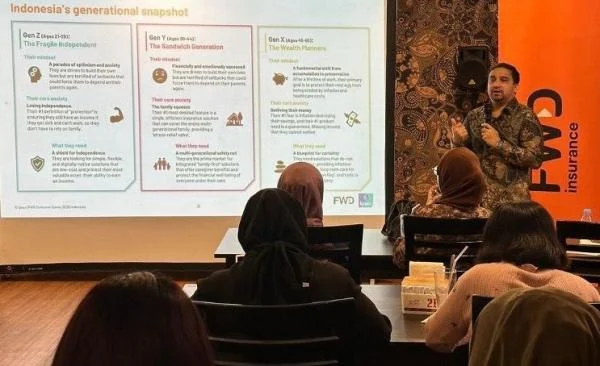
The landscape of Indonesian domestic economics is undergoing a significant shift as the nation’s middle class pivots its financial strategy from wealth accumulation toward defensive stability. According to the latest FWD Consumer Outlook Survey, conducted by FWD Group Holdings Limited in collaboration with research firm Ipsos, a combination of soaring living expenses, volatile income streams, and the prohibitive cost of healthcare has fundamentally altered the financial priorities of this critical demographic. This trend is further exacerbated by a turbulent global economic climate, characterized by geopolitical tensions in the Middle East and fluctuating commodity prices, which have collectively fostered a sense of caution among Indonesian households.
The FWD Consumer Outlook Survey, which examines the financial well-being, primary concerns, and protection gaps of the middle class across several Asian markets, highlights a growing sentiment of vulnerability in Indonesia. The findings suggest that the traditional aspiration of rapid economic mobility is being replaced by a more conservative focus on maintaining current standards of living and ensuring a safety net against unforeseen crises.
The State of Financial Stress in Indonesia
The survey provides a stark quantitative look at the psychological state of the Indonesian middle class. Approximately 66 percent of respondents reported feeling significant financial pressure, describing their current state as "stressed" or "worried." Many within this group indicated that they are currently living paycheck to paycheck, with their total income barely covering essential daily expenditures and basic household needs.
This high level of financial anxiety is not an isolated phenomenon but is the result of three primary catalysts identified by the respondents. First and foremost is the rising cost of living, cited by 70 percent of participants as their greatest concern. This includes the inflationary pressure on staple goods, fuel, and utilities, which has outpaced wage growth for many sectors of the population.
The second major factor is income uncertainty, affecting 43 percent of the surveyed population. In a post-pandemic economy where the "gig economy" has expanded and traditional job security has weakened, many middle-class families no longer feel confident in the long-term stability of their primary revenue streams. Finally, 40 percent of respondents pointed toward the rising cost of healthcare services as a major source of financial dread. Despite the existence of national health insurance schemes, the out-of-pocket expenses for specialized treatments and the perceived inadequacy of basic coverage for serious illnesses remain significant burdens.
Macroeconomic Headwinds and Global Volatility
The shift toward financial conservatism in Indonesia cannot be viewed in isolation from the broader global context. The Indonesian economy, while resilient, remains sensitive to international market fluctuations. The ongoing conflict in the Middle East has sent ripples through global energy markets, leading to concerns over domestic fuel subsidies and the potential for imported inflation.
Furthermore, the strengthening of the U.S. dollar and the subsequent pressure on the Indonesian Rupiah have made imports more expensive, directly impacting the manufacturing costs of consumer goods. For the Indonesian middle class, these macro-level events translate into micro-level anxieties. When the global economy is unpredictable, the natural reaction for households is to tighten their belts, increase their liquid savings, and forgo high-risk investments that might have otherwise fueled personal economic growth.
Economic analysts suggest that this "stability-first" mindset could lead to a slowdown in domestic consumption—a primary driver of Indonesia’s Gross Domestic Product (GDP). If the middle class, which traditionally fuels the retail, automotive, and real estate sectors, continues to prioritize "defensive" financial management, the broader national goal of achieving high-income status by 2045 may face significant headwinds.
The Healthcare Conundrum and the Insurance Gap
One of the most poignant findings of the FWD-Ipsos research is the role of healthcare costs in driving financial instability. While the Indonesian government has made strides with the Jaminan Kesehatan Nasional (JKN) program managed by BPJS Kesehatan, the survey reveals a lingering "protection gap."
Medical inflation in Indonesia often runs higher than general inflation, sometimes reaching double-digit percentages annually. This means that for a middle-class family, a single major medical emergency can wipe out years of accumulated savings. The survey indicates that while awareness of insurance products is growing, the actual penetration of comprehensive private health and life insurance remains relatively low compared to other regional peers. This gap leaves many families in a precarious position where they are one health crisis away from falling back into a lower economic bracket.
Chronology of Economic Pressures
To understand the current sentiment, one must look at the timeline of economic pressures over the last 24 months. Following the recovery phase of the COVID-19 pandemic, Indonesia faced a surge in global commodity prices in late 2022 and throughout 2023. The government was forced to adjust subsidized fuel prices (BBM) in September 2022, which triggered a domino effect on transportation costs and food prices.

In 2024, the situation was further complicated by the "El Niño" weather phenomenon, which impacted agricultural output, particularly rice—a staple of the Indonesian diet. As rice prices hit record highs in early 2024, the purchasing power of the middle class was further eroded. Concurrently, the global geopolitical situation shifted from the focus on the Russia-Ukraine war to the escalating tensions in the Middle East, ensuring that energy prices remained volatile and unpredictable.
These events have created a cumulative effect of "inflation fatigue," where consumers are no longer waiting for prices to stabilize but are instead permanently adjusting their lifestyles to accommodate a higher-cost environment.
Shifting Consumer Behavior and Investment Patterns
The FWD survey results align with observed shifts in consumer behavior across Indonesia’s urban centers. There is a noticeable trend toward "down-trading," where consumers opt for cheaper alternative brands or reduce the frequency of non-essential services. The hospitality and luxury goods sectors are seeing a more cautious consumer base, while the demand for high-yield, low-risk savings instruments has seen an uptick.
In terms of investment, the Indonesian middle class is moving away from speculative assets. There is a renewed interest in gold, government bonds (ORI/SBR), and time deposits, which offer guaranteed returns and capital preservation. This is a marked departure from the "investment boom" seen during the pandemic years, when retail investors flocked to high-growth stocks and digital assets. Today, the mantra is "capital protection" rather than "capital gains."
Expert Reactions and the Role of Financial Literacy
Industry experts believe that the results of the FWD Consumer Outlook Survey should serve as a wake-up call for both the financial services industry and policymakers. "The fact that 66 percent of the middle class feels financially stressed is a signal that we need more robust financial literacy programs and more accessible protection products," noted a financial analyst following the report’s release.
Insurance providers like FWD are responding by emphasizing the importance of "financial resilience." By providing products that combine protection with flexible savings components, the industry aims to bridge the gap between the need for stability and the desire for long-term growth. However, the challenge remains in convincing a stressed population to allocate funds toward insurance premiums when daily costs are already high.

From a policy perspective, there are calls for the government to stabilize food prices more aggressively and to enhance the quality of public services to reduce the "hidden costs" of being middle class—such as the need for private education and private healthcare due to the perceived inadequacy of public options.
Long-term Implications for Indonesia’s Economic Trajectory
The cautious stance of the middle class has profound implications for Indonesia’s future. The middle class is often referred to as the "engine of growth." If this engine is idling in a state of self-preservation, the national economic velocity will inevitably slow down.
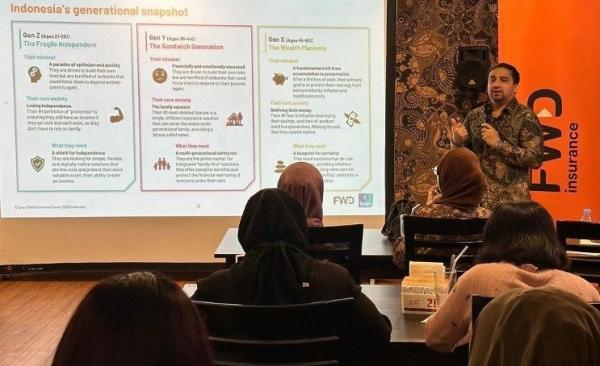
Furthermore, the "Sandwich Generation" phenomenon—where middle-aged adults must simultaneously support their aging parents and their own children—adds another layer of complexity. With 40 percent of respondents worried about healthcare, much of that concern is likely directed toward the care of elderly relatives, which further drains the disposable income that could otherwise be invested in the economy.
If these trends persist, Indonesia may face a period of stagnant social mobility. The "stability over growth" mindset, while rational for the individual household, creates a collective paradox: by being too cautious to spend or invest, the middle class may inadvertently contribute to the very economic slowdown they fear.
Conclusion
The FWD Consumer Outlook Survey paints a portrait of an Indonesian middle class that is resilient but weary. The transition from prioritizing growth to prioritizing stability is a rational response to a world that feels increasingly volatile. With 70 percent of the population concerned about the cost of living and a significant majority feeling the weight of financial stress, the focus has shifted to the essentials: keeping the lights on, staying healthy, and ensuring that today’s income can cover tomorrow’s needs.
As Indonesia navigates the complexities of 2024 and beyond, the ability of the government and the private sector to address these core anxieties—inflation, healthcare costs, and income security—will determine whether the middle class can return to its role as a driver of ambitious economic expansion or whether it will remain in a defensive crouch, prioritizing survival over the pursuit of the Indonesian dream.
