
South Korea has solidified its position as a premier global travel hub, driven by a sophisticated blend of traditional heritage and the pervasive influence of the "Korean Wave," or Hallyu. This cultural phenomenon, which encompasses music, film, and television, has fundamentally altered the landscape of international tourism, particularly among travelers from Southeast Asia. As the Ministry of Culture, Sports and Tourism (MCST) continues its "2023–2024 Visit Korea Year" initiative, the focus has shifted from traditional landmarks like Gyeongbokgung Palace to urban districts that capture the lifestyle portrayed in popular K-dramas. Destinations such as the Konkuk University area, the theatrical district of Daehakro, and the architectural marvel of Starfield Library have become central to this new tourism paradigm, offering visitors a tangible connection to the aesthetics and social atmosphere of modern Seoul.
The Hallyu Catalyst and the Evolution of South Korean Tourism
The rapid growth of South Korea’s tourism sector is inseparable from the global consumption of its media exports. According to data from the Korea Tourism Organization (KTO), approximately 17.5 million international tourists visited the country in 2019, and after a period of post-pandemic recovery, the figures for 2023 and early 2024 indicate a robust return to these levels. A significant portion of this demographic, particularly from Indonesia, Singapore, and Thailand, cites "experiencing drama filming locations" and "tasting local food featured in media" as primary motivations for their travel.
The shift in traveler behavior is marked by a move away from large, organized group tours toward Free Independent Travel (FIT). Modern tourists seek "Instagrammable" locations that offer a blend of metropolitan sophistication and cultural depth. This trend has brought localized districts into the international spotlight, transforming once-quiet residential or student areas into bustling commercial zones that cater to both locals and global visitors seeking the "K-lifestyle."
The Nightlife and Youth Culture of the Konkuk University District
One of the most prominent examples of this urban transformation is the area surrounding Konkuk University, colloquially known as "Kondae." Often referred to by tourists through the cultural lens of "Geonbae"—the Korean term for "cheers"—this district serves as a primary hub for Seoul’s vibrant nightlife and social drinking culture. Unlike the more internationally famous Itaewon or the high-end clubs of Gangnam, Kondae offers a more localized, youthful, and high-energy atmosphere.
The district is characterized by its dense network of "Pocha" (street-style bars) and modern pubs that line the neon-lit streets. The visual identity of this area—featuring vibrant signage, glass-fronted eateries, and the constant hum of social activity—mirrors the urban backdrop of many contemporary romantic and slice-of-life dramas. Economically, this district plays a vital role in the city’s SME sector. The high concentration of small businesses provides a platform for culinary innovation, where traditional Korean snacks (Anju) are reinvented for a younger, more globalized audience.
The appeal of Kondae to international travelers lies in its authenticity. It provides a window into the social fabric of South Korean youth, where the act of "Geonbae" is more than just a toast; it is a ritual of bonding and community. For many Indonesian tourists, visiting these bars allows them to recreate scenes from popular dramas like Itaewon Class or Work Later, Drink Now, effectively bridging the gap between fictional media and real-world experience.

Daehakro: The Broadway of the East and the Preservation of Performing Arts
While Kondae represents the modern social scene, the district of Daehakro serves as the soul of South Korea’s performing arts. Stretching approximately 1.6 kilometers through the Jongno-gu district, Daehakro is home to over 150 small and large-scale theaters, earning it the moniker of "The Broadway of Seoul." The area’s history is rooted in academia and intellectualism, having once been the site of Seoul National University’s main campus.
Today, Daehakro is a designated cultural district where the government and private sectors collaborate to preserve the arts. Visitors can witness a diverse array of performances, ranging from experimental indie plays and musicals to traditional Korean theater. The presence of Marronnier Park at the heart of the district provides a communal space where street performers, musicians, and artists gather, creating a continuous cycle of creative expression.
The significance of Daehakro in the tourism sector is bolstered by the "Welcome Daehakro" festival, an annual event designed to introduce non-Korean speakers to the local theater scene through non-verbal performances and English-subtitled shows. This initiative reflects a broader strategic move by the KTO to diversify tourism offerings beyond retail and sightseeing. By positioning Daehakro as a world-class cultural destination, South Korea is successfully attracting "niche tourists" interested in the global arts market.
Starfield Library: A Landmark of Aesthetic and Intellectual Tourism
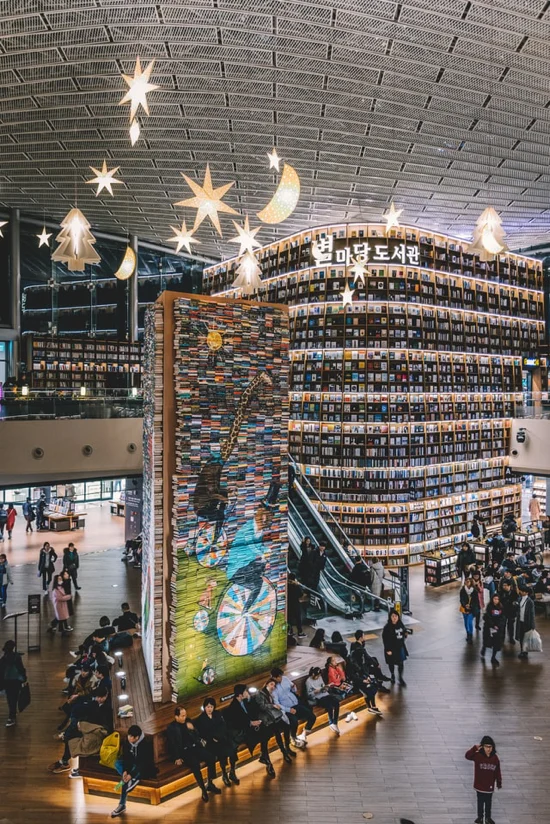
In the heart of Gangnam’s COEX Mall lies the Starfield Library, an architectural feat that has redefined the concept of public space in a commercial setting. Since its opening in 2017, the library has become one of the most photographed locations in Seoul. The facility is defined by its towering 13-meter-tall bookshelves, which house a collection of over 50,000 books and hundreds of international magazines.
The Starfield Library is a prime example of "spatial branding," where the design of a space is intended to evoke an emotional response and encourage social media sharing. While it functions as a legitimate library and community hub hosting lectures and concerts, its primary draw for tourists is its breathtaking scale and lighting. It serves as a quiet sanctuary amidst the frantic pace of the underground shopping mall, offering a "slow-living" experience that is highly valued by modern travelers.
From a sociological perspective, the Starfield Library represents the democratization of knowledge and art. It is a free-to-access space that does not require a purchase, a rarity in high-density urban commercial zones. For the international visitor, it offers a moment of reflection and a "cinematic" environment that feels as though it was lifted directly from a high-budget drama production, such as Record of Youth or Vincenzo.
Economic Implications and the Role of Government Policy
The enrichment of these tourist sites is not accidental but the result of meticulous urban planning and cultural policy. The South Korean government has recognized that the sustainability of the tourism industry depends on the ability to offer diverse experiences. By investing in the infrastructure of districts like Daehakro and promoting the unique character of university towns like Kondae, the state ensures that tourism revenue is distributed across various sectors of the economy.

Data suggests that the "Hallyu effect" contributes billions of dollars to the South Korean economy annually. A report by the Korea Foundation for International Cultural Exchange (KOFICE) highlighted that for every $100 increase in the export of cultural content, there is a corresponding $248 increase in the export of consumer goods, including tourism services. This synergy is evident in the way travelers visit these sites and subsequently spend on local fashion, cosmetics, and food.
Furthermore, the Indonesian market has shown remarkable resilience and growth. The KTO Jakarta Office has actively promoted "thematic travel," encouraging Indonesians to explore beyond the capital city and engage with local cultures. The introduction of simplified visa processes and the expansion of direct flights have further facilitated this influx, making South Korea one of the most accessible East Asian destinations for the Indonesian middle class.
Broader Impact: Soft Power and Global Connectivity
The popularity of these urban destinations signifies the success of South Korea’s "Soft Power" strategy. By exporting its culture, South Korea has created a global community of consumers who feel a personal connection to the country’s geography. When a tourist visits Starfield Library or a bar in Kondae, they are not merely visiting a physical location; they are participating in a global cultural dialogue.
The implications for the future of urban tourism are profound. Seoul’s ability to integrate its cultural narrative into its physical infrastructure provides a blueprint for other cities. It demonstrates that the value of a tourist destination is no longer just in its historical significance, but in its ability to tell a story that resonates with a global audience.
As South Korea continues to innovate, the integration of technology—such as Augmented Reality (AR) tours in Daehakro or AI-driven personalized travel itineraries—is expected to further enhance the visitor experience. The goal remains clear: to transform the transient tourist into a long-term cultural enthusiast.
Conclusion and Future Outlook
The diversification of South Korea’s tourism portfolio through the promotion of Geonbae (Kondae), Daehakro, and the Starfield Library reflects a sophisticated understanding of modern travel trends. These sites offer a holistic experience that satisfies the desire for aesthetic beauty, social engagement, and cultural enrichment. For the international traveler, particularly those influenced by the evocative storytelling of K-dramas, these destinations provide a bridge between the screen and reality.
As the global travel industry continues to evolve in the post-pandemic era, South Korea’s focus on urban lifestyle tourism serves as a testament to the country’s adaptability and cultural resonance. By maintaining a balance between commercial appeal and cultural authenticity, South Korea ensures that its status as a "must-visit" destination will endure for years to come. Travelers are encouraged to look beyond the surface of popular media and immerse themselves in the rich, multi-layered reality of these vibrant districts, where every street corner tells a story and every "Geonbae" is an invitation to connect.
