
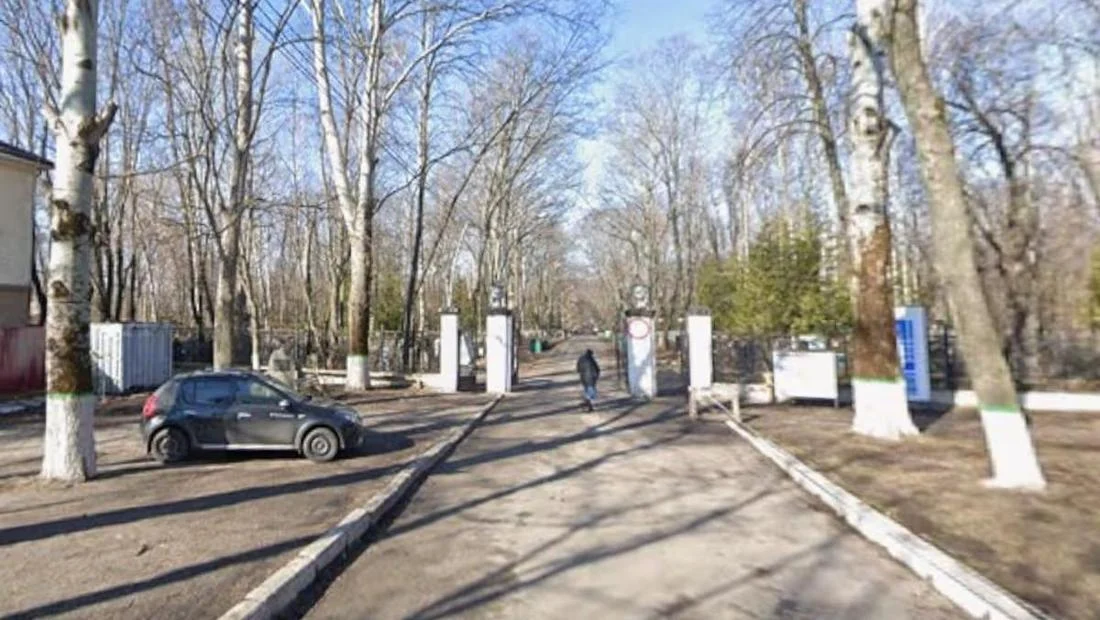
A series of viral videos emerging from central Russia has ignited an intense international debate regarding the intersection of long-standing cultural traditions and the escalating economic hardships faced by the Russian populace. The footage, which has circulated widely on platforms such as TikTok and Telegram, depicts groups of children openly collecting food items—including traditional Easter eggs, sweets, and pastries—left at gravesides in local cemeteries. While the imagery has prompted immediate accusations of desperation and "sacrilege" from some observers, others contend that the practice is a deeply rooted, albeit misunderstood, component of Slavic commemorative rituals.
The controversy comes at a time when the Russian Federation is grappling with the profound socio-economic consequences of its protracted conflict with Ukraine. As the war enters its fifth year in 2026, the domestic landscape has been reshaped by unprecedented military losses, severe international sanctions, and a volatile commodities market that has pushed the cost of living to historic highs.
The Cultural Context: Easter Traditions and the Radonitsa
To understand the scenes depicted in the viral footage, one must look toward the liturgical calendar of the Russian Orthodox Church. The period following Easter, particularly the day known as Radonitsa (the Day of Rejoicing), is traditionally marked by families visiting the graves of deceased relatives. It is a common practice to bring "gifts" for the departed, which often include painted eggs (pysanky), kulich (Easter bread), and various candies.
According to ethnographic experts, these offerings are not intended to rot. Historically, the tradition implies that the food should be consumed by the poor, travelers, or children, who in turn offer a prayer for the soul of the deceased. In many rural and provincial regions of Russia, such as Rostov and Voronezh, it has been a generational norm for children to roam cemeteries during these holidays to collect the treats.
A mother who uploaded one of the controversial videos defended the actions of the children, stating that her own son was participating in a harmless local custom. "I was simply sharing our tradition," she explained in a follow-up post. "It is a custom here. I did not expect such a negative reaction or that it would make people feel uncomfortable. In our region, this is how we remember the dead—by sharing with the living."
Economic Realities and the "Hunger" Narrative
Despite the traditional explanations, the optics of children scavenging for food in cemeteries have been viewed through a different lens by critics and international analysts. The suggestion that these children are motivated by genuine hunger rather than festive tradition is bolstered by recent economic data emerging from the region.
The Russian-Ukrainian conflict has exacted a heavy toll on the domestic supply chain. By early 2026, reports indicate that the price of basic staples has reached a breaking point for many households. In several administrative districts, the price of poultry and potatoes—the bedrock of the Russian diet—has reportedly surged by as much as 92% over a twelve-month period. Furthermore, the rationing of eggs, a primary symbol of the Easter holiday, has become a reality in various provinces, with supermarkets limiting the number of units per customer to prevent hoarding and manage dwindling supplies.
The sheer scale of human loss has also altered the physical and emotional landscape of Russian cemeteries. With military casualties estimated to have reached 1.3 million, thousands of "new" graves have appeared across the country. The influx of grieving families visiting these sites has inadvertently increased the volume of food offerings left behind, making the "harvesting" of these items by local youth more visible and frequent than in previous decades.
Public Reaction: Sacrilege or Survival?
The digital response to the footage has revealed a sharp divide in Russian society. On one side, commenters from metropolitan areas and more westernized social circles expressed horror at the scenes. "This is not a tradition; it is a desecration of the dead," wrote one user. "Are people so hungry that they must rob the graves? It is eerie and shameful to take things from a cemetery and bring them into your home."
Conversely, many residents of provincial Russia viewed the outrage as a sign of a growing disconnect between urban elites and the traditional heartland. A commenter from the Voronezh region noted, "Our grandmothers did this, our parents did this, we did this, and now our children do it. The adults put the candy there specifically knowing the children will come. It is an act of charity, not a crime."
Another witness from the Rostov region corroborated this sentiment, adding that while the volume of children in the videos might seem high, the practice itself is ancient. "We always went in groups as children. We ate our fill of sweets and remembered the names on the headstones. No one ever thought it was a bad thing until it was put on the internet."
A Chronology of Economic Decline (2022–2026)
To contextualize why these images have sparked such intense speculation regarding a famine-like state, it is necessary to examine the timeline of Russia’s economic trajectory since the escalation of the war:
- 2022–2023: Initial sanctions lead to a volatile ruble. While the government manages to stabilize the currency, the cost of imported agricultural machinery and fertilizers begins to rise, planting the seeds for future food inflation.
- 2024: Labor shortages become acute as a significant portion of the male workforce is diverted to the front lines or flees the country. Agricultural output begins to stagnate.
- 2025: The "Egg Crisis" hits its peak. Supply chain disruptions and avian flu outbreaks, combined with a lack of imported veterinary medicines, lead to a 50% spike in egg prices, prompting the first wave of rationing.
- Early 2026: Inflation for essential vegetables (the "borscht set") hits record highs. The government implements price caps on bread and milk in certain regions to prevent social unrest.
This timeline suggests that while the act of taking food from graves may be traditional, the necessity behind it may have shifted. For a family struggling with 92% inflation on potatoes, the "tradition" of children bringing home bags of cemetery sweets and eggs may now serve a functional role in the household’s caloric intake.

Sociological and Political Implications
Sociologists suggest that the viral nature of these videos reflects a deeper anxiety within the Russian psyche. The cemetery has become a focal point of national life, not just as a place of mourning for the massive military losses, but as a space where the state’s economic failures meet the people’s cultural resilience.
From a political standpoint, the Kremlin has remained largely silent on the specific "cemetery food" videos, preferring to focus on narratives of national unity and the preservation of "traditional values." However, the backlash from critics who label the act as "sacrilege" poses a challenge to this narrative. If the state promotes the Orthodox Church and traditional customs as the bedrock of society, it must also reconcile the more "pagan" or folk-religious aspects of those traditions—such as grave-sharing—which may look unseemly to a modern, globalized audience.
Furthermore, the debate highlights the "normalization of the abnormal." In a society where 1.3 million soldiers have been lost, the presence of children in sprawling, high-density military cemeteries becomes a common sight. The act of gathering food in these spaces is no longer a quiet, rural eccentricity but a public manifestation of a society living in the shadow of perpetual conflict.
Conclusion
The images of Russian children gathering food from the graves of the fallen serve as a complex symbol of the current era. To the local practitioner, it is a gesture of continuity—a way to link the living with the dead through the shared consumption of sanctified food. To the economist, it is a symptom of a strained supply chain and a population forced to find calories wherever they are available. To the critic, it is a sign of moral and social decay.
As the 2026 Easter season concludes, the debate remains unresolved. However, the data remains clear: with staple food prices nearly doubling and a demographic crisis looming, the boundaries between cultural ritual and economic survival will likely continue to blur. Whether driven by faith or by the hollow ache of an empty pantry, the children in the cemeteries of central Russia remain a poignant reminder of the enduring human cost of war and the resilience of the customs that rise to meet it.