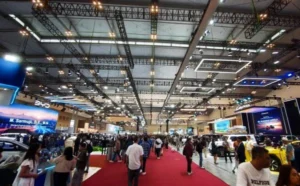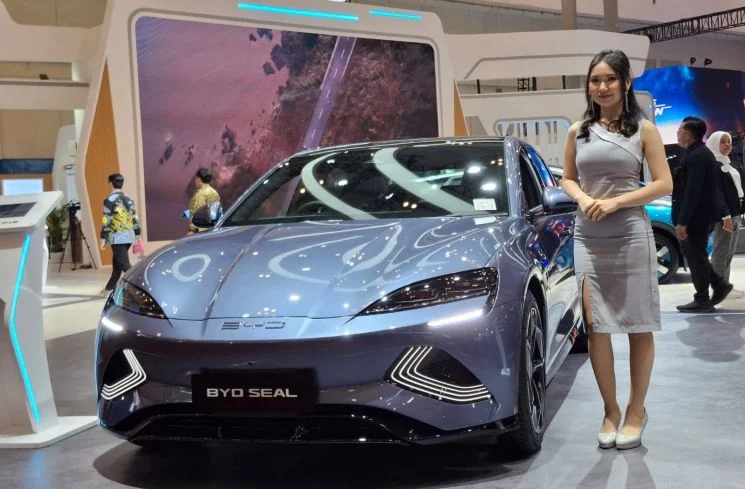
The Indonesian government has formalized a rigorous industrial roadmap aimed at transforming the nation into a global hub for electric vehicle (EV) manufacturing. Central to this strategy is the mandatory increase in the Domestic Component Level, or Tingkat Komponen Dalam Negeri (TKDN), for battery-based electric vehicles. By setting a progressive scale that reaches an 80 percent local content requirement by 2030, the Ministry of Industry intends to move beyond simple vehicle assembly, fostering a deep, localized supply chain that integrates high-value manufacturing processes within the archipelago.
This policy shift, championed by Minister of Industry Agus Gumiwang Kartasasmita, reflects a broader economic mandate to ensure that the influx of foreign capital—most notably from major international players like BYD—translates into sustainable industrial growth, technological transfer, and the creation of a robust domestic ecosystem for automotive components.
A Phased Approach to Industrial Localization
The transition toward full localization is not intended to happen overnight. Instead, the government has designed a structured, tri-stage timeline to allow automotive manufacturers sufficient time to cultivate domestic partnerships and invest in local manufacturing facilities.
According to the official industrial roadmap, the implementation phases are as follows:
- Phase 1 (Current to 2026): Manufacturers are required to meet a minimum TKDN threshold of 40 percent. This initial stage serves as the foundation, ensuring that assembly plants integrate basic domestic components such as tires, glass, and interior elements.
- Phase 2 (2027–2029): The requirement escalates to 60 percent. During this period, the government expects deeper integration of structural components and essential systems, including local battery pack assembly and power electronics.
- Phase 3 (2030 and beyond): The mandate hits its peak at 80 percent. At this stage, the expectation is that the majority of the vehicle, including the critical battery cell architecture and sophisticated propulsion systems, will be sourced or manufactured within Indonesia.
Minister Kartasasmita emphasized that this "affirmative policy" is a calculated move to prevent the automotive sector from becoming a mere conduit for imports. By tethering market access to local content, the government ensures that investors contribute directly to the Indonesian GDP through factory infrastructure and local job creation.
The Catalyst: Foreign Investment and the Subang Milestone
The government’s resolve was highlighted during the recent inauguration of a new BYD manufacturing facility in Subang, West Java. This facility represents more than just a production line; it serves as a tangible example of the government’s successful strategy to attract global automotive giants.
To date, the Indonesian government has successfully secured commitments from 14 major manufacturers in the four-wheeled electric vehicle sector. The cumulative investment from these entities has reached approximately Rp24.131 trillion, supporting a total annual production capacity of 409,860 units. This rapid scaling of capacity is a direct response to the government’s fiscal incentives, which include tax holidays, VAT exemptions for specific EV imports, and infrastructure support.
Macroeconomic Impact: Manufacturing as an Economic Engine
The growth of the electric vehicle sector is currently acting as a primary driver for the broader non-oil and gas processing industry. As of the second quarter of 2026, this industrial segment recorded a year-on-year growth rate of 5.32 percent, effectively outpacing the national economic growth rate of 5.29 percent for the same period.
The significance of the manufacturing sector to the Indonesian economy cannot be overstated. Current data indicates that the sector accounts for 16.83 percent of the national Gross Domestic Product (GDP), valued at roughly Rp1,102.88 trillion. Furthermore, the manufacturing industry remains the backbone of domestic employment, currently providing jobs for approximately 19.99 million people.
Investment remains strong as well. In the second quarter of 2026, the manufacturing sector saw a total capital influx of Rp199.48 trillion, representing 38.98 percent of the total national investment. This influx of capital is critical for Indonesia, as it seeks to move up the value chain from a raw material exporter to a finished goods producer.
Indonesia’s Global Standing: A Regional Powerhouse
The impact of these policies has not gone unnoticed on the international stage. According to World Bank data, Indonesia’s Manufacturing Value Added (MVA)—a key indicator of a nation’s industrial strength—reached an impressive $275.61 billion in 2025. This performance has propelled Indonesia to the 12th position globally, climbing one spot from its previous ranking.
Within the ASEAN region, Indonesia now stands unchallenged as the largest manufacturing power. Its MVA is more than double that of Thailand, which has long been considered the traditional automotive hub of Southeast Asia. On a continental scale, Indonesia currently ranks fifth in Asia, trailing only the established industrial giants: China, Japan, India, and South Korea.
Strategic Implications and Future Challenges
While the trajectory is positive, analysts point out that achieving an 80 percent TKDN by 2030 presents significant challenges. The primary hurdle remains the domestic supply chain for high-tech components, particularly semiconductors and advanced battery chemistries.
For the mandate to succeed, the government must continue to facilitate partnerships between international EV OEMs (Original Equipment Manufacturers) and local small-to-medium enterprises (SMEs). This process of technology transfer is essential to ensure that domestic suppliers can meet the quality and precision standards required by global automotive brands.
Additionally, the expansion of the EV sector is expected to have a multiplier effect on trade. Between January and June 2026, the non-oil and gas processing industry contributed $115.50 billion in exports, accounting for 82.03 percent of Indonesia’s total export value. As local EV production matures, the government anticipates that Indonesia will transition from an EV importer to a key regional exporter, tapping into growing demand for green mobility across the ASEAN and Oceania markets.
Conclusion: A Long-Term Vision for Industrial Autonomy
The mandate for 80 percent local content is not merely a technical requirement; it is a declaration of industrial intent. By setting high standards for domestic participation, the Indonesian government is signaling to global markets that it intends to retain the value of the EV revolution within its own borders.
As the 2030 deadline approaches, the success of this initiative will be measured not only by the number of vehicles rolling off production lines in places like Subang but by the depth of the local supply chain—the thousands of local workshops, engineering firms, and material suppliers that will support the electric transition. For now, the combination of aggressive investment attraction, a clear regulatory roadmap, and strong macroeconomic fundamentals positions Indonesia to remain a dominant force in the global manufacturing landscape for the coming decade. The transition to electric mobility has become the central pillar of the nation’s industrial policy, promising to redefine the economic structure of the country for generations to come.