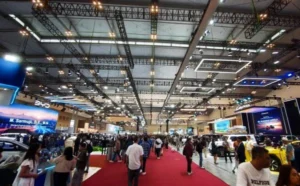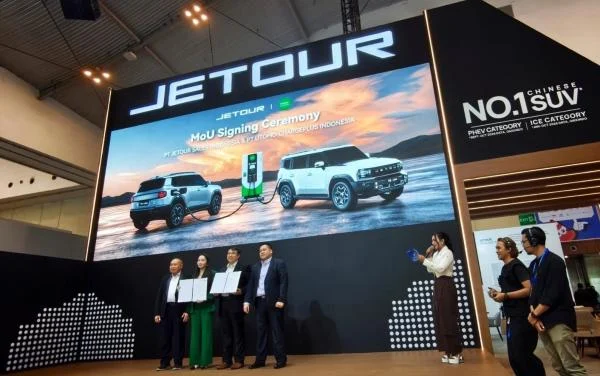
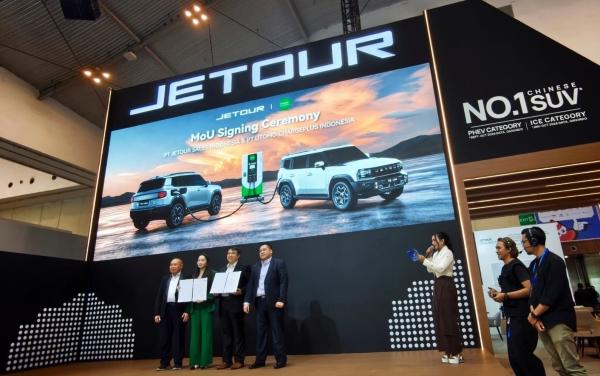
The landscape of Indonesia’s automotive industry underwent a significant shift this weekend as Chinese automaker Jetour officially announced a strategic partnership with Utomo Charge+ to accelerate the deployment of high-speed electric vehicle (EV) charging infrastructure. The announcement, made during the prestigious Gaikindo Auto Week (GAW) 2026 at ICE BSD City, Tangerang, marks a pivotal move by the manufacturer to fortify its presence in the Southeast Asian market by addressing the primary consumer concern regarding electrification: charging accessibility.
As part of this comprehensive initiative, Jetour has committed to installing Ultra Fast Charging stations across eight of its primary dealer networks throughout the Indonesian archipelago by the end of 2026. This move is designed not only to service Jetour’s growing fleet of electrified vehicles but also to serve as a beacon of progress in the national government’s broader mission to transition to sustainable mobility.
The Strategic Importance of Charging Infrastructure
President Director of Jetour Indonesia, Caroline Ling, emphasized during the press briefing at GAW 2026 that the transition to an electrified future requires a holistic approach. While technological advancements in vehicle battery range and efficiency are essential, they remain insufficient without a robust and reliable supporting ecosystem.
"In our transition toward electrified mobility, we recognize that it is not enough to simply provide innovative vehicle technology. The real challenge lies in building a comprehensive infrastructure that gives users peace of mind," said Ling. "Our partnership with Utomo Charge+ is a direct response to the needs of the modern Indonesian driver. We are integrating these charging points into our showroom network to ensure that our customers experience seamless support throughout their ownership journey."
The partnership aligns with Jetour’s global "Travel+" philosophy, which prioritizes the user’s overall travel experience. By merging high-performance vehicle engineering with accessible charging solutions, Jetour aims to mitigate "range anxiety"—a psychological barrier that remains the most significant hurdle for prospective EV buyers in developing markets.
Technical Specifications and Future Capacity
The collaboration focuses on high-capacity charging, with each station slated for installation at Jetour dealerships featuring a minimum capacity of 120 kW. This "Ultra Fast" designation is critical, as it significantly reduces downtime for vehicle owners compared to standard AC charging units.
The focus on high-speed charging is particularly important for Jetour’s strategy regarding Plug-in Hybrid Electric Vehicles (PHEV). Specifically, the infrastructure is engineered to support the company’s proprietary Intelligent Dual Mode (i-DM) technology. This system allows for a flexible power exchange between internal combustion engines and electric motors, and having a 120 kW charging point allows owners to maximize the pure electric range of these vehicles quickly, thereby optimizing fuel efficiency and reducing emissions during daily commutes.
Contextualizing Indonesia’s EV Roadmap
The announcement at GAW 2026 arrives at a time when the Indonesian government is intensifying its push for EV adoption. Through various fiscal incentives, including tax exemptions and local manufacturing mandates, the government has set ambitious targets to establish Indonesia as a regional hub for EV production and battery manufacturing.
However, the proliferation of private charging stations has historically lagged behind the growth in vehicle sales. Industry analysts point out that while the government has expanded the Public Electric Vehicle Charging Station (SPKLU) network, private-sector participation remains the missing link required to achieve the necessary density for mass adoption. Jetour’s decision to utilize its own dealership network is a model that other manufacturers are beginning to adopt, effectively turning sales centers into service hubs for the electrification era.

Broader Market Implications
The entry of Jetour into the Indonesian market, backed by this infrastructure investment, signals a shift in competitive dynamics. By embedding charging services directly into the retail experience, Jetour is positioning itself as a "lifestyle-focused" automotive brand rather than a traditional hardware seller.
- Consumer Confidence: The presence of dedicated charging hubs at authorized dealers creates a "safety net" for early adopters of PHEV and EV technology.
- Economic Synergy: The partnership with Utomo Charge+ leverages existing specialized knowledge in energy distribution, allowing Jetour to focus on its core competency of vehicle manufacturing while ensuring the highest standards of electrical safety and efficiency at their sites.
- Regional Standardization: As Indonesia works to harmonize its charging standards, the adoption of 120 kW high-speed chargers sets a benchmark for what consumers should expect from premium vehicle segments.
Timeline and Implementation Strategy
The rollout, scheduled to span the remainder of 2026, will be executed in phases. The selection of the eight initial dealership locations is being determined based on traffic density, proximity to major urban arteries, and existing demand for electrified models.
- Q4 2026 (Launch Phase): Identification of high-traffic dealership sites and initial site surveying by the Utomo Charge+ engineering team.
- Mid-2026 (Expansion Phase): Installation of the first four units, focusing on the Greater Jakarta area, which currently holds the highest concentration of EV owners.
- End-of-Year 2026 (Completion): Final commissioning of all eight sites, followed by an assessment of usage patterns to determine the viability of a second phase of expansion in 2027.
Expert Analysis on the Transition
Industry experts have long argued that the "chicken and egg" problem—where manufacturers hesitate to sell EVs due to lack of charging, and energy companies hesitate to build charging due to low EV numbers—can only be broken by such partnerships.
"What Jetour is doing is effectively de-risking the ownership experience," said a regional automotive analyst. "By providing the hardware, they are removing the friction of ownership. When a customer knows that their dealer is also a charging destination, the mental cost of switching from internal combustion engines to a hybrid or full electric vehicle decreases significantly."
Furthermore, the integration of i-DM technology with high-speed charging infrastructure highlights a bridge-building strategy. While full battery electric vehicles (BEVs) are the ultimate goal, the current market reality in Indonesia favors PHEVs due to the vast geographical landscape and varying levels of infrastructure development in outer islands. Jetour’s dual-mode approach allows the vehicle to remain functional in areas without chargers while providing the efficiency of an EV in urban centers where this new infrastructure is being installed.

Corporate Responsibility and Sustainability Goals
Beyond the commercial benefits, this initiative aligns with broader ESG (Environmental, Social, and Governance) targets. By facilitating the shift to electric power, Jetour is contributing to the reduction of the carbon footprint of the Indonesian transport sector. The transportation sector remains one of the largest contributors to urban air pollution in Jakarta, and accelerating the adoption of cleaner vehicle technology is a key component of the nation’s commitment to international climate agreements.
The collaboration with Utomo Charge+ is also expected to foster local job creation, as the installation and maintenance of these high-voltage charging units require specialized technical skills. The project will likely necessitate training programs for local technicians, further embedding Jetour into the local industrial ecosystem.
Conclusion
The commitment made by Jetour Indonesia to establish a network of Ultra Fast Charging stations is more than a mere corporate expansion; it is a calculated effort to lead the market transition. By bridging the gap between vehicle technology and infrastructure, the company is attempting to set a new standard for customer-centric automotive services in Indonesia.
As the industry moves toward 2027, all eyes will be on the operational success of these eight stations. If the rollout proves successful in driving both customer satisfaction and vehicle sales, it will likely serve as a blueprint for other manufacturers currently weighing the risks and rewards of investing in the Indonesian electrified automotive sector. Through this partnership, Jetour has effectively signaled that for them, the road to electrification is built on more than just engines—it is built on the power to keep the nation moving forward.