Instagram has officially confirmed the initiation of a pilot program for a new video format titled "Features," a strategic move that marks the platform’s most significant pivot toward long-form content to date. The feature allows creators to upload horizontal videos lasting up to 90 minutes, directly challenging the dominance of long-form video platforms such as YouTube and TikTok’s own recent expansions into horizontal viewing. By allowing users to break the traditional constraints of short-form, vertical content, Meta—Instagram’s parent company—is signaling a major shift in its consumer engagement strategy.
The Genesis of the Features Initiative
The testing phase, which began this past Monday, is currently restricted to a select group of high-profile creators within the United States. However, internal reports indicate that the development of this feature was not an overnight decision. Instagram has been quietly iterating on the concept with creators in Brazil, a key market for Meta’s testing of new interface behaviors.
According to sources close to the development team, the initiative was designed to address a growing demand from the creator economy for a "one-stop-shop" platform. Currently, many podcasters and documentary-style creators are forced to host their full-length content on YouTube while using Instagram solely as a promotional funnel. With "Features," Instagram aims to keep the audience within its ecosystem, thereby increasing "Time Spent" metrics, which remain a primary indicator of platform health for advertisers.
Technical Implementation and User Experience
The integration of 90-minute videos presents a significant technical challenge for a platform traditionally built for high-speed, vertical, scrollable feeds. To manage this, Instagram has developed a multi-stage viewing experience.
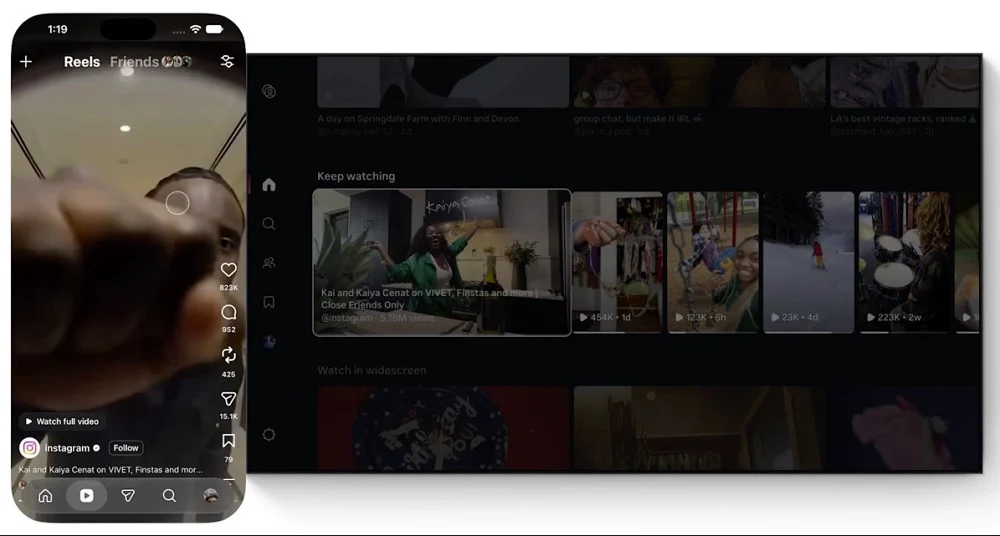
Initially, the long-form content will not appear in the user’s main feed in its entirety. Instead, the algorithm will present a "hook" or a short-form snippet of the video within the Explore tab. This snippet serves as a teaser, designed to pique the interest of the viewer. Once a user is engaged, they can tap a call-to-action button labeled "Watch full video," which transitions the user into the long-form player.
This hybrid approach acknowledges the "short-attention-span" culture inherent in social media while providing a bridge to deeper, more substantive engagement. The initial rollout will be confined to mobile applications, with official statements confirming that support for Instagram for TV (IGTV’s successor frameworks) is in the development pipeline.
Strategic Rationale: The Pivot to Long-Form
The move toward 90-minute content is grounded in a broader industry shift. As social media platforms become increasingly saturated, the competition for user attention has intensified. Industry analysts note that while short-form content (Reels) is excellent for discovery and viral growth, it struggles with monetization and deep-brand storytelling.
Adam Mosseri, the head of Instagram, and Tessa Lyons, Vice President of Product, have been vocal about the necessity of evolving the platform. By allowing for longer durations, Instagram is effectively targeting the podcasting industry. With the rise of "video-podcasting"—where the visual element of a conversation is just as important as the audio—Instagram is positioning itself as a viable alternative to YouTube for creators who want to host their long-form video podcasts directly on the app.
A Chronology of Instagram’s Video Evolution
To understand the magnitude of this change, it is helpful to view it against the backdrop of Instagram’s historical pivots regarding video:
- 2013: Instagram introduces 15-second video support, fundamentally changing the app from a photo-sharing platform to a multimedia hub.
- 2016: The platform expands limits to 60 seconds, responding to the rise of amateur video production.
- 2018: The launch of IGTV, an ambitious, standalone app designed for long-form, vertical video. The project eventually struggled with adoption and was folded back into the main app.
- 2020: Instagram launches Reels, a direct response to the meteoric rise of TikTok, focusing on short, algorithmic-driven vertical content.
- 2026 (Current): The introduction of "Features," marking a return to long-form content but with a focus on horizontal, professional-grade media.
This trajectory shows a clear oscillation between short-form agility and long-form depth. By embracing the 90-minute format, Instagram is effectively acknowledging that users are willing to consume longer content on mobile devices, provided the quality and relevance of that content are sufficiently high.
Data-Driven Implications for Creators and Advertisers
The shift toward longer videos carries significant weight for the digital advertising landscape. Currently, ads on Instagram are optimized for short bursts of attention. A 90-minute video format opens the door for mid-roll advertisements, a standard practice on YouTube that generates substantial revenue for creators.
From a data perspective, long-form content allows for deeper behavioral tracking. If a user watches 45 minutes of a 90-minute interview, the platform gains significantly more granular data about the user’s interests compared to a 15-second video loop. This data is invaluable for the machine learning algorithms that power Instagram’s advertising engine, potentially allowing for more precise ad targeting.
However, there are risks. A move toward long-form content could dilute the "snackable" identity that Instagram has cultivated through Reels. Furthermore, content moderation for 90-minute videos is exponentially more complex than for 60-second clips, potentially increasing the burden on Meta’s automated and human review systems.
Official Stance and Future Roadmap
While Meta has not provided an exact date for a global release, internal communications suggest a phased rollout. The current plan is to expand access to all creators in the United States by the end of this year or early 2027. International expansion will likely follow, contingent on the performance of the US pilot program and the infrastructure capacity of regional servers.
In comments regarding the launch, spokespeople for Instagram emphasized that the primary goal is "creator empowerment." By reducing the friction between social discovery and content consumption, Instagram hopes to minimize the "link in bio" traffic loss where users currently have to leave the app to watch longer content on external websites.
Competitive Analysis: The Battle for the Screen
The introduction of "Features" puts Instagram on a direct collision course with YouTube. While YouTube remains the king of long-form video, its recent forays into short-form content (YouTube Shorts) have been highly successful. Instagram is effectively attempting the inverse: starting with short-form and moving toward long-form.
Whether this strategy succeeds will depend on two factors: the quality of the discovery algorithm for these new, longer videos, and the willingness of the user base to treat Instagram as a "lean-back" viewing platform rather than a "lean-forward" scrolling app. If successful, this move could fundamentally alter how social media platforms are categorized, blurring the lines between social networking and video-on-demand services.
As the tech industry watches closely, the success of "Features" will serve as a bellwether for the future of social media. The transition from the fleeting, viral nature of the current feed to a repository for long-form, immersive media is a bold gamble, one that could either cement Instagram’s dominance for the next decade or lead to a fracturing of the user experience. For now, the industry waits to see how the pilot program performs among the initial cohort of American creators.