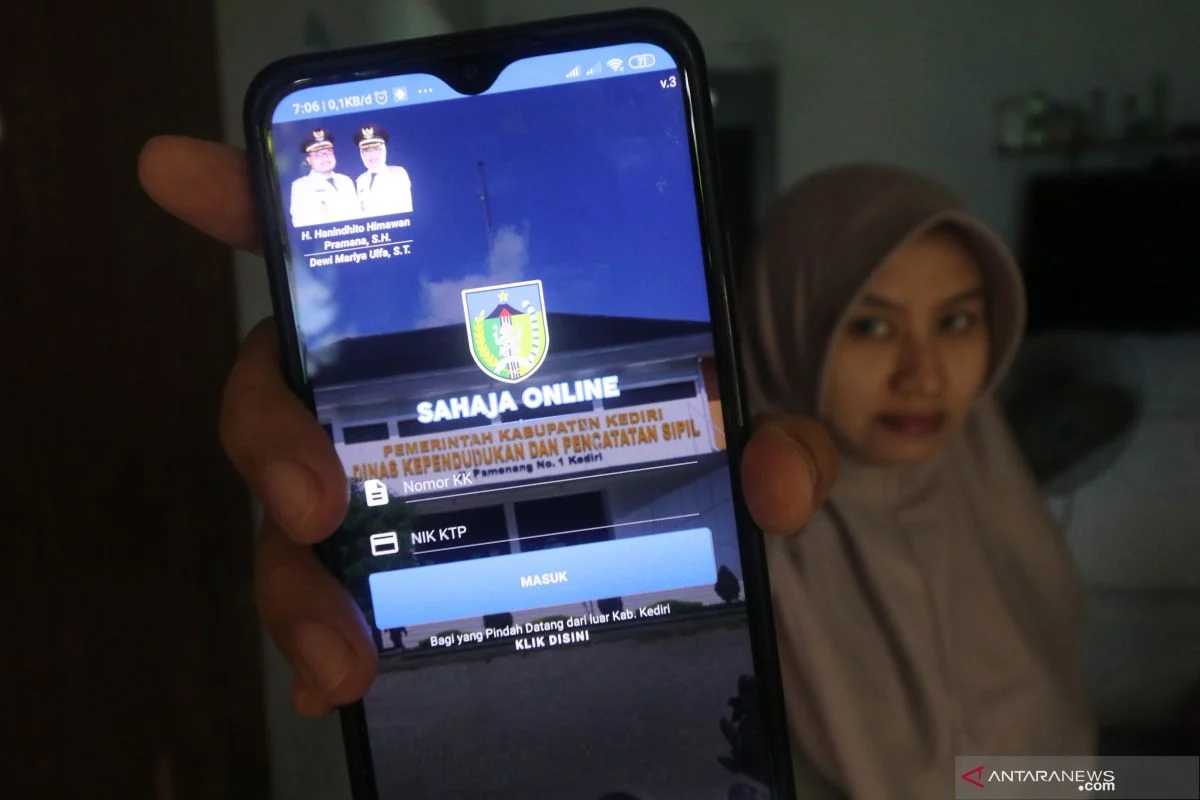
The landscape of civil registration in Indonesia has undergone a monumental shift toward digital accessibility, allowing citizens to manage vital family data updates, such as adding new family members to a Kartu Keluarga (KK), directly through online platforms without the historical hassle of visiting local Dinas Kependudukan dan Pencatatan Sipil (Disdukcapil) offices in person. This evolution is a core component of the Directorate General of Population and Civil Registration’s (Dukcapil) broader strategy under the Ministry of Home Affairs to streamline bureaucratic processes, reduce physical queues at government offices, and accelerate the transition toward a unified digital identity ecosystem nationwide.
Background and Context of Civil Administration Digitization
For decades, processing changes to a Kartu Keluarga—whether due to the birth of a child, the adoption of a dependent, or the integration of extended relatives into a household—required multiple visits to municipal or regency government offices. Citizens often faced long wait times, cumbersome paperwork checks, and logistical bottlenecks. Recognizing these inefficiencies, the Indonesian government accelerated the rollout of online population administration services, empowering regional administrations to develop dedicated portals and applications.
This digital pivot aligns with the implementation of Law Number 24 of 2013 on Population Administration, which mandates efficient, transparent, and accessible public services. Furthermore, the integration of services with innovations like the Identitas Kependudukan Digital (IKD)—or Digital Population Identity—has allowed households not only to apply for changes online but also to download and print authenticated digital copies of their updated Kartu Keluarga independently, saving both time and state resources. However, because local governments possess autonomy in choosing their technological infrastructure, the specific applications used—such as the SIDEMANG application in Palembang or distinct portals in other regions—vary across jurisdictions, necessitating careful navigation by citizens.
Step-by-Step Chronology and Workflow for Online Submissions
Navigating the online system requires a structured approach to ensure that applications are processed without unnecessary rejections or delays. While specific interface designs differ by region, the standardized procedural workflow established by regional Disdukcapil offices generally follows a clear chronological path.
Phase 1: Portal Access and Account Authentication
The process begins when a citizen accesses the official, verified website or mobile application provided by their local Disdukcapil office. Security experts and government officials continuously stress the importance of using strictly official government domains (typically ending in .go.id) to safeguard sensitive personal identifiable information (PII) against phishing and data harvesting operations. Once on the platform, new users must register by supplying valid contact information and verifying their identity, while returning users can simply log in using their established credentials and multi-factor authentication steps where applicable.
Phase 2: Selecting the Correct Service Category
Upon successful authentication, applicants must navigate to the family card services menu and choose the precise administrative category that matches their life event. Civil administration experts emphasize that selecting the correct category is critical. For instance, registering a newborn infant who lacks a National Identification Number (NIK) requires a completely different administrative track than integrating an existing family member who is transferring from another household or registry. Misclassifying the request often results in automatic system flags or administrative rejections by reviewing officers.
Phase 3: Form Completion and Document Uploading
Applicants are then prompted to fill out comprehensive digital forms detailing the demographic information of the household and the incoming individual. Accuracy at this stage is paramount; discrepancies in spelling, dates of birth, or parentage details can halt the verification process. Following data entry, users must upload scanned copies or high-resolution photographs of original supporting documents. These files must adhere strictly to the format, resolution, and file-size limitations specified by the municipal portal to ensure legibility for reviewing officers.
Phase 4: Administrative Verification and Processing
Once submitted, the digital dossier enters the verification queue. Civil servants within the local Disdukcapil office review the submitted data against existing national population databases (Sistem Informasi Administrasi Kependudukan, or SIAK). According to internal service standards set by many regional offices, standard online processing typically takes anywhere from two to five working days, provided all documentation is complete. If deficiencies or errors are detected, the system generates a notification requiring the applicant to rectify the specific document or data point.
Phase 5: Document Issuance and Digital Retrieval
Upon successful validation and approval by the authorized registrar, the updated Kartu Keluarga is finalized. In regions equipped with advanced digital signature (Tanda Tangan Elektronik – TTE) infrastructure, the document is authenticated via a quick response (QR) code, eliminating the need for wet-ink signatures and physical stamps. Citizens receive a notification via email or through the application portal, granting them the ability to download the PDF document, print it safely on standard white A4 80-gram paper, or view it directly through the IKD application.
Differentiating Requirements Based on Family Dynamics
The exact documentation required to update a Kartu Keluarga depends heavily on the nature of the family addition. Disdukcapil guidelines divide these scenarios into distinct operational categories.
Registering Newborn Infants
For families welcoming a new baby, the primary objective is assigning a NIK and incorporating the child into the parental Kartu Keluarga. The mandatory documents typically include:
- The existing family Kartu Keluarga.
- An official birth certificate or birth statement issued by a hospital, puskesmas, clinic, or licensed midwife.
- The parents’ marriage certificate or official proof of marriage recognized by the state.
- Parental identification documents (KTP) if requested by the municipal portal.
- Region-specific application forms.
In numerous progressive jurisdictions, regional offices have streamlined this process further by integrating the issuance of the birth certificate, the new Kartu Keluarga featuring the newborn, and the Child Identity Card (KIA) into a single bundled service, though availability remains contingent on local administrative capabilities.
Integrating Individuals with Existing NIKs
When adding an individual who already possesses a NIK—such as an elderly parent moving into an adult child’s home, or a relative’s child entering a new guardianship arrangement—the procedure shifts toward a data migration or household restructuring model. If the individual is transitioning from a separate Kartu Keluarga, the process may trigger relocation protocols (pindah datang), requiring the submission of release certificates from the previous domicile, historical family cards, and explicit documentation proving the legitimacy of the household integration. Additional scrutiny is often applied to ensure compliance with legal guardianship or co-residency regulations.
Financial Transparency and Legal Protections Against Extortion
A cornerstone of Indonesia’s population administration reform is the strict enforcement of zero-cost policies for basic civil documents. Under Article 79A of Law Number 24 of 2013 on Population Administration, the processing and issuance of foundational documents—including Kartu Keluarga, birth certificates, and identity cards—are explicitly mandated to be entirely free of charge when processed through official government channels.
Despite these legal protections, public policy watchdogs note that intermediaries, unauthorized brokers (calo), and fraudulent online entities occasionally attempt to exploit citizens by charging fees under the guise of expediting administrative approvals. Government officials and consumer protection advocates continuously urge the public to bypass third-party agents, utilize official government portals exclusively, and report any demands for illicit payments directly to the Ombudsman of the Republic of Indonesia or local supervisory bodies.
Broader Implications and Future Outlook of Civil Digitalization
The successful decentralization and digitization of civil administration services carry profound socioeconomic implications for Indonesia. By removing geographical and logistical barriers to vital recordkeeping, the government ensures that marginalized or remote populations gain unhindered access to public goods, social assistance programs, healthcare subsidies, and educational enrolment rights that rely heavily on verified Kartu Keluarga data.
Furthermore, accurate and real-time population data collection serves as the foundation for macro-level state planning, ranging from infrastructure development to targeted fiscal stimulus distribution. As digital literacy rates climb and internet penetration expands across the archipelago, the integration of services like online Kartu Keluarga updates marks a decisive step toward a fully realized digital governance model, reinforcing administrative transparency, operational efficiency, and citizen empowerment across all layers of Indonesian society.