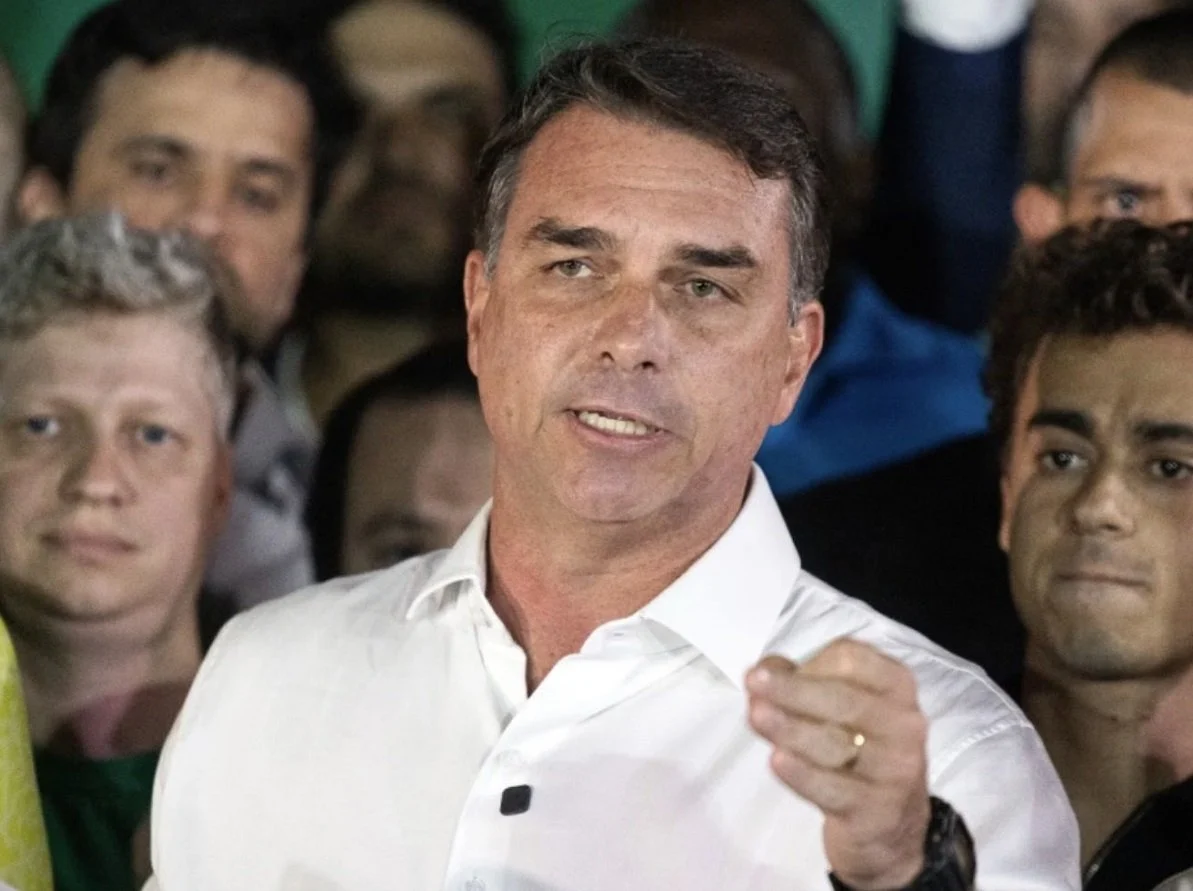
The political landscape in Brazil has undergone a seismic shift as Senator Flavio Bolsonaro, a prominent figure of the nation’s right-wing movement and son of imprisoned former President Jair Bolsonaro, has reportedly fled to the United States. This departure follows his narrow defeat in the second round of the Brazilian general election held on October 24, 2026, against the incumbent administration of President Luiz Inacio Lula da Silva. The move marks a significant escalation in the ongoing political instability that has gripped the South American nation, as key members of the Bolsonaro dynasty seek refuge abroad while facing a mounting array of domestic criminal investigations.
The confirmation of his arrival in the United States comes as a senior official within the U.S. Department of State indicated on Tuesday, October 26, 2026, that the American government has committed to granting visa access to Flavio Bolsonaro and his immediate family. This diplomatic maneuver underscores the complex geopolitical relationship between the United States and Brazil, particularly given the historical alliances between the Bolsonaro family and former U.S. President Donald Trump.
A Chronology of the 2026 Electoral Crisis
The trajectory leading to this exodus began in early October 2026, during the first round of the presidential and legislative elections. Initial returns had suggested a potential resurgence for the right-wing coalition, with Flavio Bolsonaro securing a lead in the polls that ignited hope among his supporters for a legislative comeback. However, the momentum shifted dramatically during the final weeks of the campaign.
On Sunday, October 24, 2026, the second round of voting concluded with a narrow but decisive victory for the Lula-led coalition. In the immediate aftermath of the announcement, Flavio Bolsonaro publicly refused to concede, alleging that the extension of polling hours by two hours constituted a procedural irregularity that undermined the integrity of the democratic process. He vowed at the time to launch a formal legal challenge to invalidate the results, a stance that mirrored the rhetoric used by his father following the 2022 presidential elections.
However, as the legal pathway to overturning the election results appeared increasingly narrow, reports began to surface on Monday, October 25, that the Senator had vacated his residence in Brasilia. By Tuesday, international observers and Brazilian media outlets confirmed that he had crossed the border into the United States, effectively abandoning his post and his legal defense in the Brazilian courts.
The Shadow of Legal Jeopardy
Flavio Bolsonaro’s departure is inextricably linked to the web of legal challenges currently ensnaring him. For years, the Senator has been the subject of intensive investigations by Brazilian federal authorities. The most prominent of these involves allegations of systemic money laundering and the violation of currency regulations. Prosecutors have specifically focused on his financial dealings with attorney Willer Tomaz and a network of online gambling enterprises, which authorities allege were used as conduits for illicit financial activities.
Beyond the financial crimes, Flavio is also under scrutiny for alleged irregularities regarding the financing of "Dark Horse," a film biography of his father, Jair Bolsonaro. Investigators are examining whether public funds or improperly sourced private capital were funneled into the production of the film to serve as political propaganda. Despite these serious allegations, Flavio Bolsonaro has maintained his innocence, consistently characterizing the investigations as politically motivated "lawfare" intended to dismantle the legacy of his father’s administration.
The Precedent of the Bolsonaro Family
The flight of Flavio Bolsonaro is not an isolated event but rather the latest chapter in a family saga defined by legal confrontation and international relocation. His brother, Eduardo Bolsonaro, also a prominent political figure, sought refuge in the United States in February 2025. Eduardo’s departure was prompted by what he described as a campaign of persecution by the Brazilian judiciary.
Eduardo’s tenure in the United States has been marked by controversy. He was later convicted by a Brazilian court for his attempts to interfere with the judicial proceedings surrounding his father, specifically for lobbying U.S. officials to impose sanctions on Brazilian judges and prosecutors. In June 2026, a Brazilian court sentenced Eduardo to four years and two months in prison. His continued presence in the United States, despite the extradition requests that are expected to follow, highlights the friction between the two nations regarding the treatment of political exiles.
Geopolitical Implications and U.S.-Brazil Relations
The decision by the U.S. Department of State to facilitate the entry of Flavio Bolsonaro, despite his legal standing in Brazil, has sparked intense debate. From a diplomatic perspective, the move is seen as an attempt to maintain a degree of influence with the right-wing faction of Brazilian politics, which retains a significant and vocal constituency. Conversely, the Brazilian government under President Lula is expected to view this as a potential diplomatic affront, potentially complicating cooperation on regional security and trade.
Analysts suggest that the U.S. government is navigating a difficult path. Granting visas to individuals who are under criminal indictment in a democratic partner nation can be perceived as an undermining of that nation’s judicial sovereignty. However, the U.S. remains sensitive to claims of political persecution, especially when those claims are championed by the right-wing populist movement that remains influential in the United States.
Broader Impact on Brazilian Democracy
The departure of the Bolsonaro brothers suggests a potential cooling-off period for the most volatile elements of the Brazilian right, yet it also leaves a power vacuum within the opposition. Without the direct leadership of the family, the right-wing coalition may face a period of fragmentation.
Furthermore, the legal cases against the Bolsonaros serve as a litmus test for the strength and independence of Brazil’s democratic institutions. The judiciary, which has faced immense pressure from supporters of the former president, has proven resilient in its pursuit of accountability. Whether the Brazilian government can successfully pursue the extradition of those who have fled remains an open question, one that will likely dominate the bilateral agenda between Brasília and Washington for the foreseeable future.
Public and Political Reactions
Reactions within Brazil have been deeply polarized. Supporters of the Bolsonaro family have taken to social media to denounce the move as an "exile of patriots," claiming that the Senator was forced out to prevent him from organizing a viable opposition. In contrast, legal advocacy groups and members of the ruling coalition have hailed the departure as a sign that no individual, regardless of their political lineage, is above the law.
In a brief statement released through an intermediary on Wednesday, a spokesperson for the Senator stated: "Flavio Bolsonaro continues to maintain his total innocence regarding all charges leveled against him. His move to the United States is a temporary measure taken in response to the clear and present threat to his personal safety and the systemic bias present in the current Brazilian judicial environment."
Looking Ahead
As the dust settles on the 2026 elections, the focus will now shift to the administrative transition and the long-term legal ramifications for the Bolsonaro family. The Brazilian Attorney General’s office is expected to review the status of the ongoing investigations in light of the Senator’s absence. While his physical departure complicates the process of discovery and potential interrogation, it does not necessarily halt the judicial proceedings.
The case of Flavio Bolsonaro serves as a stark reminder of the challenges facing contemporary democracies, where the line between political opposition and criminal activity is often blurred by high-stakes rhetoric. The coming months will determine whether the United States will cooperate with potential extradition requests or if the Bolsonaro family will be permitted to establish a permanent base of operations in the United States, effectively creating a "government-in-exile" that could continue to influence, and potentially destabilize, the political discourse back home.
For now, the international community watches with bated breath as Brazil attempts to reconcile its commitment to the rule of law with the realities of a deeply divided electorate and the flight of its political elite. The implications of this event will likely ripple through the hemisphere, testing the durability of democratic norms in an era of increasing political polarization.