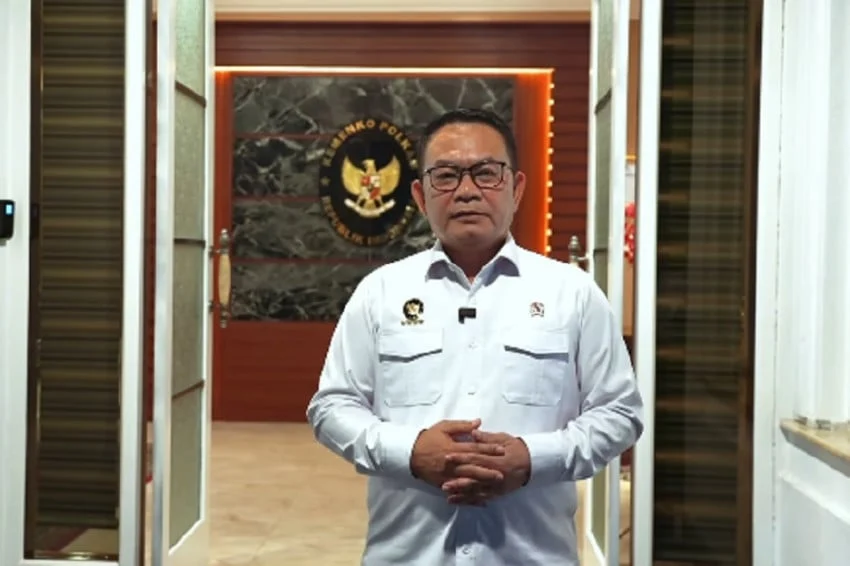
The landscape of Indonesian democracy witnessed another wave of civic expression on Wednesday, October 28, 2026, as various segments of society, notably university students and civil society coalitions, took to the streets in Jakarta and multiple regional capitals. Against the backdrop of these demonstrations, Coordinating Minister for Political and Security Affairs (Menko Polkam) General TNI (Ret.) Dudung Abdurachman issued a formal response on behalf of the central government. Emphasizing the foundational principles of a democratic state, Minister Dudung articulated the administration’s official stance, asserting that public aspirations, critiques, and feedback are fundamentally valued as vital components of national governance and societal progression.
The demonstrations, which drew hundreds of participants to prominent public spaces such as the Hotel Indonesia (HI) Roundabout in central Jakarta, reflected growing public discourse regarding contemporary government policies, economic pressures, and legislative directions. As crowds gathered, raising banners and displaying symbolic gestures such as the three-finger salute, security forces maintained a visible yet measured presence to manage traffic and ensure public safety. In response to these developments, the Ministry of Political and Security Affairs utilized digital communication channels, specifically releasing an official video statement via the Instagram account @polkamri, to address the nation directly and outline the government’s perspective on the exercise of constitutional rights.
Constitutional Rights and the Boundaries of Free Expression
Elaborating on the legal framework governing public demonstrations in Indonesia, Minister Dudung reiterated that the freedom of speech and the right to assemble are explicitly guaranteed by the 1945 Constitution. These liberties form the bedrock of the nation’s political identity following the historic transition to the Reformation Era in 1998, which fundamentally expanded civil liberties. For the current administration, engaging with public dissent is viewed not as a threat to political stability, but as an indispensable feedback mechanism necessary for transparent and accountable governance.
However, this endorsement of democratic participation was paired with a firm reminder regarding the regulatory parameters established by national legislation. Citing Law Number 9 of 1998 concerning Freedom of Expression in Public Spaces, the Menko Polkam underscored that the exercise of civil rights is inherently coupled with civic responsibilities. The statutory framework dictates that while citizens possess the absolute right to voice grievances, this freedom must be exercised in strict accordance with prevailing laws, public order, and the rights of fellow citizens who are not participating in the demonstrations.
Minister Dudung specifically called upon all action coordinators and participants to prioritize peaceful dialogue and orderly conduct throughout their public assemblies. By urging citizens to deliver their critiques firmly yet politely, the government sought to balance the imperative of democratic engagement with the practical necessity of maintaining public order and preventing economic disruption in major metropolitan centers.
Chronology of the October 28, 2026, Demonstrations
The events of October 28 unfolded according to a pattern typical of large-scale Indonesian student mobilizations, carrying symbolic resonance given the historical context of Youth Pledge Day (Hari Sumpah Pemuda), which is commemorated annually on the same date.
Morning Mobilization and Arrival at Strategic Points
The day’s activities began during the late morning hours as organized groups of university students, representing various higher education institutions across Greater Jakarta, converged on pre-determined assembly points. By midday, a significant contingent of protesters had gathered around the iconic Bundaran HI (Hotel Indonesia Roundabout), a central traffic hub and traditional focal point for demonstrations in the capital. Participants were observed carrying placards detailing specific policy objections, while some demonstrators prominently raised the three-finger salute—a widely recognized symbol of defiance and political critique popularized in regional protest movements.
Traffic Diversions and Security Preparations
In anticipation of large crowds and potential gridlock, the Jakarta Metropolitan Police (Polda Metro Jaya), in coordination with the Jakarta Transportation Agency (Dishub), implemented localized traffic diversions around major thoroughfares, including Jalan M.H. Thamrin and Jalan Jenderal Sudirman. Security protocols were deployed under standard operating procedures designed to de-escalate potential tensions. Personnel from the Indonesian National Police (Polri), backed by elements of the Indonesian National Armed Forces (TNI), were stationed at strategic locations to secure vital government installations, public transport hubs, and diplomatic quarters, ensuring that demonstrators could exercise their rights while preventing opportunistic elements from inciting property damage or violence.
Afternoon Speeches and Issuance of Demands
By mid-afternoon, student representatives and civil society leaders took turns delivering oral statements from mobile command vehicles. The core demands articulated during the rallies centered on economic accountability, transparency in state expenditures, regulatory reforms, and specific legislative reviews. Unlike previous instances of civil unrest characterized by widespread structural clashes, the majority of the October 28 demonstrations proceeded in an orderly fashion, maintaining a focus on oratorical expressions and theatrical performances designed to draw media attention to their core grievances.
Government Response and Evening De-escalation
As the demonstrations peaked during the late afternoon, the Ministry of Political and Security Affairs released its official response via digital platforms. The timely intervention by Minister Dudung served to temper the atmosphere, reassuring protesters that their voices had been registered at the highest levels of government. By early evening, groups began to disperse voluntarily, clearing the roadways and allowing municipal sanitation crews to restore normal traffic flow across the central business district without major incidents of structural damage or mass arrests.
Data and Context: The Evolution of Public Protests in Indonesia
To understand the significance of the October 28 demonstrations, it is necessary to examine the broader sociological and political context of public protests in contemporary Indonesia. Over the past decade, the frequency and nature of civil demonstrations have evolved significantly, influenced by digital connectivity, shifting demographics, and changing economic conditions.
Demographic Profile of Participants
Statistical analyses of recent urban protests in Indonesia indicate that the primary demographic driving these movements consists of Generation Z and younger Millennials. University students and young urban professionals utilize digital platforms not only to mobilize physical turnouts but also to sustain narrative momentum online through real-time documentation, digital advocacy, and crowdsourced fundraising for logistical support. This digital infrastructure allows for rapid mobilization but also presents challenges regarding message consistency and the potential for decentralized leadership to complicate formal state-society negotiations.
Legislative and Institutional Framework
The legal basis for public assemblies in Indonesia remains rooted in Law No. 9/1998, which replaced restrictive New Order-era decrees. While the law guarantees the right to express opinions, it also outlines specific prohibitions, such as conducting demonstrations near vital national objects (Istana Negara, vital military installations, and places of worship) and failing to provide written notification to local police authorities at least 3×24 hours prior to the event. The ongoing tension between upholding constitutional guarantees and enforcing notification and location restrictions remains a central point of discussion between law enforcement agencies and civil rights advocates.
Economic and Social Drivers of Dissent
Sociological evaluations of recent protest waves suggest that while political grievances frequently serve as the catalyst, underlying economic anxieties—such as cost-of-living increases, job security concerns, and perceptions of widening social inequality—frequently amplify public participation. When inflation impacts basic commodities or when labor and educational policies undergo significant shifts, the threshold for public mobilization drops, leading to coordinated expressions of discontent across multiple regional centers simultaneously, as observed on October 28.
Official Responses and Institutional Perspectives
Beyond the specific statements issued by Minister Dudung Abdurachman, various institutional stakeholders offered perspectives on the management and implications of the demonstrations.
The Indonesian National Police (Polri) maintained an institutional posture emphasizing persuasive policing and human rights compliance during crowd control operations. Senior police officials repeatedly instructed personnel deployed to the field to exercise maximum restraint, avoid the unnecessary use of tear gas or physical force, and prioritize dialogue with student marshals. This approach reflects an ongoing institutional effort within Polri to modernize public order management in alignment with international standards for policing assemblies.
Concurrently, academic observers and political analysts noted the strategic importance of the government’s prompt response. By acknowledging the legitimacy of public criticism through high-ranking officials like the Menko Polkam, the administration sought to prevent the escalation of localized grievances into broader political instability. Analysts suggest that proactive communication from security coordinators helps defuse adversarial dynamics between state apparatuses and youth-led movements, creating a more conducive environment for subsequent institutional dialogue.
Broader Implications and Future Outlook
The events of October 28, 2026, and the subsequent government response carry several important implications for the future of Indonesian democracy and state-society relations.
First, the peaceful nature of the demonstrations underscores the maturing political consciousness of the Indonesian public. Both protesters and security forces demonstrated an increased capacity to navigate ideological friction without descending into widespread systemic conflict. This institutional resilience is crucial for maintaining investor confidence and ensuring macroeconomic stability in Southeast Asia’s largest economy.
Second, the government’s explicit acknowledgment of public criticism highlights the continuous pressure on state institutions to enhance responsiveness and transparency. As digital platforms continue to democratize information access, civil society actors possess unprecedented capacity to scrutinize public policy decisions in real-time. Consequently, executive and legislative branches must increasingly rely on substantive policy communication and evidence-based justifications rather than administrative dismissals when addressing public dissent.
Finally, the dialogue initiated around the October 28 mobilizations sets a precedent for how the administration intends to manage future waves of civic expression. By framing dissent as an essential element of the democratic ecosystem while maintaining clear legal boundaries regarding public order, the Ministry of Political and Security Affairs aims to strike a delicate balance between safeguarding national stability and upholding constitutional liberties. As Indonesia continues to navigate complex socio-economic transformations, the ongoing interaction between state authorities and vocal citizenry will remain a defining metric of the nation’s democratic health.