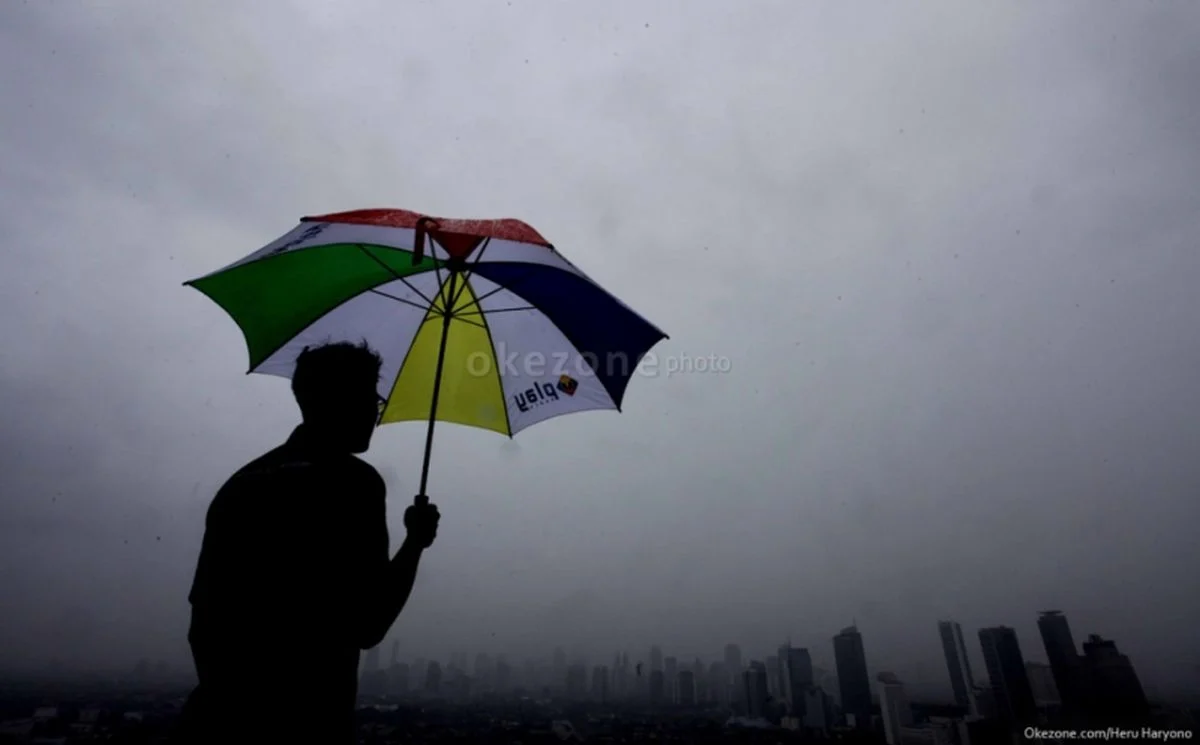
The residents of the Greater Jakarta area, known as Jabodetabek, are bracing for a wet Wednesday, October 28, 2026, as the Meteorology, Climatology, and Geophysics Agency (BMKG) has issued a forecast dominated by precipitation across the metropolitan region. While light rainfall is expected to be the prevailing trend for the capital city and its immediate surroundings, authorities have issued specific warnings for severe weather in certain districts, particularly in Bogor and Bekasi, where thunderstorms are anticipated.
Regional Weather Breakdown
The latest meteorological data indicates that all administrative regions of Jakarta—including Central, North, West, South, and East Jakarta—along with the Thousand Islands, will experience persistent light rain throughout the day. This atmospheric instability is consistent with current regional weather patterns, which have seen an increase in moisture levels as the transition period between seasons continues to affect the archipelago.
In contrast, the satellite imagery and numerical weather prediction models suggest a more volatile situation for the suburban satellite cities. Residents of the Bogor Regency, Bogor City, and the Bekasi Regency are advised to remain vigilant as the BMKG has forecast lightning and thunderstorms. These conditions, typical of the tropical convective activity prevalent in the area, pose potential risks such as localized flooding, traffic congestion, and disruptions to outdoor activities. Meanwhile, the administrative areas of Bekasi City and Depok are expected to experience milder conditions, with light rain forecasted for the duration of the day.
The Tangerang region presents a varied weather profile. Both the Tangerang Regency and the city of Tangerang are predicted to see light rain, similar to the capital. However, South Tangerang stands as a notable exception, with meteorologists predicting predominantly cloudy conditions, offering a brief reprieve from the precipitation affecting its neighbors.
Meteorological Context and Seasonal Transition
The weather conditions observed in Jabodetabek are part of the broader climatic shifts currently influencing Western Java. October represents a critical month in the Indonesian meteorological calendar, often characterized by the tail-end of the dry season or the early onset of the rainy season, depending on the specific microclimate.
Atmospheric scientists point to the convergence of air masses over the Java Sea, which facilitates the formation of rain-bearing clouds. When these clouds encounter the topographical elevation of the Bogor highlands, the mechanical lifting process intensifies the storm activity. This is the primary reason why Bogor frequently experiences higher rainfall intensity and more frequent lightning compared to the coastal plains of Jakarta and Tangerang.
Historically, the transition period—often referred to locally as the Pancaroba—is marked by unpredictable weather patterns. Mornings may begin with high humidity and intense sunshine, which then provide the thermal energy required for the rapid development of cumulonimbus clouds in the afternoon and evening. This phenomenon is why urban planners and disaster management agencies in the Jabodetabek area remain on high alert throughout this period.

Implications for Infrastructure and Public Mobility
The forecast of rain, particularly the thunderstorm alerts in Bogor and Bekasi, carries significant implications for regional infrastructure and public safety. In the Jabodetabek area, where the population density is among the highest in the world, even moderate rainfall can have cascading effects on the transportation network.
- Traffic Congestion: Historical data shows that rainfall in Jakarta often leads to a sharp increase in traffic accidents and congestion. Commuters are advised to account for longer travel times and to exercise increased caution on arterial roads, where reduced visibility and slippery surfaces frequently lead to bumper-to-bumper delays.
- Flood Mitigation: The Jakarta provincial government, in coordination with the Ministry of Public Works and Housing, continues to monitor river water levels. While light rain is generally manageable by the city’s drainage infrastructure, the threat of localized inundation remains, especially in low-lying areas or neighborhoods where drainage channels may be obstructed by sediment or debris.
- Public Health: During periods of persistent rain, health authorities often issue reminders regarding the potential for vector-borne diseases. The accumulation of standing water can facilitate the breeding of mosquitoes, leading to a rise in cases of Dengue Fever. Citizens are encouraged to maintain environmental cleanliness and clear any water-retaining vessels.
Disaster Management and Emergency Preparedness
In response to the current weather outlook, the Regional Disaster Management Agency (BPBD) for Jakarta and surrounding provinces has maintained a state of readiness. Emergency response teams are strategically positioned in flood-prone zones, and early warning systems have been activated to disseminate real-time information to the public.
For residents in the areas specifically mentioned for thunderstorm activity—Bogor and Bekasi—authorities recommend the following safety protocols:
- Seek Shelter: If caught outdoors during a thunderstorm, individuals are advised to move indoors immediately and avoid standing under tall structures or trees, which are susceptible to lightning strikes.
- Electrical Safety: Unplug sensitive electronic devices during severe lightning storms to prevent damage from power surges.
- Monitor Official Channels: The public is encouraged to rely exclusively on official updates from the BMKG website and verified social media accounts to avoid the spread of misinformation regarding weather-related emergencies.
Long-term Outlook and Climate Trends
Looking ahead, meteorologists suggest that the Jabodetabek area may experience an increase in the frequency of extreme weather events as global climatic patterns shift. While the current forecast of light rain and localized thunderstorms is well within the seasonal norm for October, the increasing intensity of these storms in recent years has prompted a re-evaluation of urban resilience strategies.
Urban planners are increasingly focusing on "sponge city" concepts—integrating more permeable surfaces and green spaces into the urban landscape to better manage surface water runoff. Furthermore, the collaboration between regional administrations in Jakarta, West Java, and Banten is becoming essential, as weather systems do not respect administrative boundaries. A unified approach to water management, early warning dissemination, and disaster response is critical for the long-term sustainability of the Jabodetabek megalopolis.
As of early Wednesday morning, the situation remains fluid. While no major floods have been reported, the BMKG continues to monitor the atmospheric conditions. Residents are urged to remain cautious, particularly during the afternoon hours when the probability of thunderstorm development is highest. The combination of high-density living and unpredictable tropical weather requires constant vigilance, and the city’s ability to navigate these daily weather challenges remains a testament to the ongoing efforts of meteorological agencies and local government bodies to ensure the safety and well-being of the region’s millions of inhabitants.
In summary, while the weather for October 28, 2026, presents no widespread emergency, the regional variations in precipitation demand that citizens in Bogor and Bekasi take proactive measures to mitigate the risks associated with lightning and heavy downpours. By staying informed through official sources and adhering to safety guidelines, residents can ensure that the day’s meteorological challenges do not translate into significant personal or structural disruption.