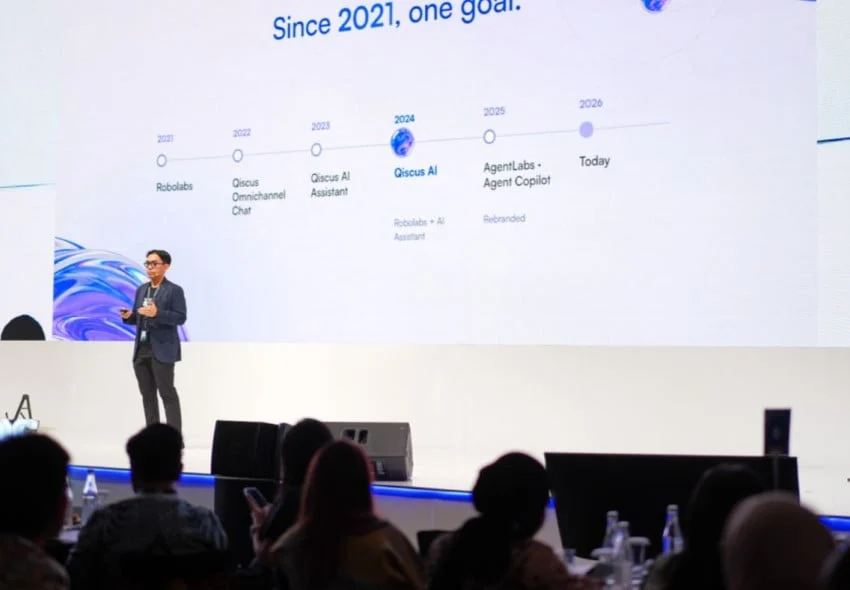
The landscape of customer experience (CX) in Southeast Asia reached a significant turning point this week as Qiscus, a leading provider of agentic customer engagement solutions, officially introduced two transformative artificial intelligence layers: Operator and Qiscus MCP. The announcement, delivered during the company’s flagship annual forum, Conversa 6.0, in Jakarta, marks a strategic shift from simple automated responsiveness to complex operational decision-making. Attended by over 200 industry practitioners and technology leaders, the event served as a platform for Qiscus to articulate its vision for the future of business-to-customer interactions, moving toward what the company defines as "Perfect CX"—a seamless, rapid, personal, and proactive engagement model.
The Evolution of Conversa: From Interaction to Operation
Conversa 6.0 represents the sixth iteration of Qiscus’s annual industry gathering, an event that has historically served as a barometer for the adoption of digital communication tools in the region. Since its inception, the forum has evolved from discussing simple omnichannel integration to exploring the depths of generative AI and, now, agentic AI.
The core motivation behind this year’s launch is the growing realization that businesses are hitting a ceiling with current AI deployments. For years, the industry focus has been on "interaction layers"—chatbots and automated response systems that reduce latency in replies but rarely possess the autonomy to resolve underlying operational issues. By introducing the Operator and Qiscus MCP layers, Qiscus aims to bridge the gap between customer queries and organizational actions.
Delta Purna Widyangga, CEO and Co-Founder of Qiscus, emphasized that the modern business environment is plagued by "decision latency." He noted, "During the development of these solutions, we observed that businesses are often paralyzed by the fragmentation of data. AI has been successful in answering questions faster, but the next frontier is operational intelligence—using AI to make faster and more precise decisions that directly impact the customer’s journey."
Understanding the Technological Architecture: Operator and Qiscus MCP
To address the challenges of modern customer service, Qiscus has structured its new offering around two distinct but integrated components.
The "Operator" layer acts as the autonomous agent capable of executing tasks that previously required human intervention. Unlike traditional rules-based bots, these agentic tools are designed to interact with existing business systems, extract data, and initiate workflows based on predefined objectives.
Complementing this is the "Qiscus MCP" (Multi-Channel Platform or Management Control Plane), which serves as the orchestration hub. In a typical modern enterprise, customer data is siloed across CRM platforms, order management systems, inventory databases, and marketing suites. The Qiscus MCP functions as the connective tissue, allowing these disparate systems to communicate with the Operator layer. By centralizing the management of these complex touchpoints, Qiscus aims to eliminate the operational silos that cause delays in service delivery.
The Problem of Decision Latency in Digital Commerce
The impetus for this technical pivot is rooted in hard data regarding the complexity of the digital economy. As companies expand their presence across multiple channels—WhatsApp, Instagram, web chat, and mobile applications—the volume of data generated is exponential. According to industry research, organizations that fail to unify their communication channels suffer from a "data fragmentation penalty," where customer information is scattered across as many as seven different dashboards on average.
This fragmentation leads to what Qiscus calls "decision latency"—the interval between receiving a customer signal and taking the correct action. When a customer makes a request, a company’s inability to access historical data or inventory status in real-time forces a disconnect. By integrating the Operator and MCP layers, Qiscus seeks to shorten this window, enabling a proactive rather than reactive stance. The goal is to provide a "Perfect CX" not just to high-value VIP clients, but to the entire customer base, leveraging the scalability of agentic AI.
Industry Context and the Rise of Agentic AI
The shift toward "Agentic AI" is a broader trend currently reshaping the global software industry. While generative AI (like LLMs) focused on creating content and human-like text, agentic AI focuses on agency—the ability of a system to perceive its environment, reason, and take action to achieve a goal.
Market analysts suggest that the adoption of agentic AI in the customer service sector will grow by over 30% annually through 2028. This transition is critical for Southeast Asian businesses, which have seen rapid digitization but often struggle with legacy infrastructure. Qiscus’s move to facilitate this transition aligns with the broader regional push toward "Hyper-Personalization," where businesses are expected to know the customer’s needs before the customer even articulates them.
Expert Perspectives and Operational Implications
Industry observers at Conversa 6.0 noted that the implementation of such technology requires a shift in organizational culture. "It is not just about installing software," remarked a senior consultant present at the forum. "It is about restructuring the relationship between the human support agent and the AI. The AI becomes the ‘operator’ that handles the heavy lifting, while the human transitions into a ‘manager’ role, overseeing the logic and emotional nuances of the customer journey."
The potential impact on business metrics is significant. Early testing of agentic AI frameworks in similar markets has shown potential reductions in Average Handling Time (AHT) by up to 40% and a marked increase in First Contact Resolution (FCR) rates. By minimizing the need for customers to repeat information to different agents, companies can theoretically see a proportional increase in Net Promoter Scores (NPS) and customer lifetime value.
Chronology of Qiscus’s Strategic Roadmap
The path to the launch of the Operator and MCP layers was not spontaneous. It follows a deliberate roadmap established by the company over the last two years:
- 2022: Qiscus focused heavily on expanding its omnichannel communication capabilities, ensuring that businesses could connect with customers on any platform.
- 2023: The company integrated generative AI into its interface, allowing for sentiment analysis and suggested responses for human agents.
- Early 2024: Development of the "Agentic" framework began, focusing on API connectivity and system integration capabilities.
- Late 2024 (Conversa 6.0): Official unveiling of the Operator and MCP layers, marking the transition from "AI-assisted agents" to "Autonomous AI operations."
Broader Implications for the Southeast Asian Market
The introduction of these technologies by a Jakarta-based firm highlights the growing sophistication of the Southeast Asian technology sector. Rather than merely adopting Western solutions, local companies like Qiscus are now engineering platforms specifically tailored to the nuances of local consumer behavior—such as the heavy reliance on social media messaging for business transactions.
The implications for the regional workforce are also noteworthy. As AI takes over the transactional layer of operations, the demand for high-level analytical and empathy-based skills is expected to rise. Qiscus’s "The Agentic Shift" theme suggests a future where the complexity of AI is not a barrier but an orchestration tool. By "orchestrating" this complexity, Qiscus aims to provide a standardized, high-quality experience that scales with the business, regardless of its size.
Looking Ahead: The Future of Orchestrated AI
As the dust settles on Conversa 6.0, the industry will be watching to see how quickly companies can integrate these new layers into their existing workflows. The primary challenge will likely be data hygiene and the willingness of organizations to grant AI systems the autonomy to make operational decisions.
Delta Purna Widyangga remains optimistic. The roadmap ahead for Qiscus involves deeper integration with local payment gateways and supply chain management systems, further cementing the role of the MCP layer in the daily lives of businesses. In a world where customer loyalty is increasingly fragile, the ability to act with precision and speed is no longer a competitive advantage—it is a necessity for survival.
As organizations prepare for the next fiscal year, the focus will undoubtedly be on how to effectively deploy these agentic systems. If Qiscus’s latest announcement is any indicator, the era of the "smart chatbot" is coming to a close, replaced by the era of the "autonomous operator." For the businesses that successfully navigate this shift, the reward is the holy grail of modern commerce: a loyal, satisfied, and perpetually engaged customer base.