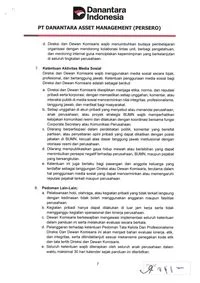
The Badan Pengelola Investasi Daya Anagata Nusantara (BPI Danantara) has officially launched a comprehensive overhaul of the corporate governance landscape for Indonesia’s state-owned enterprises (BUMN). Through the issuance of Circular Letter number SE/002/DI-DAM/DO/2025, the state investment management body has introduced a stringent code of conduct and professional standards for directors and commissioners. This initiative marks a pivotal shift in the management culture of Indonesia’s state-owned firms, aiming to align the behavior of high-level management with public expectations for accountability, efficiency, and professional integrity. The policy, established on October 31, 2025, explicitly restricts the use of company facilities, governs social media usage, and mandates a clear separation between personal activities and professional duties.
The Rationale Behind the Governance Reform
The move by Danantara is not merely a bureaucratic adjustment but a strategic intervention intended to professionalize the management tier of state-owned entities. For years, the perks associated with BUMN leadership—often characterized by lavish business travel, private security escorts, and the use of company resources for leisure activities—have been a subject of public scrutiny. By formalizing these restrictions, Danantara is signaling a transition toward a performance-based culture where the focus is shifted from the prestige of the position to the actual delivery of value for the state and the public.
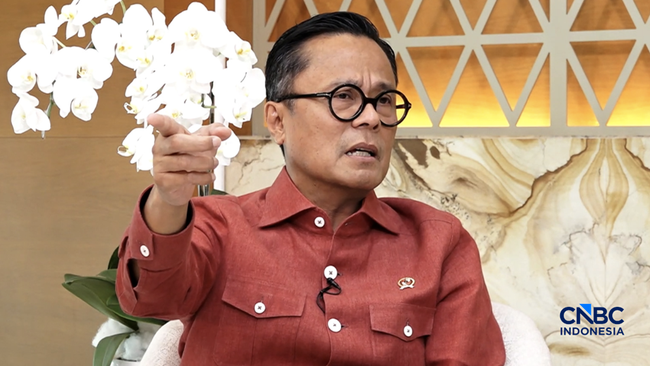
Chief Operating Officer of Danantara, Dony Oskaria, has been the primary architect of this policy shift. During a press briefing in Jakarta on October 26, 2026, Oskaria emphasized that BUMN executives are, in essence, public servants managing state assets. Consequently, the expectation is that their lifestyle and professional conduct should reflect the sobriety and responsibility inherent in their roles. The circular serves as a regulatory boundary, defining what is considered appropriate corporate behavior and what constitutes an abuse of office.
Key Provisions of the Circular Letter
The circular is exhaustive in its scope, covering several aspects of daily operations that were previously subject to ambiguous corporate policies. Key highlights of the mandate include:
- Strict Facility Usage Guidelines: The directive explicitly prohibits the use of corporate funds or assets for personal activities. This encompasses luxury travel, private lodging, and the use of company-owned aircraft for non-duty-related purposes.
- Prohibition of Non-Duty Leisure During Working Hours: Activities such as golf, which have historically been associated with business networking, are now strictly regulated. If such activities are not directly linked to official business or revenue-generating networking, they are prohibited during working hours. Even when conducted, they cannot be financed by the company.
- Social Media Conduct: Recognizing the influence of digital platforms, the directive establishes rules for how executives represent their companies online. This aims to prevent reputational risks and ensure that the public image of BUMN leadership remains aligned with the values of the institution.
- Operational Restrictions: The circular outlines precise limitations regarding personal aides and security escorts (patrol vehicles), ensuring that these resources are utilized only when strictly necessary for the performance of official functions.
Chronology of the Transformation
The issuance of this policy is the culmination of a broader transformation strategy initiated by the Indonesian government to consolidate and streamline the management of state assets under the Danantara umbrella.
- Mid-2025: Initial assessments by the government revealed significant disparities in governance standards across various BUMN sectors. Reports of excessive operational spending led to calls for a standardized code of conduct.
- October 31, 2025: The official signing of Circular Letter SE/002/DI-DAM/DO/2025 by Danantara leadership, formally codifying the new behavioral standards.
- Late 2025 – Early 2026: A period of internal socialization, where BUMN boards were notified of the new requirements and expected to update their internal company bylaws accordingly.
- October 26, 2026: Public affirmation of the policy by Dony Oskaria, underscoring that the enforcement of these rules is now entering a critical implementation phase.
Economic and Institutional Implications
The implementation of these rules carries significant implications for the BUMN ecosystem, which comprises dozens of companies spanning sectors from energy and telecommunications to infrastructure and banking.
From a financial perspective, the reduction in non-essential executive spending is expected to improve the bottom line of various BUMNs. While the individual savings from a round of golf or a private jet flight might seem marginal compared to the massive capital expenditures of these firms, the cumulative effect of a culture of austerity is substantial. By eliminating "perk-heavy" management practices, Danantara is attempting to foster an environment where capital is directed toward innovation, research, and operational efficiency rather than executive comfort.
From a social perspective, the move is a response to the "trust gap" between the public and state-run entities. BUMNs are the backbone of the Indonesian economy, and their performance is directly linked to the country’s GDP growth. When the public perceives executives as living beyond their means, it undermines the legitimacy of these institutions. By imposing these standards, Danantara is attempting to restore public confidence and ensure that the leadership of these companies is focused on the national interest.
Challenges in Enforcement and Cultural Change
While the policy is robust on paper, the true test lies in its enforcement. Changing the "corporate culture" of massive, legacy-heavy state institutions is a monumental task. Historically, BUMNs have operated with significant autonomy, and shifting the mindset of veteran executives will require more than a circular letter.
Observers note that the success of these measures will depend on the establishment of clear monitoring mechanisms. If Danantara creates a rigorous oversight committee tasked with auditing the expenses and behaviors of board members, the policy will hold weight. However, if enforcement is lax, the circular risks becoming another piece of "paper-only" regulation.
Moreover, there is the potential for friction between traditional management styles and the new, modern expectations of transparency. Dony Oskaria has signaled that this is part of a multi-stage process. The focus on executive conduct is merely the first step; subsequent phases are expected to address deeper structural reforms, such as performance-linked compensation and more rigorous board appointments based on technical merit rather than political patronage.
Market and Stakeholder Reactions
Market analysts have generally reacted positively to the news, viewing it as a sign of professionalization. Institutional investors, who often hold shares in publicly listed BUMNs, have long advocated for better ESG (Environmental, Social, and Governance) scores within these companies. By aligning the behavior of directors with international standards of corporate governance, Danantara is making these state-owned firms more attractive to global capital markets.
Conversely, there has been quiet apprehension among some in the management circles of older state-run firms, where traditional perks were seen as part of the "package" of a high-level executive position. However, the prevailing sentiment from the government is that the era of "business as usual" is over.
Conclusion: A New Era for Indonesian BUMNs
The introduction of the SE/002/DI-DAM/DO/2025 circular represents a fundamental shift in how Indonesia views its state-owned enterprises. By stripping away the layers of excess that have long surrounded BUMN leadership, BPI Danantara is attempting to redefine what it means to be an executive in the public sector.
The mandate is clear: the privilege of leading a state-owned enterprise comes with the responsibility of serving as a steward of public wealth. Through this policy, Danantara is not only curbing excessive spending but is also setting a new benchmark for professional behavior. As the government continues its efforts to reform the BUMN sector, this code of conduct will serve as the foundation upon which a more transparent, efficient, and professional state-owned enterprise sector can be built. The coming months will be critical in observing how strictly these rules are applied and whether they lead to the broader cultural transformation that the government envisions.