The evolution of digital banking and self-service financial technology has fundamentally transformed how individuals manage cash deposits. For decades, the traditional method of visiting a bank branch and waiting in line for a teller was the only way to deposit physical currency into an account. Today, the ubiquity of Cash Deposit Machines (CDMs) and Cash Recycling Machines (CRMs) offers a convenient alternative. However, a recurring question among banking customers is whether they can utilize an ATM or a deposit machine belonging to a different banking institution to complete a cash transaction. The short answer is that while the technology is increasingly sophisticated, the ability to perform cross-bank cash deposits remains highly restricted due to security protocols, technical infrastructure, and interbank settlement limitations.
The Technical Reality of Cross-Bank Cash Deposits
To understand why a customer cannot simply walk up to any ATM and deposit cash into an account held at a different bank, one must first distinguish between "ATM Withdrawal" and "Cash Deposit." When a customer withdraws cash from an ATM belonging to a different bank, they are utilizing an interbank network—such as ATM Bersama, Prima, or Link in Indonesia, or global networks like Plus and Cirrus. These networks are designed to verify account balances and authorize the dispensing of funds.
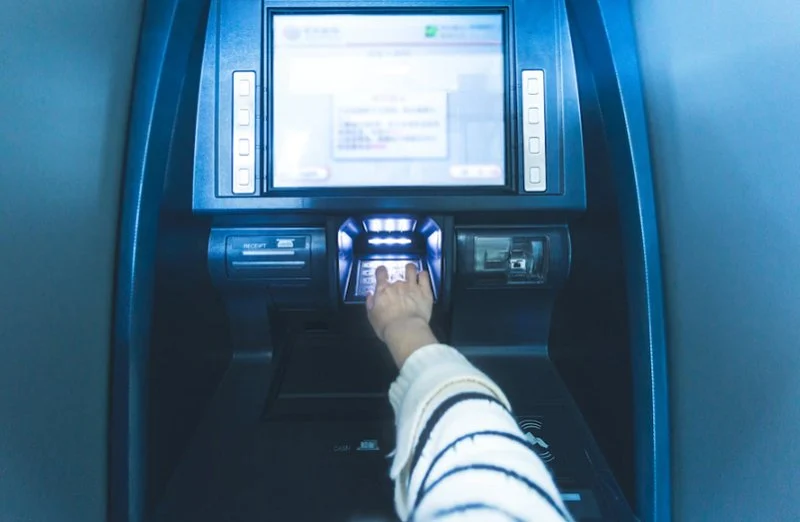
Conversely, a cash deposit requires the machine to physically accept, count, authenticate, and store currency. This process is significantly more complex. When a user deposits cash into a machine owned by their own bank, the machine is programmed to instantly update the internal ledger of that specific institution. When attempting this at a different bank’s machine, the machine lacks a direct, real-time interface to update the core banking system of a competitor. While interbank transfers of digital balances are seamless, the physical act of "ingesting" cash into a machine is currently not supported across the vast majority of cross-bank networks.
Chronology of ATM Innovation
The journey of the ATM began in the late 1960s, primarily as a cash dispenser. Throughout the 1980s and 1990s, the functionality expanded to include balance inquiries and, eventually, rudimentary deposit services, usually involving envelopes that were manually processed by bank staff the following business day.
By the mid-2000s, the introduction of intelligent Cash Deposit Machines (CDMs) revolutionized the industry. These machines could identify denominations, detect counterfeit currency, and update account balances in real-time. Despite these advancements, the interoperability of these machines remained within the silos of individual banking groups. Throughout the 2010s, as digital banking apps emerged, the industry shifted focus toward "cardless" transactions and QR-code-based payments, effectively bypassing the need for physical cash handling at ATMs. Today, the sector is in a transition phase where physical cash infrastructure is being maintained but not necessarily expanded for cross-bank utility.
Supporting Data and Industry Trends
Data from central banking authorities and financial industry reports suggest a clear trend: while the total number of ATMs globally is plateauing or slightly declining, the volume of cash in circulation remains high in developing economies. According to recent industry analyses, over 80% of ATM transactions involve withdrawals, while less than 15% involve deposits. Of those deposits, approximately 95% are performed at machines owned by the user’s primary bank.
The cost of maintaining a CDM is significantly higher than a standard cash-dispensing ATM. These machines require frequent maintenance, cash replenishment, and sophisticated sensors to prevent fraud. Because the cost-per-transaction of a deposit is higher than a withdrawal, banks are financially incentivized to reserve these services for their own customers, thereby strengthening their ecosystem and reducing the need for costly interbank settlement procedures for physical cash.
The Perspective of Financial Institutions
Official statements from major banking associations consistently reiterate that the infrastructure for "Universal Cash Deposits"—where any machine accepts any bank’s cash—is not currently on the immediate roadmap. Banking spokespersons often cite three primary reasons for this limitation:
- Security and Fraud Prevention: Every bank has unique anti-money laundering (AML) and "Know Your Customer" (KYC) protocols. Accepting physical cash from an unknown source through a third-party machine poses significant risks regarding the verification of the funds’ origin.
- Technical Standardization: While interbank transfer protocols (such as ISO 8583) exist, they are primarily optimized for digital data packets, not for the physical handling of assets. Standardizing the hardware sensors across different manufacturers (e.g., Diebold Nixdorf, NCR, Hyosung) to ensure uniform detection of counterfeit bills across all banks is a massive technical hurdle.
- Operational Liability: If a machine malfunctions—for example, if it "eats" the cash or miscounts the deposit—the process of reconciling the error becomes exponentially more complicated when two different financial institutions are involved. Most banks prefer to avoid the liability associated with handling cash for a non-customer.
Broader Impact and Economic Implications
The limitation on cross-bank cash deposits forces consumers to rely on specific banking networks. For individuals living in rural areas or regions with limited ATM density, this presents a significant inconvenience. If a customer resides near a competitor’s ATM but is far from their own bank’s branch or machine, they are often forced to travel to access their funds.
This "banking friction" has contributed to the rapid adoption of digital payment alternatives. Many consumers are increasingly opting for e-wallets, mobile banking transfers, and digital clearing systems that allow for instant peer-to-peer payments. The policy of restricting cash deposits to specific bank networks is, in a way, an accelerant for the "cashless society" transition. By making cash management more difficult, banks are subtly pushing customers toward digital transactions, which are easier to track, cheaper to process, and more profitable for the financial sector.
Alternatives and Future Outlook
For those who frequently find themselves needing to deposit cash but lacking proximity to their own bank’s ATM, the industry offers several workarounds:
- Retailer Partnerships: In many regions, banks have formed partnerships with major retail chains or convenience stores. Customers can often deposit cash at a retail point-of-sale terminal, which acts as a proxy for their bank.
- Agent Banking: Some banks employ a "banking agent" model, where authorized third parties (local shops or kiosks) are equipped with secure technology to accept deposits on behalf of the bank. This is becoming a critical financial inclusion tool in emerging markets.
- Cashless Digital Transfers: The most efficient alternative remains the conversion of cash to digital form at the earliest opportunity. By utilizing transfer services or digital wallets, consumers can move funds between banks instantly, rendering the physical deposit of cash at a machine unnecessary.
Looking toward the future, it is unlikely that standard ATMs will ever become fully interoperable for cash deposits. The trend is moving away from hardware-based cash handling. As Central Bank Digital Currencies (CBDCs) and real-time payment systems continue to mature, the necessity for physical cash deposit infrastructure is expected to wane.
In conclusion, while the desire for a "universal ATM" that accepts cash for any bank is understandable, the current banking architecture is built on proprietary networks that prioritize security and risk management over universal access. For the foreseeable future, customers should continue to prioritize using their own bank’s ATMs or designated banking agents to ensure the integrity of their financial transactions. As the financial landscape continues to digitize, the friction associated with physical cash deposits will likely be solved not by better machines, but by the obsolescence of the cash-based deposit model itself.