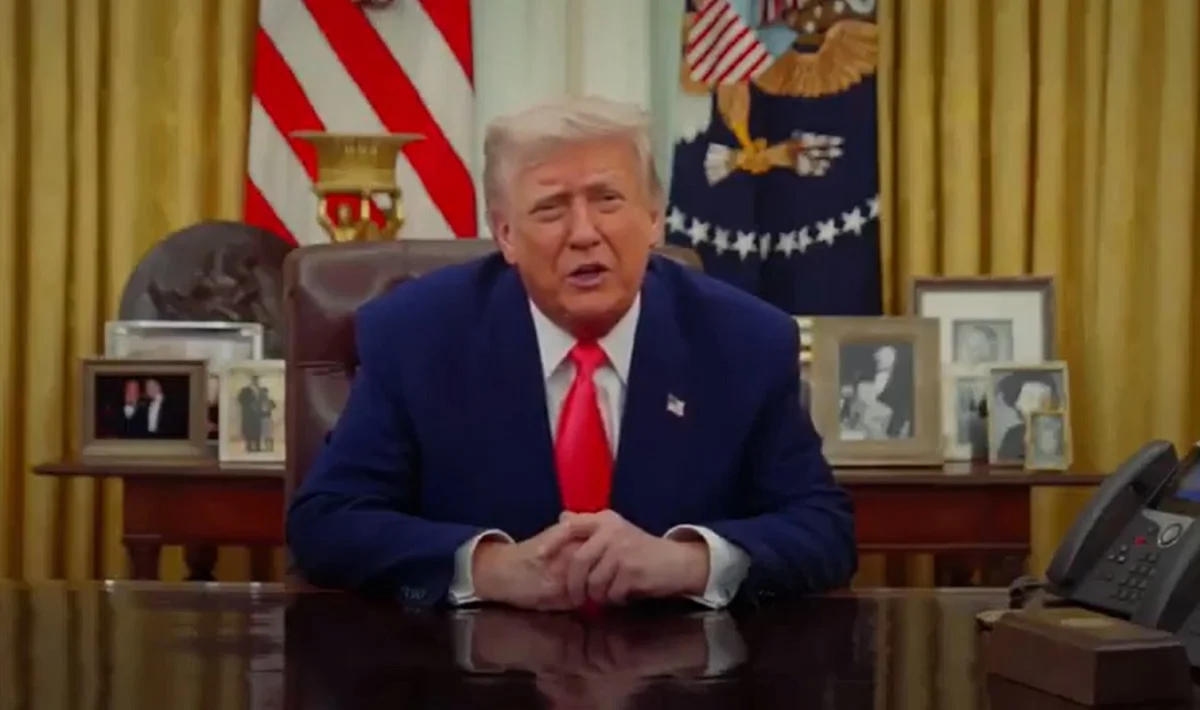
United States President Donald Trump has signaled a dual-track approach toward Iran, oscillating between the threat of imminent military intervention and the possibility of a diplomatic breakthrough. Speaking to reporters at the White House, the President underscored the volatility of the current geopolitical climate, stating that Washington remains prepared to strike the Islamic Republic on short notice while simultaneously keeping the door open for what he described as a "great and beautiful" deal. This ambiguity, characterized by a mix of brinkmanship and negotiation, reflects the ongoing tension between the two nations as the administration weighs its options for containing Tehran’s nuclear ambitions and regional influence.
The Dynamics of Diplomatic Brinkmanship
The President’s comments, delivered during a press briefing, have left international observers and regional powers scrambling to interpret the White House’s true intentions. When pressed on the timeline for potential kinetic action, Trump famously retorted, "Do you really think I’m going to tell you if I’m going to do it?" This calculated unpredictability is a hallmark of the Trump administration’s foreign policy, designed to keep adversaries off-balance.
However, beneath the rhetoric lies a specific strategic goal: the permanent containment of Iran’s nuclear program. Trump emphasized that his primary objective is to ensure that Iran is effectively and permanently barred from developing a nuclear weapon. He explicitly dismissed the efficacy of past surgical strikes, such as those utilizing B-2 Spirit stealth bombers, arguing that such tactical deployments are insufficient to guarantee a long-term strategic shift. "I have to make sure this is permanent," the President stated, underscoring that his administration views any agreement not just as a temporary pause in hostilities, but as a structural overhaul of Iran’s nuclear capabilities.
Chronology of Escalation: From Sanctions to Standoffs
The current friction is the culmination of years of mounting tension following the 2018 United States withdrawal from the Joint Comprehensive Plan of Action (JCPOA), commonly known as the Iran Nuclear Deal. The Trump administration’s "maximum pressure" campaign—a policy defined by the systematic imposition of severe economic sanctions—was intended to force Tehran back to the negotiating table under terms more favorable to Washington.
- May 2018: The U.S. formally exits the JCPOA, arguing the deal failed to address Iran’s ballistic missile program and regional proxy activities.
- 2019-2020: A series of maritime incidents in the Persian Gulf and the Strait of Hormuz increases the risk of accidental war, involving the seizure of oil tankers and the downing of a U.S. surveillance drone.
- October 2026: Following a period of relative, albeit fragile, calm, reports emerge of renewed consideration for military strikes as intelligence suggests Iranian nuclear activity has surged beyond previously negotiated thresholds.
- Present Day: The President publicly acknowledges the dual possibility of a "decisive finish" or a high-level diplomatic settlement.
Economic and Geopolitical Stakes in the Strait of Hormuz
A critical component of this standoff is the security of the Strait of Hormuz. Approximately 20% of the world’s total petroleum consumption passes through this narrow waterway, making it a global economic chokepoint. The President noted that oil shipments through the Strait have actually increased since the onset of the current conflict, a paradox that highlights the resilience of global energy supply chains despite regional instability.
For the international community, any military escalation in this region would have immediate, catastrophic consequences for global energy prices. A sustained blockade or a kinetic conflict would likely trigger a sharp spike in Brent and WTI crude oil prices, potentially destabilizing a global economy already reeling from post-pandemic recovery pressures. Analysts suggest that Tehran is well aware of this leverage, using the threat of disruption to the Strait as a deterrent against further U.S. aggression.
The Burden of Compliance and Verification
The core of the diplomatic impasse, according to President Trump, is the issue of verification and long-term compliance. While the President noted that Iranian officials have signaled a willingness to strike a deal, his skepticism remains rooted in the perceived failures of previous international agreements. "They want to make a deal, but the problem is, will they abide by the deal?" he questioned.
This concern is shared by a segment of the international security community, which argues that without intrusive, "anytime, anywhere" inspections, no agreement can truly prevent a clandestine nuclear breakout. The administration’s demand for a "permanent" solution suggests that any future framework would need to go significantly further than the previous JCPOA, likely including stricter limitations on enrichment centrifuges, the complete dismantling of advanced research facilities, and a broader consensus on regional missile proliferation.
Global Responses and Strategic Implications
The international reaction to the President’s remarks has been characteristically divided. European signatories to the original nuclear deal, including France, Germany, and the United Kingdom, have urged restraint, warning that a military strike could lead to a broader regional war that would be difficult to contain. They continue to advocate for a diplomatic resolution, emphasizing that the current framework, while flawed, remains the best tool to monitor Iran’s progress.
Conversely, regional allies of the United States, including Israel and several Gulf Cooperation Council (GCC) states, have largely supported the administration’s hardline stance. These nations have long viewed Iran’s nuclear ambitions as an existential threat and have consistently lobbied for an approach that combines economic strangulation with a credible, overwhelming military threat.
Analysis: The Path Forward
The situation remains in a state of high-stakes equilibrium. By publicly mentioning the possibility of a "beautiful deal," the President is providing an exit ramp for the Iranian leadership, provided they are willing to accept substantial concessions. Simultaneously, by keeping the "strike tomorrow" option on the table, he is ensuring that the military threat remains a credible deterrent.
For the United States, the primary challenge is to avoid a "mission creep" scenario, where limited tactical strikes lead to an open-ended regional conflict. Historically, military interventions in the Middle East have proven to be complex, costly, and difficult to exit gracefully. The administration’s focus on a "permanent" solution suggests they are seeking a definitive strategic victory, but the history of the region suggests that permanent stability is rarely achieved through military force alone.
As the world watches, the ball remains in Tehran’s court. The leadership in Iran is now forced to weigh the risks of continued defiance against the costs of a comprehensive deal that would fundamentally alter their national security posture. Whether this leads to a new era of diplomacy or an escalation into conflict, the impact will be felt across global markets, regional security architectures, and the future of nuclear non-proliferation efforts for decades to come.
The President’s final sentiment—"In any event, we are winning"—serves as both a reassurance to his domestic base and a message of strength to his adversaries. As the administration continues to weigh its options, the international community remains in a state of cautious observation, hoping that the promise of a "beautiful deal" outweighs the reality of potential military action.