WASHINGTON — A missile strike attributed to Iranian forces has struck a maritime vessel navigating the strategic Strait of Hormuz, resulting in injuries to eight United States Marines. The incident, which occurred on September 14, has prompted immediate concern regarding the safety of naval transit in one of the world’s most critical maritime chokepoints. According to reports from NBC News citing three anonymous U.S. officials, the attack has reignited domestic scrutiny regarding the Department of Defense’s transparency protocols concerning casualties sustained in regional confrontations with Iran.
The eight service members, comprising seven enlisted personnel and one officer, were serving as part of a battalion landing team at the time of the strike. While none of the injuries were initially classified as life-threatening, the Pentagon has confirmed that the personnel suffered from smoke inhalation and potential traumatic brain injuries (TBI). Symptoms reported among the affected Marines included persistent headaches and cognitive disruptions consistent with concussive events. Despite the severity of these medical complications, officials have stated that all eight individuals returned to their operational duties shortly after receiving initial medical evaluations.
The Geography of Conflict: The Strait of Hormuz
The Strait of Hormuz remains a central theater for geopolitical friction. Roughly 20 to 30 percent of the world’s total global petroleum consumption passes through this narrow passage, which separates the Persian Gulf from the Gulf of Oman. Iran’s ability to project power via anti-ship cruise missiles and unmanned aerial systems in this region serves as a primary deterrent against Western naval influence.
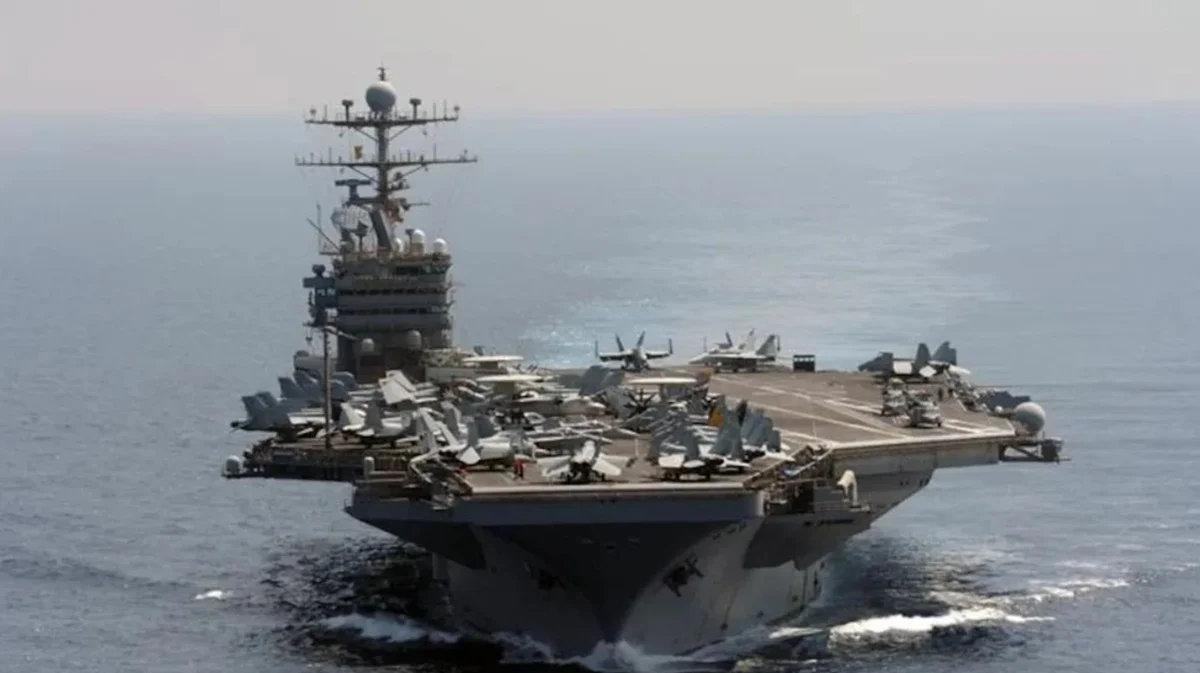
The vessel targeted in the September 14 incident has not been officially identified by the Department of Defense. Officials have pointedly clarified that the ship was not a commissioned United States Navy warship, though they have refused to provide details regarding the ship’s flag, registration, or specific class. This ambiguity has fueled speculation regarding the nature of the mission, with some analysts suggesting the vessel may have been involved in maritime security patrols or intelligence-gathering operations often conducted in the region by U.S. and allied forces.
Chronology of the September 14 Engagement
The attack occurred during a period of heightened regional tension, characterized by a series of low-intensity maritime confrontations. Based on reports from TRT and subsequent briefings, the timeline of the event suggests a calculated engagement:
- Pre-Incident: The vessel was transiting the Strait of Hormuz as part of routine maritime security operations.
- September 14: The vessel was struck by a projectile confirmed by U.S. intelligence to have originated from Iranian-controlled coastal batteries.
- Immediate Aftermath: The eight Marines onboard were exposed to the immediate blast effect and subsequent smoke from the damaged superstructure.
- Medical Evaluation: The affected personnel were assessed on-site. The determination was made that while they required monitoring for concussion-related symptoms, they remained fit for duty.
- Reporting Lag: Information regarding the injuries only surfaced in the public domain weeks later, following internal reports and subsequent verification by defense officials.
Growing Scrutiny of Casualty Reporting
The delayed acknowledgment of these injuries has triggered a broader debate in Washington. Critics of the current administration’s communication strategy argue that the Pentagon has been increasingly opaque regarding the toll of regional skirmishes. This incident follows a pattern of "low-level" attacks—often drone or missile strikes—that the military frequently downplays until independent reporting forces a formal statement.
The classification of these injuries as "non-critical" has been challenged by military medical advocates, who note that even minor traumatic brain injuries can have long-term neurological impacts. The fact that the personnel were returned to active duty almost immediately has led some observers to suggest that the military is attempting to minimize the political fallout of the attack to avoid an escalation cycle that could necessitate a more robust military response.
Official Responses and Geopolitical Implications
While the Pentagon has remained tight-lipped regarding the specific nature of the vessel and the potential for a retaliatory strike, the implications of this event are far-reaching. The Iranian government, through its state media outlets, has frequently framed such actions as defensive measures against "foreign encroachment" in the Persian Gulf.
From the perspective of the U.S. Central Command (CENTCOM), the incident underscores the vulnerability of non-combatant or support-class vessels operating in the region. The proliferation of Iranian precision-guided munitions has shifted the risk calculus for the U.S. Navy. Whereas previous decades were defined by the threat of conventional naval combat, the modern era is defined by the threat of asymmetrical "gray zone" warfare, where adversaries utilize missiles and drones to strike at American personnel without triggering a full-scale conventional war.
Fact-Based Analysis of the Strategic Landscape
The vulnerability of the Strait of Hormuz to such attacks highlights the difficulty of maintaining "freedom of navigation" in the face of persistent state-sponsored harassment. If Iran is willing to strike vessels containing U.S. personnel, the threshold for future escalation is dangerously low.
- Technological Shift: The use of cruise missiles against a non-warship indicates a high degree of confidence from Iranian forces in their ability to hit specific, identified targets while minimizing the probability of a direct, overwhelming U.S. military reprisal.
- The "TBI" Threshold: The military’s handling of the eight injured Marines is reflective of a wider trend in post-combat reporting. Since the post-9/11 conflicts, the U.S. military has faced significant pressure to account for "invisible wounds" like TBI. By reporting these injuries—however minor—the Pentagon is likely attempting to avoid the systemic underreporting that characterized earlier stages of the war on terror.
- Diplomatic Stalemate: With no formal mechanism for de-escalation currently active between Washington and Tehran, these incidents represent the "new normal." Diplomatic channels remain largely frozen, and the reliance on "de-confliction lines" has proven insufficient in preventing kinetic exchanges.
Conclusion: A Precarious Status Quo
The September 14 attack on the vessel in the Strait of Hormuz is more than a localized maritime incident; it is a symptom of a deeply fractured regional security architecture. As eight Marines recover from the effects of a missile strike, the focus of the international community shifts toward the potential for a larger miscalculation.
The U.S. military’s choice to keep the identity of the ship classified suggests a desire to maintain operational security, but it also reflects the complex, shadow-filled nature of current U.S.-Iran relations. Whether this event leads to a hardening of the U.S. posture in the region or is absorbed into the list of "accepted risks" of maritime navigation remains to be seen. For now, the eight Marines serve as a reminder that in the volatile waters of the Middle East, peace is often as fragile as the hull of a ship passing through the narrowest of straits.
As investigations continue, the public remains waiting for further clarity on the identity of the vessel and the specific circumstances that allowed a missile to penetrate the defensive perimeters of a U.S.-affiliated ship. With tensions showing no signs of abating, the Strait of Hormuz remains a flashpoint where the next incident may not result in minor injuries, but in a crisis that the global economy and regional stability can ill afford.