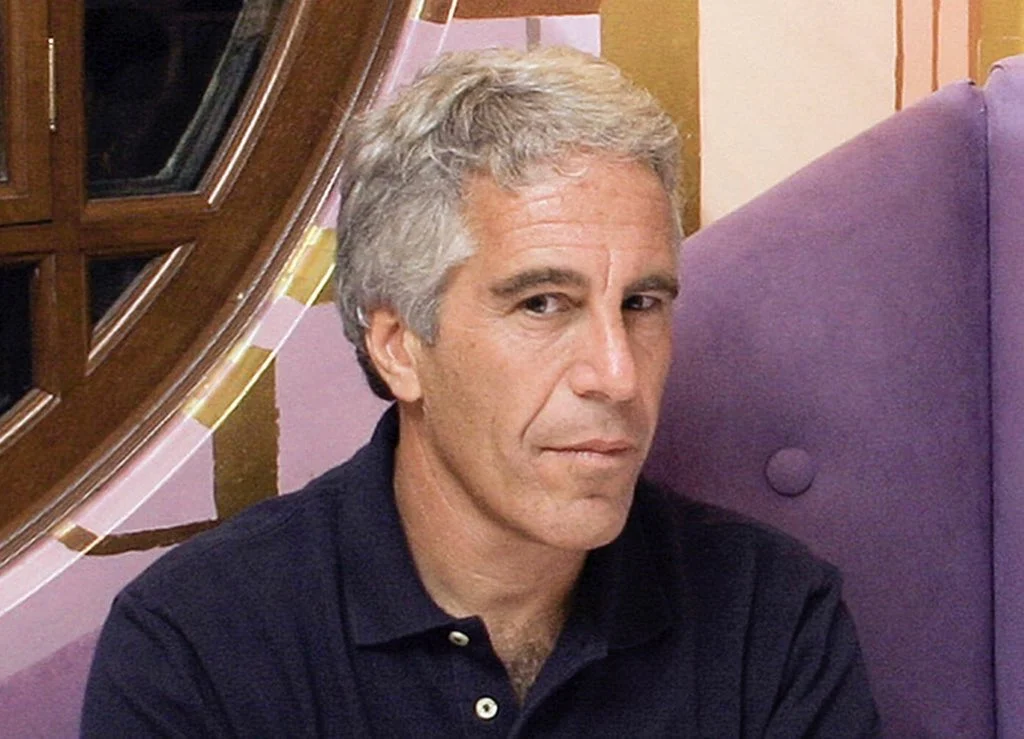
The death of convicted sex offender Jeffrey Epstein, once a fixture of international high society and a financier to the global elite, has returned to the forefront of public scrutiny following a provocative forensic analysis. Michael Freeman, a distinguished professor of forensic medicine and editor-in-chief of the Journal of Forensic and Legal Medicine, has formally contested the official determination that Epstein died by suicide in his Manhattan jail cell in 2019. By reviewing previously unreleased autopsy records and photographic evidence provided by the Epstein family, Freeman argues that the physical evidence is more consistent with a homicide than a self-inflicted hanging. This development reopens a dark chapter in American criminal justice, challenging the narrative established by the New York City Office of Chief Medical Examiner and reigniting long-standing theories regarding the circumstances of the financier’s demise.
A Chronology of a Controversial Case
To understand the weight of Freeman’s findings, one must revisit the timeline of events that culminated in the discovery of Epstein’s body. On July 6, 2019, Jeffrey Epstein was arrested at Teterboro Airport in New Jersey on federal charges of sex trafficking of minors in Florida and New York. His arrest followed a renewed public interest in his decades-old plea deal, which had previously shielded him from federal prosecution.
Epstein was held at the Metropolitan Correctional Center (MCC) in Lower Manhattan, a facility known for its high-security standards. On July 23, 2019, approximately two weeks after his arrival, prison staff discovered Epstein in his cell with injuries to his neck, an incident initially categorized as a suicide attempt or a potential assault. Following this, he was placed on suicide watch, a protocol that was inexplicably lifted on July 29, 2019.
On August 10, 2019, the world learned that Epstein had been found unresponsive in his cell. Despite the facility being one of the most secure in the federal system, reports emerged regarding malfunctioning surveillance cameras and a failure of guards to conduct the mandatory welfare checks. By August 16, the New York City medical examiner, Dr. Barbara Sampson, officially ruled the death a suicide by hanging. This conclusion was met with immediate skepticism, not only by the public but by the Epstein family, who hired forensic pathologist Dr. Michael Baden to observe the autopsy.
Forensic Discrepancies and Medical Analysis
Dr. Michael Freeman’s recent assertions focus on specific physical evidence that he argues contradicts the mechanics of a self-inflicted hanging. According to Freeman’s assessment, the primary point of contention is the nature of the ligature marks found on Epstein’s neck. In a standard hanging, the mark left by a ligature is typically singular and angled toward the suspension point. Freeman notes that the records indicate a second, lower mark that does not align with the physics of a single-point suspension.
Furthermore, Freeman utilized 3D modeling based on the testimony of the correctional officer who discovered the body. The officer, Michael Thomas, reported that Epstein was found suspended from a bed frame. Freeman’s model suggests that the force required to create the documented neck injuries, combined with the presence of other contusions on the body, points toward a struggle rather than a passive act of self-harm. "The injuries documented by the medical examiner are not consistent with suicide by hanging," Freeman stated in his analysis. "Moreover, injuries that are indicative of other causes—such as a physical altercation or assault—were seemingly dismissed."
The Context of the Metropolitan Correctional Center Failures
The death of Jeffrey Epstein was not merely a forensic mystery; it was a systemic failure of the U.S. Bureau of Prisons. The MCC, which has since been permanently closed, was plagued by understaffing, crumbling infrastructure, and a culture of negligence. In the aftermath of the death, two correctional officers responsible for monitoring Epstein’s wing were charged with falsifying records, claiming they had performed rounds that they never actually conducted.
While these officers eventually entered into deferred prosecution agreements, the institutional failure created a vacuum of information that fueled global conspiracy theories. The fact that the surveillance footage for the hallway outside Epstein’s cell was reportedly corrupted or missing only served to deepen the public’s distrust of the official narrative.
The Epstein Case and Global Power Dynamics
Jeffrey Epstein’s case was uniquely explosive because of the vast network of influential individuals he associated with. From political leaders and royalty to renowned scientists and business moguls, Epstein’s social orbit was composed of the world’s most powerful figures. When he died, he was in the midst of preparing a defense that could have implicated numerous high-profile individuals in a complex web of exploitation.
The suspicion surrounding his death is deeply rooted in the potential motivation for a cover-up. Skeptics have long argued that Epstein possessed compromising information that many, including some of the world’s wealthiest people, would have gone to extreme lengths to protect. Freeman’s forensic critique provides a scientific basis for what has, until now, been largely relegated to the realm of speculative theory.
Implications for Forensic Science and Justice
The intervention of a professional of Michael Freeman’s stature brings a new level of credibility to the challenges against the official autopsy. In the forensic community, disagreements over cause of death are not uncommon, but the scale of the Epstein case elevates the implications. If the medical examiner’s office is found to have overlooked signs of struggle, it could necessitate a review of how high-profile deaths in custody are investigated.
Moreover, the lack of transparency in the original investigation has created a lingering wound in the public’s perception of the justice system. When the death of a defendant as prominent as Epstein remains shrouded in doubt, it undermines the integrity of the legal proceedings that were intended to bring closure to his victims.
Broader Impact and Future Outlook
The findings presented by Dr. Freeman raise significant questions about whether a truly independent investigation into Epstein’s death can ever be achieved. With the passage of time and the decay of physical evidence, the prospect of a definitive resolution remains slim. However, the call for a re-examination of the existing autopsy records is gaining traction among legal observers who argue that the truth, regardless of how uncomfortable it may be, is essential for historical accuracy.
The Department of Justice, which oversaw the initial inquiry, has largely stood by the findings of the Inspector General’s report, which attributed the death to a series of prison management failures rather than foul play. Yet, as new forensic interpretations emerge, the burden of proof may shift. The forensic community is now tasked with reconciling the official medical examiner’s report with the data-driven analysis provided by experts like Freeman.
As this story continues to develop, the focus remains on the intersection of forensic science, institutional accountability, and the protection of justice. Whether or not Freeman’s analysis leads to a formal reopening of the investigation, it serves as a stark reminder of the necessity for transparency when dealing with the deaths of individuals held in state custody. The Epstein case, already synonymous with the darker side of global influence, may well remain an open wound in the American legal system for years to come. The pursuit of the truth in this case is not merely about one man; it is about the standard to which we hold the institutions entrusted with our justice and our safety. As the public digests these latest forensic claims, the demand for a comprehensive, impartial, and exhaustive review of the 2019 evidence only continues to grow.