In a landmark ruling that underscores the deepening crisis within the armed forces of the Democratic Republic of the Congo (DRC), a military tribunal in the Walikale territory of North Kivu has sentenced 66 soldiers to death. The verdict, delivered following a high-profile trial involving 71 military personnel, marks a significant escalation in the government’s efforts to crack down on perceived insubordination, desertion, and cowardice amidst an unrelenting insurgency in the nation’s eastern provinces.
The trial, which concluded this week, saw the majority of the defendants receive the maximum penalty under military law. Of the 71 individuals who faced the court, four were acquitted of all charges due to insufficient evidence, and one soldier was sentenced to 10 years in prison. The remaining 66 were found guilty of multiple counts, including fleeing their posts, inciting insurrection, and direct refusal to obey combat orders during active operations against rebel forces.
The Walikale Incident and Legal Proceedings
The legal proceedings were rooted in an incident that occurred on October 20, 2026. According to military prosecutors, the soldiers were tasked with holding strategic positions in Walikale, a region plagued by the presence of the Front for the Restoration of the Nation (FRN)—a volatile coalition of armed groups that includes the notorious M23 movement. During a critical confrontation, the soldiers allegedly abandoned their defensive lines, effectively allowing the rebels to seize tactical territory without a sustained counter-offensive.
The military prosecution argued that the mass desertion was not merely a tactical failure but a deliberate act of cowardice that compromised the safety of the civilian population and emboldened the insurgency. Defense attorneys for the soldiers, however, have hinted at systemic issues, suggesting that the troops were poorly equipped, lacked adequate logistical support, and were facing a force significantly better armed than themselves. Despite these arguments, the tribunal maintained a strict interpretation of military discipline, asserting that the survival of the state depends on the unwavering adherence to the chain of command.
Historical Context of the DRC Conflict
The Democratic Republic of the Congo has been a theater of war for decades. The eastern provinces, particularly North and South Kivu, serve as the epicenters of a complex web of ethnic, political, and resource-driven conflicts. The resurgence of the M23 (March 23 Movement) in recent years has brought the region back to the brink of full-scale war.
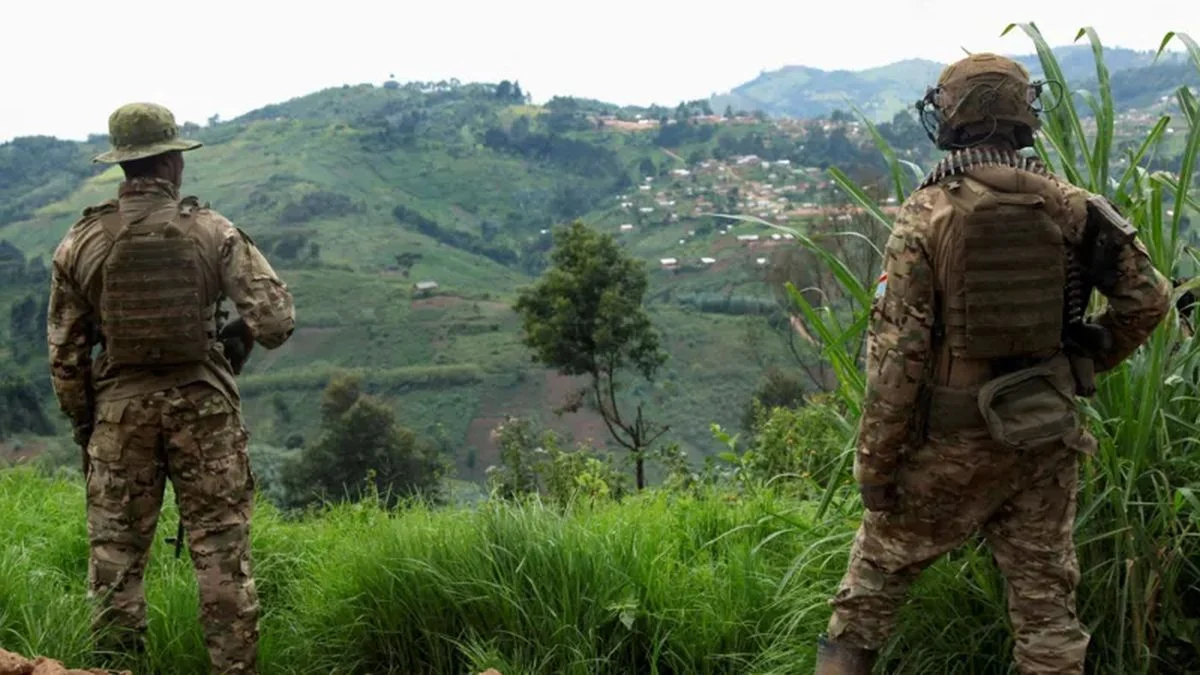
The FRN, a coalition mentioned in the proceedings, represents a newer, more fluid iteration of the various rebel factions that have operated in the Congo since the First and Second Congo Wars. These groups often exploit the porous borders between the DRC, Rwanda, and Uganda, drawing upon illicit mining operations—specifically gold, coltan, and tin—to finance their military endeavors. The Congolese Armed Forces (FARDC) have struggled to contain these groups, often citing the vast, mountainous terrain and the support networks enjoyed by the rebels as significant obstacles to success.
The Logic Behind the Military’s Crackdown
The decision to impose the death penalty—a sentence that has been under a moratorium in the DRC since 2003, though the government recently lifted this ban for specific crimes including treason and espionage—signals a strategic pivot by the Kinshasa administration. President Felix Tshisekedi’s government has faced immense pressure to demonstrate progress in the security sector.
Military analysts suggest that the ruling is intended to serve as a deterrent. By prosecuting 71 soldiers at once, the military leadership is attempting to restore a sense of order in a force that has been criticized for corruption, ghost soldiers, and lack of morale. For years, observers have noted that many units in the DRC army suffer from low pay, lack of food, and outdated equipment, which contributes to high rates of desertion. However, the government’s current stance is that internal discipline must take precedence over these systemic grievances if the state is to survive the current existential threat posed by the FRN.

Chronology of the 2026 Crisis
The events leading up to this verdict can be traced back to the intensified combat operations launched earlier this year:
- January – March 2026: The FRN launches a series of coordinated attacks on government administrative hubs in North Kivu, displacing thousands of civilians.
- May 2026: The Congolese government declares a "state of siege" in the region, granting the military expanded powers to bypass civilian judicial processes.
- September 2026: A series of heavy losses for the FARDC in Walikale leads to a high-level review of regional command structures.
- October 20, 2026: The specific incident occurs where the 71 soldiers reportedly abandoned their positions, leading to their immediate arrest and detainment.
- November 11, 2026: The military tribunal announces the sentences for the 66 convicted soldiers, drawing international attention to the severity of the punishment.
Implications for Human Rights and Military Law
The sentencing has sparked a complex debate among international human rights organizations. While the Congolese government views the ruling as a necessary step toward military reform, critics argue that the death penalty is an archaic solution that fails to address the root causes of failure on the battlefield.
Human rights groups operating in the region have expressed concern that these trials may be used to scapegoat individual soldiers for failures that are fundamentally the result of high-level military mismanagement and corruption. There is also the question of due process. In a region where legal infrastructure is weak and military courts often prioritize institutional loyalty over impartial justice, the speed of the trial—occurring within weeks of the alleged incident—has raised questions regarding the adequacy of the defense provided to the soldiers.
Furthermore, the impact on the morale of the remaining forces remains to be seen. While the government hopes for increased discipline, some experts warn that such harsh measures could lead to further fracturing within the ranks, potentially causing more soldiers to defect to rebel groups if they fear they will be executed by their own commanders for tactical retreats.
Broader Regional and Economic Consequences
The stability of the DRC is inextricably linked to the economic health of the Great Lakes region. The persistent insecurity in the Kivu provinces has led to the closure of several mining operations and has severely hampered the delivery of humanitarian aid. The continued presence of groups like the FRN prevents the repatriation of hundreds of thousands of internally displaced persons (IDPs), keeping the region in a cycle of poverty and dependency.
The international community, including the United Nations mission in the DRC (MONUSCO), has been tasked with supporting the government’s efforts to stabilize the area. However, the government’s reliance on capital punishment places it at odds with many of its international partners who advocate for the abolition of the death penalty. This diplomatic friction adds another layer of complexity to the already strained relationship between Kinshasa and its Western allies.
Conclusion: A Turning Point for the FARDC
The sentencing of the 66 soldiers in Walikale is more than a judicial event; it is a manifestation of a state attempting to reclaim its authority in a territory where the government’s writ is frequently challenged. Whether this move effectively curbs the tide of desertion and improves the combat efficacy of the FARDC remains the central question for the coming months.
As the Congolese government continues to grapple with the multifaceted challenges of the eastern conflict, the focus will likely remain on whether these military trials can bring about the necessary structural changes. Without addressing the underlying issues of supply lines, soldier welfare, and professional training, the military may find that punitive measures, no matter how severe, provide only a temporary veneer of control rather than a lasting solution to the insurgency. For now, the eyes of the world remain fixed on the DRC, observing a nation attempting to forge a path to stability through the harsh application of military law.