Central Japan was struck by a powerful 5.7 magnitude earthquake early Sunday morning, leaving at least 20 people injured and causing significant structural damage across the Shizuoka and Aichi prefectures. The seismic event, which triggered widespread panic, prompted residents to flee their homes in the dead of night as storefronts shattered and infrastructure sustained impact damage. According to the Japan Meteorological Agency (JMA), the quake occurred at 01:04 local time on Sunday, November 8, 2026. The epicenter was localized in the western region of Shizuoka Prefecture, with a shallow focal depth of approximately 40 kilometers.
While the magnitude of 5.7 is categorized as moderate to strong, the shallow nature of the rupture caused significant surface shaking intensity. Despite the intensity of the tremors, the JMA confirmed that no tsunami warnings were issued, as the quake did not possess the specific characteristics—such as an undersea vertical displacement—that typically trigger catastrophic ocean surges.
Chronology of the Seismic Event
The earthquake struck during the early hours of the morning, catching the majority of the population in the affected regions while they were asleep. Data from the Japan Meteorological Agency indicates that the initial shockwave was felt intensely across a broad swath of Honshu, Japan’s main island.
By 01:10 local time, local emergency services in Shizuoka and Aichi began receiving a surge of distress calls. The reports were consistent: broken glass from commercial storefronts, disrupted electricity in localized sectors, and residents suffering from falls and blunt force trauma while attempting to evacuate buildings in the dark. By 02:00, the Kyodo news agency, citing local authorities, confirmed that at least 20 individuals had been transported to regional hospitals. Most injuries were categorized as non-life-threatening, consisting primarily of lacerations from shattered glass and fractures sustained during falls on stairwells or uneven terrain.
By dawn, municipal cleanup crews had begun the process of clearing debris from the streets of Hamamatsu, which was one of the urban centers closest to the epicenter. Meanwhile, transit authorities initiated safety inspections of regional rail lines, a standard but rigorous procedure in Japan’s earthquake-prone infrastructure network.
Geographic Impact and Felt Intensity
The tremor’s reach was extensive, demonstrating the seismic sensitivity of the central Japanese landscape. The shaking was reported in the historic cities of Kyoto and Nara, as well as the mountainous terrains of Gifu and Yamanashi. The latter is home to the iconic Mount Fuji, a region where seismic monitoring is constant due to the volcanic nature of the area.
In contrast, the capital city of Tokyo remained largely unaffected. The distance between the epicenter in Shizuoka and the metropolitan sprawl of Tokyo meant that seismic waves attenuated significantly before reaching the capital, resulting in little to no disruption for the majority of the city’s residents.
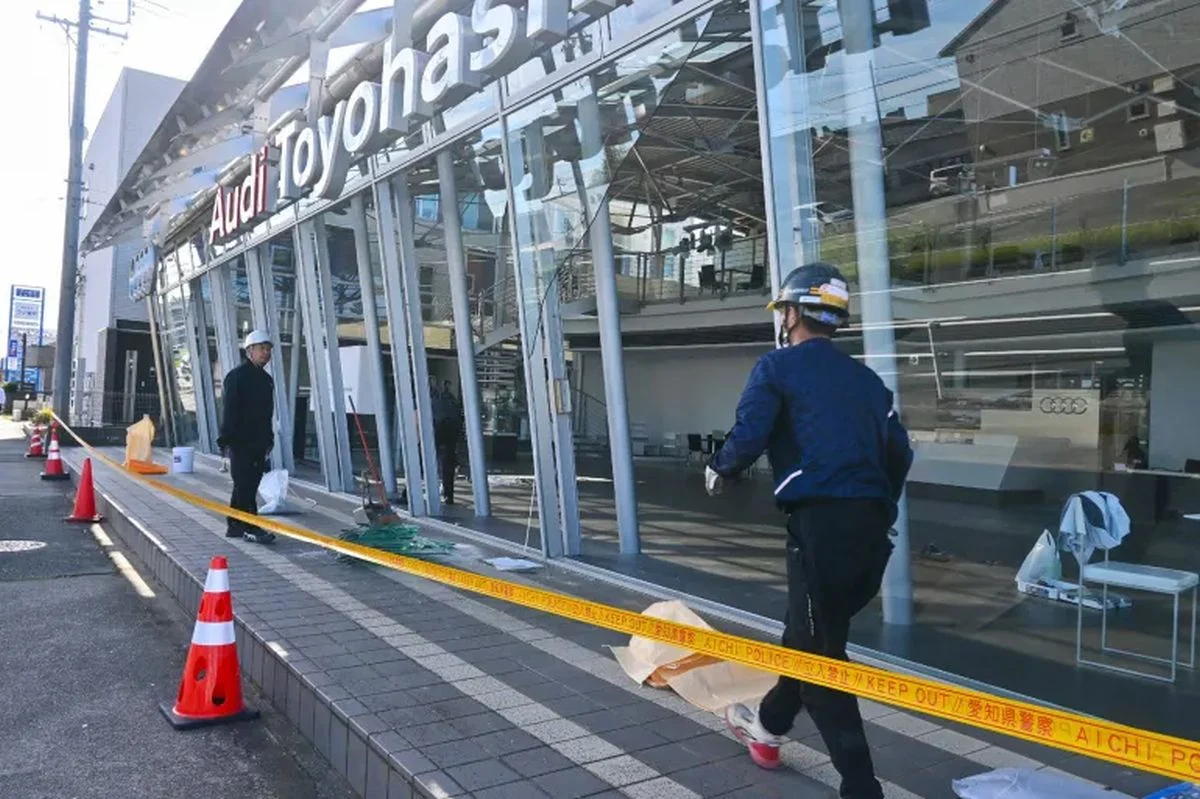
Visual evidence captured by local media outlets and surveillance footage showcased the immediate aftermath: storefront windows in the Shizuoka area had buckled under the stress of the tremors, leaving piles of glass on public sidewalks. Inside residential and commercial buildings, the scene was one of chaos; bookstores, in particular, suffered heavy damage as shelves collapsed, burying aisles in volumes of paper and ink.
Emergency Response and Official Protocols
The response to the earthquake was swift, adhering to Japan’s world-renowned disaster preparedness protocols. Local fire departments and police units were mobilized immediately to conduct welfare checks and ensure that no citizens were trapped in collapsed structures.

Government officials in the affected prefectures have issued reminders for residents to remain vigilant. The JMA’s official stance following the event has been to warn the public of potential aftershocks. "While the primary earthquake has subsided, the possibility of aftershocks of similar or slightly smaller magnitude remains in the coming days," a representative from the JMA stated during a brief technical briefing. They urged citizens to avoid entering damaged buildings and to monitor official channels for updates.
The Japanese government’s Disaster Management Office has begun coordinating with local prefectural leaders to assess the long-term structural integrity of homes and public facilities. In cases of major seismic activity in Japan, the government frequently deploys structural engineers to evaluate whether buildings have sustained "hidden" damage, such as fractures in foundations or support beams, which could pose risks in the event of subsequent tremors.
Contextualizing Japan’s Seismic Vulnerability
Japan sits at the intersection of several tectonic plates, including the Pacific, Philippine Sea, Eurasian, and North American plates. This geological complexity makes the archipelago one of the most earthquake-prone nations in the world. The Shizuoka region, specifically, is a point of constant scientific observation because it sits near the Nankai Trough, a subduction zone that has historically been the source of major seismic events.
While a 5.7 magnitude earthquake is not considered a "mega-quake" by Japanese standards—where buildings are constructed to withstand much higher intensities—it serves as a stark reminder of the latent energy stored beneath the surface. For many residents, the event triggered memories of previous seismic activity, reinforcing the psychological impact of living in a high-risk zone. The resilience of the local population is largely credited to the rigorous earthquake-resistant building codes, known as Taishin, which have been updated repeatedly over the last three decades to ensure that even when structures sustain damage, they do not suffer catastrophic collapse.
Socio-Economic Implications
Beyond the immediate physical injuries, the incident highlights the economic vulnerability of regional commerce. Even a moderate earthquake can lead to millions of yen in losses due to damaged retail inventory and temporary business closures. As the cleanup effort continues, insurance providers are expected to begin processing claims for property damage.
Furthermore, the disruption of transportation and the psychological toll on the workforce in Shizuoka and Aichi may lead to a temporary dip in regional economic productivity. However, history has shown that Japan’s infrastructure recovery is among the fastest in the world, with local supply chains typically returning to normal within 48 to 72 hours, provided no secondary disasters occur.
Looking Ahead: Preparedness and Resilience
As of Sunday evening, emergency crews were transitioning from the search-and-rescue phase to the recovery and damage-assessment phase. The focus has now shifted toward ensuring that the elderly and vulnerable populations in the affected prefectures have access to medical care and temporary shelter if their homes were deemed unsafe.
Experts in seismology have reiterated that this event does not necessarily indicate a larger impending disaster, but rather emphasizes the need for continuous public education regarding evacuation routes and emergency supplies. Families across the region have been encouraged to check their "go-bags"—the pre-packed kits containing water, non-perishable food, flashlights, and portable chargers—to ensure they are ready should a larger tremor occur.
In conclusion, while the earthquake that struck Shizuoka on November 8, 2026, resulted in injuries and visible destruction, the lack of fatalities and the absence of a tsunami speak to the efficacy of Japan’s disaster mitigation strategies. The coming week will be defined by rigorous inspections and the slow return to normalcy, as the nation continues to live in harmony with its geologically volatile environment. The government remains on high alert, with meteorological stations monitoring the tectonic activity in the Shizuoka region around the clock to provide timely warnings to the public. As Japan moves past this event, the focus remains on the resilience of its communities and the ongoing evolution of its seismic defense infrastructure.